
How Often Should You Test Carbon Monoxide Alarms?
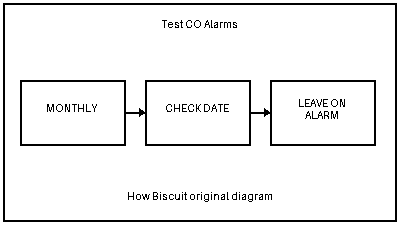
Test every carbon monoxide alarm at least once a month using its test button. Follow the manufacturer's schedule for batteries, sensors, end-of-life chirps, and full replacement.
What to know
- A test button checks alarm electronics and sound, not the surrounding air.
- CO alarms belong outside sleeping areas and on every level.
- An alarm or suspected exposure calls for fresh air and emergency help, not troubleshooting beside the appliance.
Carbon monoxide is colorless and odorless, so a working alarm is the practical early-warning device in a home with fuel-burning equipment, an attached garage, a fireplace, or other possible sources. The U.S. Fire Administration recommends installing carbon monoxide alarms outside each separate sleeping area and on every level of the home. It also says to test them at least once a month. [1]
Monthly testing is simple, but it is not the only maintenance an alarm needs.
What the test button actually checks
Pressing and holding the TEST button should trigger the unit’s alarm pattern. On interconnected systems, it may also sound other alarms. This confirms that the device has power and that its electronics and sounder can respond to the built-in test.
It does not release carbon monoxide into the room and does not recreate every possible sensor condition. Do not test an alarm with vehicle exhaust, a stove, a candle, or another combustion source. That introduces a real poisoning and fire hazard.
If the alarm does not sound:
- Confirm that replaceable batteries are installed correctly.
- Replace the batteries with the type specified by the manufacturer.
- Restore power to hardwired units and check the circuit if it can be done safely.
- Clean only as directed by the manual.
- Replace the unit if it still fails, is damaged, or has reached its end-of-life date.
Test every alarm, not just one
Homes often have multiple CO alarms. Test each unit individually because one working alarm does not prove that another has power, a functional sounder, or a live interconnection.
Use a recurring calendar reminder. A monthly test takes less time than discovering during an emergency that a device was disabled after a nuisance chirp.
Batteries and end-of-life signals
Battery schedules depend on the alarm design:
- Some alarms use replaceable batteries.
- Some are hardwired with replaceable backup batteries.
- Some use sealed long-life batteries.
- Combination smoke/CO alarms may have their own maintenance pattern.
Follow the label and manual rather than applying one universal battery rule. Replaceable batteries should be changed when the low-battery signal occurs and on any schedule the manufacturer specifies. Never remove a battery merely to silence a device without correcting the cause.
CO sensors also age. Many alarms produce a distinct end-of-life chirp or display message. Record the manufacture or replacement date when you install the unit, and replace it by the date stated on the alarm or in its manual.
Placement matters
The U.S. Fire Administration advises placing CO alarms in a central location outside each sleeping area and on every level of the home. [2] Local building or fire codes may add requirements, and a manufacturer may specify minimum distances from fuel-burning appliances, humid areas, vents, or corners.
Tenants should report missing, damaged, or expired alarms to the landlord or property manager in writing. Do not assume a silent wall-mounted device is active merely because it is present.
When an alarm sounds
Treat an alarm as a warning, not as a request to inspect the furnace personally. Move everyone to fresh air and contact emergency services or the fire department from outside. Follow the alarm manufacturer’s emergency instructions.
Possible carbon monoxide symptoms can resemble flu or fatigue and may include headache, dizziness, weakness, nausea, chest pain, or confusion. Do not stay inside trying to identify the source, and do not re-enter until emergency responders say it is safe.
A brief chirp may indicate a battery, fault, or end-of-life condition rather than detected CO, but identify the pattern from a safe place and the manual. A full alarm pattern or symptoms deserve emergency treatment.
A monthly maintenance routine
- Press TEST on every CO alarm.
- Confirm that each unit sounds loudly enough to wake sleepers.
- Check for fault, low-battery, or end-of-life indicators.
- Make sure vents and openings are not painted over or obstructed.
- Verify that the alarm remains mounted in the intended location.
- Review the date label.
- Keep combustion-appliance vents clear and arrange maintenance for equipment as needed.
USFA also advises keeping furnace, stove, fireplace, and dryer vents clear and using portable generators outdoors, away from doors, windows, and vents. [2]
Bottom line
Test carbon monoxide alarms monthly, maintain them according to the exact model instructions, and replace expired or failed units promptly. The alarm is the warning system; it is not a substitute for maintaining fuel-burning appliances, venting equipment correctly, or leaving immediately when danger is suspected.
Limits and cautions
- Local codes and manufacturer instructions may require different placement or replacement intervals.
- The test button does not prove that every sensor function is perfect.
- This is safety guidance, not diagnosis of possible poisoning.
Source notes
- Carbon Monoxide Safety PictographsU.S. Fire Administration
- Carbon Monoxide Poisoning PreventionU.S. Fire Administration
See something wrong or out of date? Report a correction.