
How to Clean and Sanitize a Cutting Board
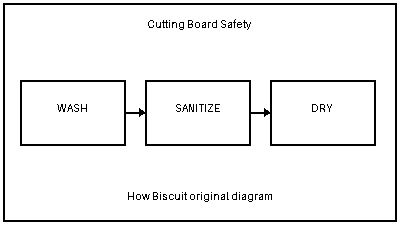
Clean a cutting board first with hot soapy water, rinse it, then sanitize when needed with a food-contact-safe product or the USDA bleach solution. Keep raw-animal-food boards separate from ready-to-eat food.
What to know
- Cleaning removes residue; sanitizing works best after cleaning.
- Use separate boards for raw meat and foods that will not be cooked.
- Discard boards with hard-to-clean grooves, cracks, or delamination.
A cutting board can look clean while still carrying food residue in knife marks, seams, or damp areas. Safe care has two stages: clean the board to remove debris and grease, then sanitize it when the food-safety risk calls for an additional germ-reduction step.
The USDA Food Safety and Inspection Service recommends washing cutting boards with hot, soapy water after each use, rinsing them with clear water, and air-drying or drying with clean paper towels. It also recommends separating a board used for raw meat, poultry, or seafood from one used for produce, bread, and other foods that will not receive a cooking step. [1]
Clean after every use
- Scrape food scraps into the trash or compost.
- Wash both sides and the edges with hot water and dish soap.
- Pay attention to juice grooves, handles, feet, and seams.
- Rinse with clean water.
- Stand the board where air can circulate until it is fully dry.
Washing both sides helps prevent uneven moisture absorption and warping, especially with wood. Do not leave a wood or laminated board soaking in a sink unless its manufacturer explicitly permits it.
Dishwasher safety depends on material and construction. USDA notes that nonporous acrylic, plastic, and glass boards, as well as some solid wood boards, can be dishwasher-safe, while laminated boards may crack or split. [1] Check the board’s instructions instead of assuming that every wood or plastic board tolerates high heat.
When to sanitize
Sanitize after preparing raw meat, poultry, seafood, or eggs; after contact with a known contaminant; and whenever someone in the household is at elevated risk from foodborne illness.
USDA’s home guidance gives a simple food-contact sanitizer: mix 1 tablespoon of unscented liquid chlorine bleach with 1 gallon of water. After washing the board, flood the surface with the solution, allow it to stand for several minutes, rinse with clear water, and air-dry or pat dry with clean paper towels. [1] USDA also emphasizes that sanitizing is most effective after the surface has been cleaned. [2]
Use plain, unscented bleach with a label suitable for the intended use. Never mix bleach with ammonia, vinegar, acids, or other cleaners. Prepare the solution in a ventilated area, protect clothing and skin, and follow current label instructions because product concentrations can vary.
A commercial sanitizer can also be used if its label specifically permits food-contact surfaces. Follow its dilution, contact-time, rinsing, and ventilation directions. A general household disinfectant is not automatically approved for a board that touches food.
Wood, bamboo, plastic, and glass
Wood: Wash promptly and dry upright. Avoid prolonged soaking. Oil only with a product intended for cutting boards, following the maker’s instructions. Deep splits or separated glue joints are replacement signs.
Bamboo: Treat it much like wood unless the manufacturer says otherwise. USDA notes that bamboo absorbs relatively little moisture, but it still needs washing and drying. [1]
Plastic: Many plastic boards tolerate dishwashers, but deep knife grooves can become difficult to clean. Replace a board that stays stained, warped, rough, or heavily scarred.
Glass, stone, and ceramic: These are nonporous and easy to clean, but they can be hard on knife edges and can chip. Stop using a board with damaged edges or cracks.
Prevent cross-contamination
A two-board system is easier than trying to remember what was prepared where:
- Mark one board for raw meat, poultry, and seafood.
- Reserve another for produce, bread, and ready-to-eat food.
- Use clean knives, plates, and hands when moving from raw to cooked food.
- Do not place cooked food back on a board or platter that held it raw until the surface has been properly cleaned and sanitized.
Color coding can help, but color itself does not sanitize anything.
When to replace the board
USDA advises discarding boards that become excessively worn or develop hard-to-clean grooves. [1] Replace a board when it has:
- Deep cuts that retain debris
- Cracks, splits, or delamination
- Warping that makes it unstable
- Persistent odor after proper cleaning
- Mold that cannot be completely removed
- Chipped material that may enter food
Bottom line
Wash every cutting board after every use. Sanitize after raw-animal-food preparation or other meaningful contamination. Dry it completely, keep raw and ready-to-eat work separate, and replace the board when damage makes reliable cleaning doubtful.
Limits and cautions
- Material-specific care instructions override generic dishwasher or soaking advice.
- Bleach concentration and contact instructions must be followed exactly.
- This guide addresses routine home food safety, not commercial food-code compliance.
Source notes
- Cutting BoardsUSDA Food Safety and Inspection Service
- Washing Food: Does it Promote Food Safety?USDA Food Safety and Inspection Service
See something wrong or out of date? Report a correction.