
Can You Use Soap on Cast Iron?
Yes. Mild dish soap can be used on seasoned cast iron. Avoid soaking and the dishwasher, dry the pan completely, and use harsh abrasion only when removing rust or deliberately stripping the surface for reseasoning.
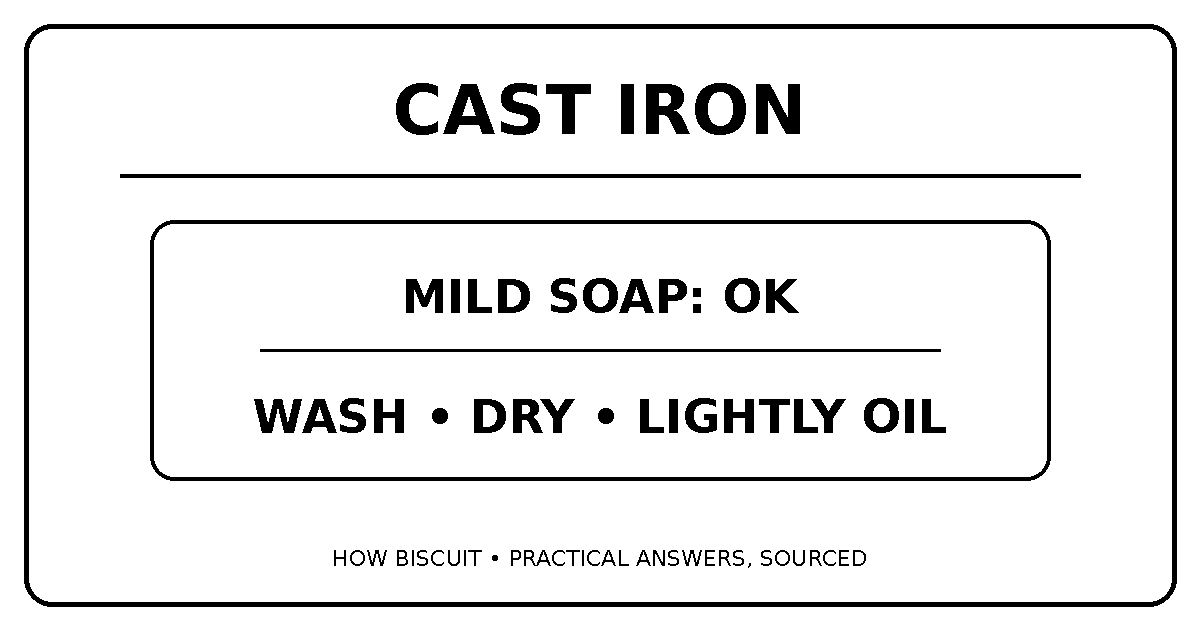
What to know
- Modern mild dish soap does not automatically destroy a sound seasoning layer.
- Hand-wash cast iron and avoid prolonged soaking.
- Dry promptly and thoroughly to prevent rust.
- Harsh detergents, dishwasher cycles, and aggressive daily abrasion can damage seasoning.
You can use a small amount of mild dish soap on seasoned cast iron. The old warning against all soap is broader than current manufacturer and university guidance.
Lodge says modern dish soap is acceptable for cleaning cast iron and that a well-established seasoning layer can withstand soap, water, and brushing. [1] University of Illinois Extension also recommends hand washing with mild or diluted soap, followed by thorough drying. [2]
What seasoning actually is
Cast-iron seasoning is a thin, bonded layer formed when oil is heated on the metal. It is not simply a loose coating of cooking grease waiting for one bubble of dish soap to carry it away.
Seasoning is durable, but not indestructible. Repeated harsh treatment, long soaking, dishwasher detergent, or aggressive scouring can wear it down.
A simple cleaning routine
For ordinary cleanup:
- Let the pan cool enough to handle safely.
- Wash it by hand with warm water.
- Add a small amount of mild dish soap when needed.
- Use a brush, sponge, or non-scratch scrubber.
- Rinse.
- Dry immediately and completely.
- Apply a very thin film of cooking oil if the surface looks dry.
Lodge summarizes regular care as wash, dry, and oil. [3]
Do not leave a visible pool of oil. Excess oil can become sticky or rancid.
Why the dishwasher is different
A dishwasher exposes the pan to a long wet cycle, strong detergent, and prolonged drying conditions. Lodge warns that this can strip seasoning and cause rust. [3]
Hand washing takes less time than repairing the orange landscape produced by abandoning the skillet in a machine full of alkaline detergent.
What if food is stuck?
Try the least aggressive method first:
- warm water and a scraper;
- a nylon brush;
- simmering a small amount of water for several minutes, then scraping after cooling;
- coarse salt as a gentle abrasive, if the manufacturer permits it.
Avoid soaking the pan for hours. Water can reach exposed iron and start corrosion.
When should steel wool be used?
Steel wool is useful for rust removal or a deliberate restoration, not as the everyday cleaning tool for a seasoned surface. Lodge recommends it for removing rust before washing, drying, oiling, and reseasoning. [3]
If ordinary food residue requires steel wool after every meal, cooking temperature, preheating, or the seasoning condition may be the real problem.
What if soap removes black material?
A dark residue on a towel can be loose seasoning, carbonized food, or oil. Some transfer can occur without ruining the pan. If the cooking surface becomes gray, patchy, sticky, rusty, or increasingly prone to sticking, clean it thoroughly and reseason it.
Flaking, thick carbon buildup should not be preserved as though it were an ancestral artifact.
Enameled cast iron is different
Enameled cookware has a glass-like coating rather than a bare seasoned cooking surface. It is normally washed with mild soap, but abrasive tools and thermal shock can damage the enamel. Follow the specific instructions for that product.
Likewise, some heat-treated cast-iron serveware may have different dishwasher guidance. Product-specific instructions override generic cast-iron rules.
What about acidic food?
Acidic food can interact with bare or weakly seasoned iron and may wear seasoning during long cooking. That is separate from washing with mild soap. A well-seasoned skillet can handle short contact with many acidic foods, while long simmering may be better in enameled or stainless cookware.
How to dry the pan completely
Towel-dry first. Then place the pan over low heat briefly until the remaining moisture evaporates. Turn off the heat and, if needed, wipe on a very thin film of oil.
Do not walk away from an empty pan heating on the stove.
Bottom line
Mild soap is fine for seasoned cast iron. The important habits are hand washing, avoiding long soaking, drying immediately, and maintaining a thin seasoning layer. The pan is durable cookware, not a fragile mythological creature that dies upon contact with detergent.
Limits and cautions
- Follow the cookware manufacturer’s instructions, especially for enameled or heat-treated products.
- Seasoning condition and cleaning needs vary by pan.
- This article concerns cookware care, not treatment of severe rust, cracks, or structural damage.
Source notes
- 10 Myths About Cast Iron Cookware, Busted!Lodge Cast Iron
- A Guide to Cast-Iron CookwareUniversity of Illinois Extension
- How to Clean Cast IronLodge Cast Iron
See something wrong or out of date? Report a correction.