
Appliance Buying Checklist: Measurements, Hookups, Delivery, Warranty, and Recalls
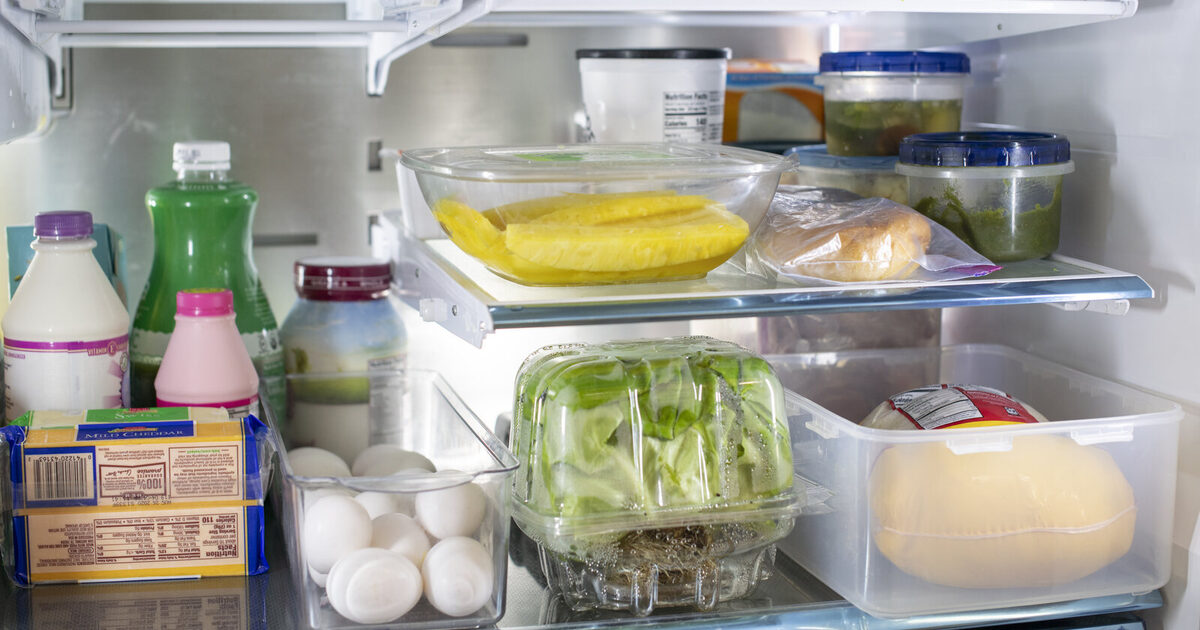
Measure the opening, appliance, doors, hallways, stairs, elevator, and door swing. Identify voltage, circuit, gas, water, drain, vent, condensate, and floor requirements. Inspect before signing.
.jpg)
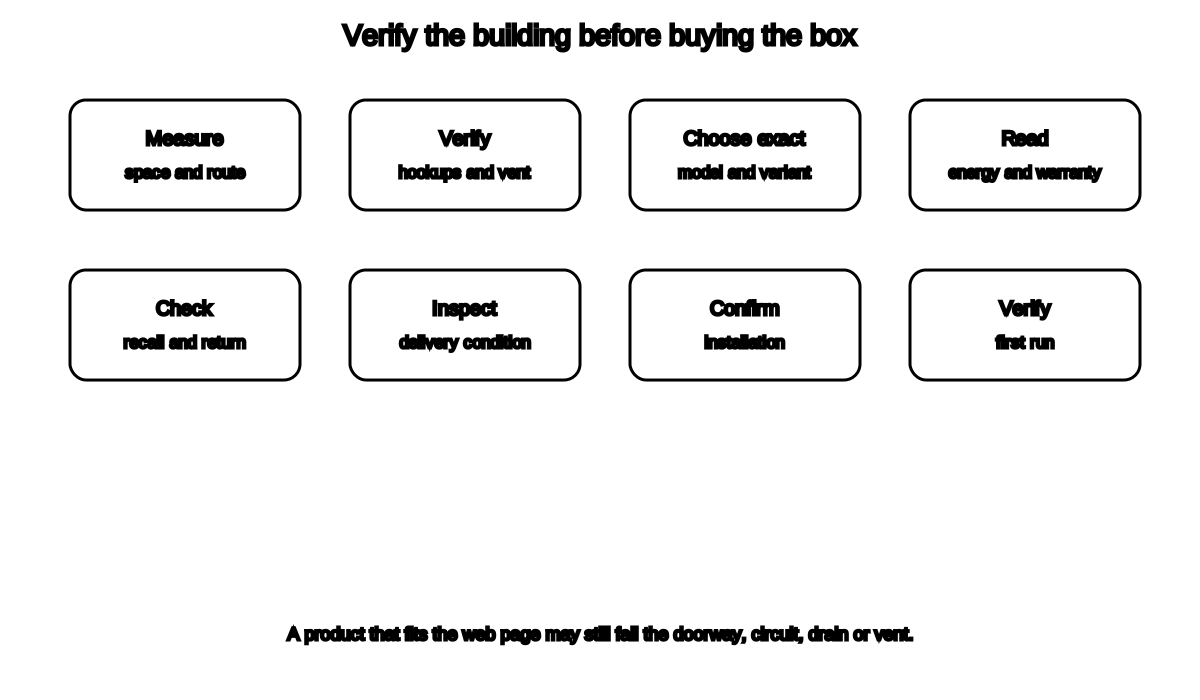
Before buying a major appliance, verify:
- It fits the installation space.
- It fits through the delivery route.
- The building has the required hookups.
- Ventilation and clearances are adequate.
- Installation is permitted and safe.
- Warranty and return terms are acceptable.
- The exact model is not recalled.
- Delivery condition is documented.
Quick answer: Measure the opening, appliance, doors, hallways, stairs, elevator, and door swing. Identify voltage, circuit, gas, water, drain, vent, condensate, and floor requirements. Inspect before signing.
Measure the installation space
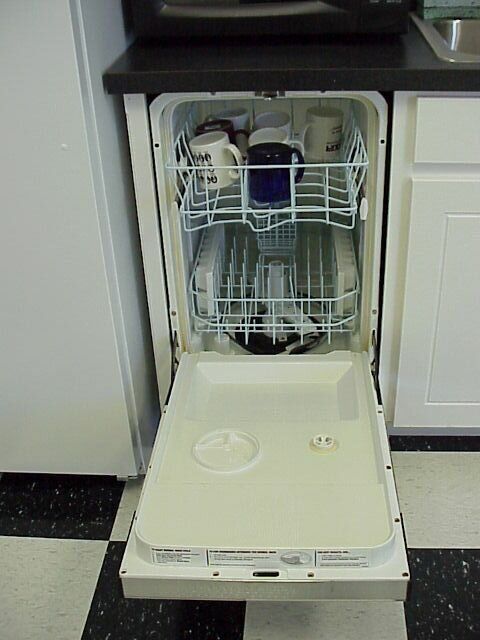

Record:
- Width
- height
- depth
- baseboard
- counter overhang
- trim
- doors
- hinges
- utility protrusions
- floor slope
Measure in several places.
Walls and floors are not always square.
FTC advises measuring the installation space and allowing room for doors and safe ventilation.[1]
Measure the appliance
Use the manufacturer specification, not only retailer dimensions.
Check:
- Cabinet dimensions
- door
- handle
- hinge
- required clearance
- open-door depth
- hose and cord space
- vent
- anti-tip bracket
- leveling range
A refrigerator depth may exclude handles.
A dryer depth may increase with the vent.
Delivery route

Measure:
- Exterior door
- interior door
- hallway
- turn
- stair width
- landing
- ceiling
- railing
- elevator
- doorway trim
- gate
- porch
- slope
Ask whether doors or handles can be removed.
Do not assume the delivery team will dismantle the building.
Door and lid swing
Check:
- Refrigerator door
- oven door
- dishwasher door
- washer lid
- washer door
- dryer door
- filter access
- service access
The appliance may fit closed but block the walkway when open.
Electrical requirements
Verify:
- Voltage
- amperage
- dedicated circuit
- receptacle type
- grounding
- cord included or separate
- plug orientation
- disconnect
- GFCI or AFCI requirements
- panel capacity
Do not use:
- extension cord
- adapter
- ungrounded conversion
- undersized circuit
Major appliances should be connected according to manufacturer instructions and code.
Gas
Verify:
- Fuel type
- pressure
- shutoff
- connector
- venting
- combustion air
- permit
- professional installation
- CO alarms
Natural gas and propane are not interchangeable without an approved conversion.
Do not use an old connector automatically.
Water supply
Check:
- Shutoff
- pressure
- pipe condition
- connector
- flood protection
- filter
- hot/cold requirement
- water hardness
- leak pan
Appliances may require new hoses rather than reused hoses.
Drain
Verify:
- Standpipe
- sink connection
- floor drain
- drain height
- air gap
- hose routing
- pump capacity
- code
Do not create an airtight washing-machine drain connection unless required.
Venting
Dryers, gas appliances, range hoods, and some water heaters require specific venting.
Check:
- Material
- diameter
- length
- elbows
- termination
- clearance
- shared vent
- condensate
- code
Do not assume an existing vent is reusable.
Condensate
Possible sources:
- Heat-pump water heater
- high-efficiency gas appliance
- heat-pump dryer
- dehumidifier
- air conditioner
Plan:
- Gravity drain
- pump
- freeze protection
- service access
- overflow protection
Floor and structure
Check:
- Level
- strength
- water resistance
- vibration
- pedestal
- drain pan
- seismic strapping where required
- anti-tip bracket
- clearance from combustibles
A large refrigerator or water heater can impose substantial weight.
Model identity
Record:
- Manufacturer
- model
- variant
- color
- fuel
- voltage
- capacity
- hardware version
- certification
- included accessories
Do not accept a substitution without reviewing all specifications again.
EnergyGuide and ENERGY STAR
Use:
- Annual kWh or fuel
- local rate
- current ENERGY STAR status
- capacity
- feature comparison
Do not rely on the retailer’s monthly cost graphic.
Warranty and service
Read:
- Manufacturer warranty
- labor
- parts
- sealed system
- registration
- service area
- authorized service
- extended contract
- return period
Do not buy a service contract before reading exclusions.
Recall check
Search CPSC using:
- Manufacturer
- model
- date code
- serial range
Check again before accepting used or open-box equipment.
Record the result.
Delivery inspection
Before signing:
- Match model.
- Inspect packaging.
- Inspect all sides.
- Check doors.
- Check glass.
- Check controls.
- Check cord.
- Check hoses.
- Check accessories.
- Photograph damage.
- Note concealed-damage procedure.
- Keep documents.
Do not allow pressure to rush the inspection.
Installation
Confirm:
- Installer identity
- permit
- old-appliance removal
- leveling
- anti-tip
- leak test
- gas test
- vent
- drain
- electrical connection
- startup
- temperature
- test cycle
Do not sign completion before basic operation is verified.
First-run verification
Refrigerator
- Temperature reaches safe range
- doors seal
- water line does not leak
Washer
- Fills
- drains
- spins
- no leak
- shipping bolts removed
Dryer
- Heats
- tumbles
- exterior vent opens
- no gas odor
Dishwasher
- Fills
- drains
- no leak
- door seals
Water heater
- No leak
- correct vent
- safe delivered temperature
- relief discharge installed
Printable package
The Complete Appliance Purchase and Delivery Checklist should include:
- Space measurements
- Delivery route
- Hookups
- Product identity
- Energy and warranty
- Recall check
- Delivery inspection
- Installation
- First-run verification
- Records
Frequently asked questions
Should I measure the doorway or appliance first?
Both, including handles, packaging, turns, and open-door depth.
Does delivery include installation?
Not automatically. Read the service scope.
Can I reuse cords and hoses?
Only when manufacturer and code permit it. Many installers require new approved connections.
Should I accept a dent discount?
Only after confirming the damage is cosmetic and warranty/return terms are documented.
When should I register the appliance?
Follow the warranty instructions and keep proof of purchase.
Printable companion
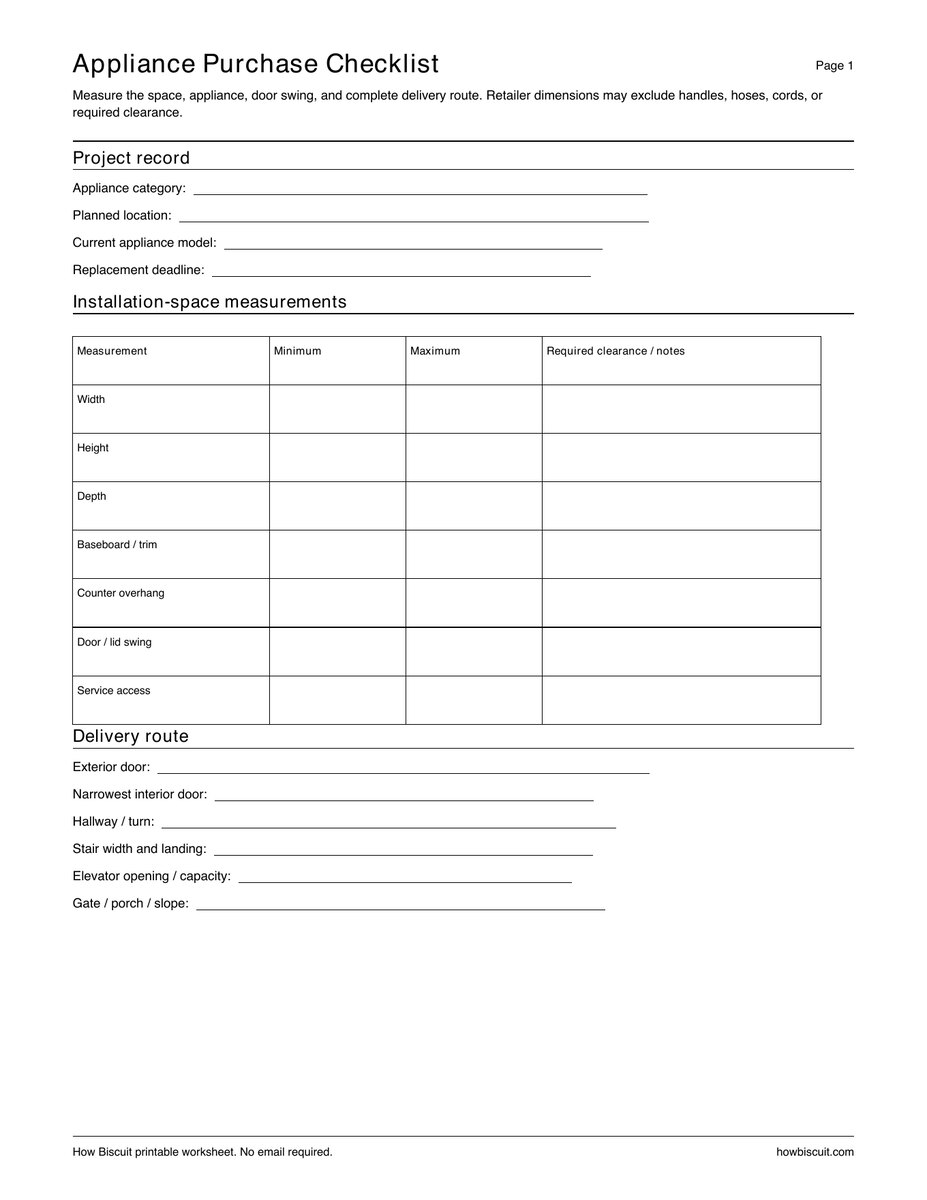
Download the ungated Appliance Purchase and Delivery Checklist PDF. No email address is required.
Related guides
- How to Read an EnergyGuide Label
- ENERGY STAR vs. EnergyGuide
- Are Extended Warranties on Appliances Worth It?
- Repair or Replace an Appliance?
- New vs. Used vs. Refurbished vs. Open-Box Appliances
- How to Calculate What an Appliance Costs to Run
- How Much Does a Refrigerator Cost to Run?
- How Much Does a Dishwasher Cost Per Load?
- How Much Does a Washing Machine Cost Per Load?
- How Much Does an Electric Dryer Cost Per Load?
Source notes
- How To Use the EnergyGuide Label To Shop for Home AppliancesFederal Trade Commission
- WarrantiesFTC
- RecallsU.S. Consumer Product Safety Commission
See something wrong or out of date? Report a correction.