
Home Energy Check for a High Summer Electric Bill
A high summer electric bill is easier to diagnose when you check the account, the cooling system, the building, and other appliances in a fixed order.

A high summer electric bill is easier to diagnose when you check the account, the cooling system, the building, and other appliances in a fixed order.
This checklist starts with the bill because a price change, long billing period, or corrected meter reading can look like an energy problem. It then moves through low-risk household checks before suggesting professional service.
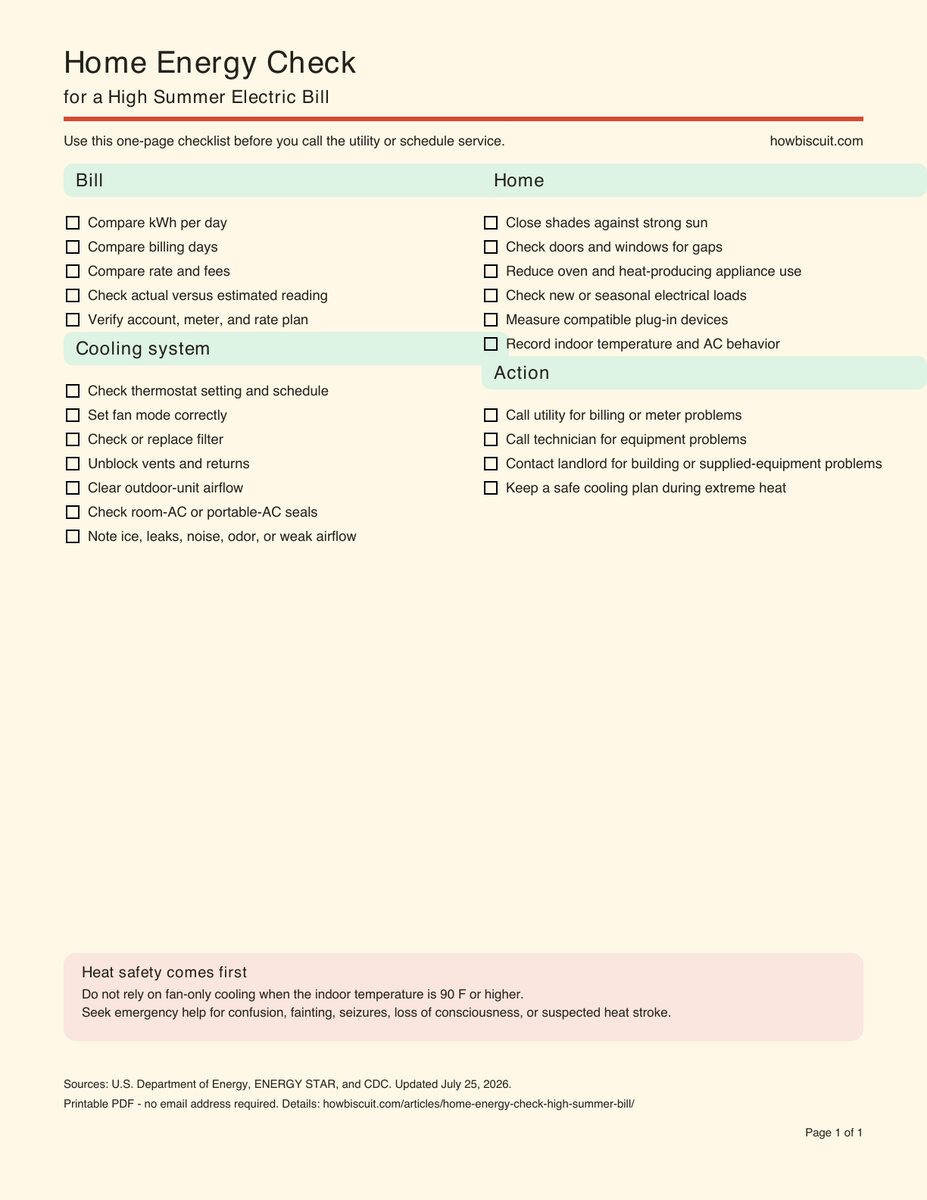
Download: Home Energy Check for a High Summer Bill (PDF)
Printable PDF, no email address required.
Before you start
Gather:
- Current electric bill
- Previous electric bill
- A bill from the same month last year, if available
- HVAC or room-AC manual
- Flashlight
- Replacement filter, if needed
- Calculator
- Thermometer or thermostat reading
- Utility login, if it provides daily or hourly usage
Do not open electrical panels, remove HVAC access covers, handle refrigerant lines, climb onto an unsafe roof, or work around energized equipment. Stop if you smell burning, see damaged wiring, hear arcing, or encounter water near electrical components.
Part 1: Check the bill
Billing period
- Record the current start and end dates.
- Record the number of billing days.
- Record the previous bill’s number of days.
- Note whether the current bill covers more days.
Electricity use
- Record current kWh.
- Record previous kWh.
- Calculate current kWh per day.
- Calculate previous kWh per day.
- Compare with the same month last year, if available.
Use:
Formula: kWh per day = (bill kWh ÷ billing days)
Rates and fees
- Record the energy or supply price per kWh.
- Record delivery charges.
- Record fixed customer charges.
- Look for tiered or time-of-use pricing.
- Look for a new rider, tax, fee, or expired credit.
- Check for a prior balance or late fee.
Meter reading
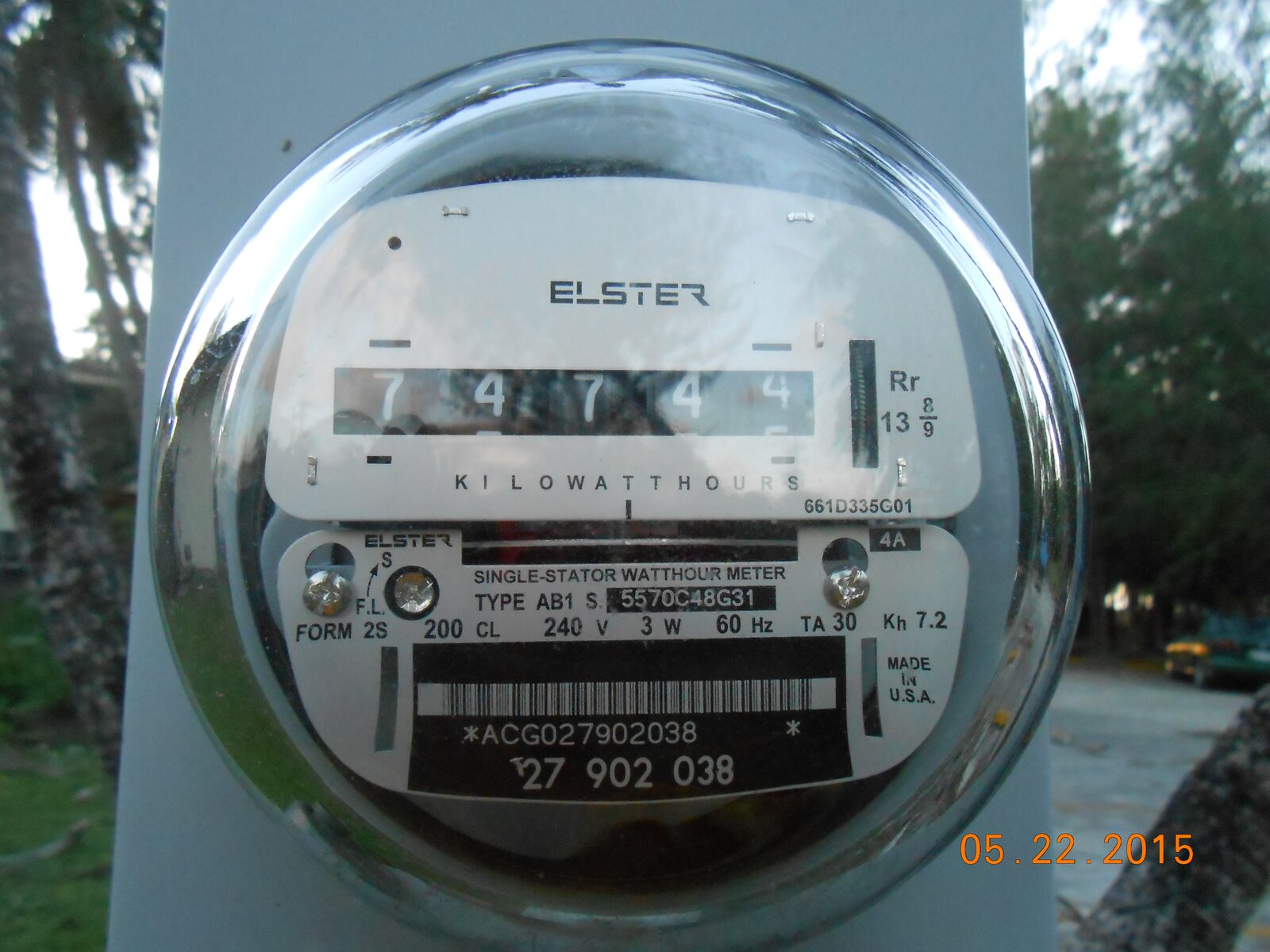

- Confirm the meter number matches the account.
- Check whether the reading was actual or estimated.
- Look for a correction from a prior estimated bill.
- Confirm the service address and rate plan.
Finding:
- Daily kWh increased: continue to the equipment and household checks.
- Daily kWh stayed similar but cost rose: focus on rates, fees, and billing changes.
- Reading or account data looks wrong: contact the utility.
Part 2: Check thermostat and cooling settings
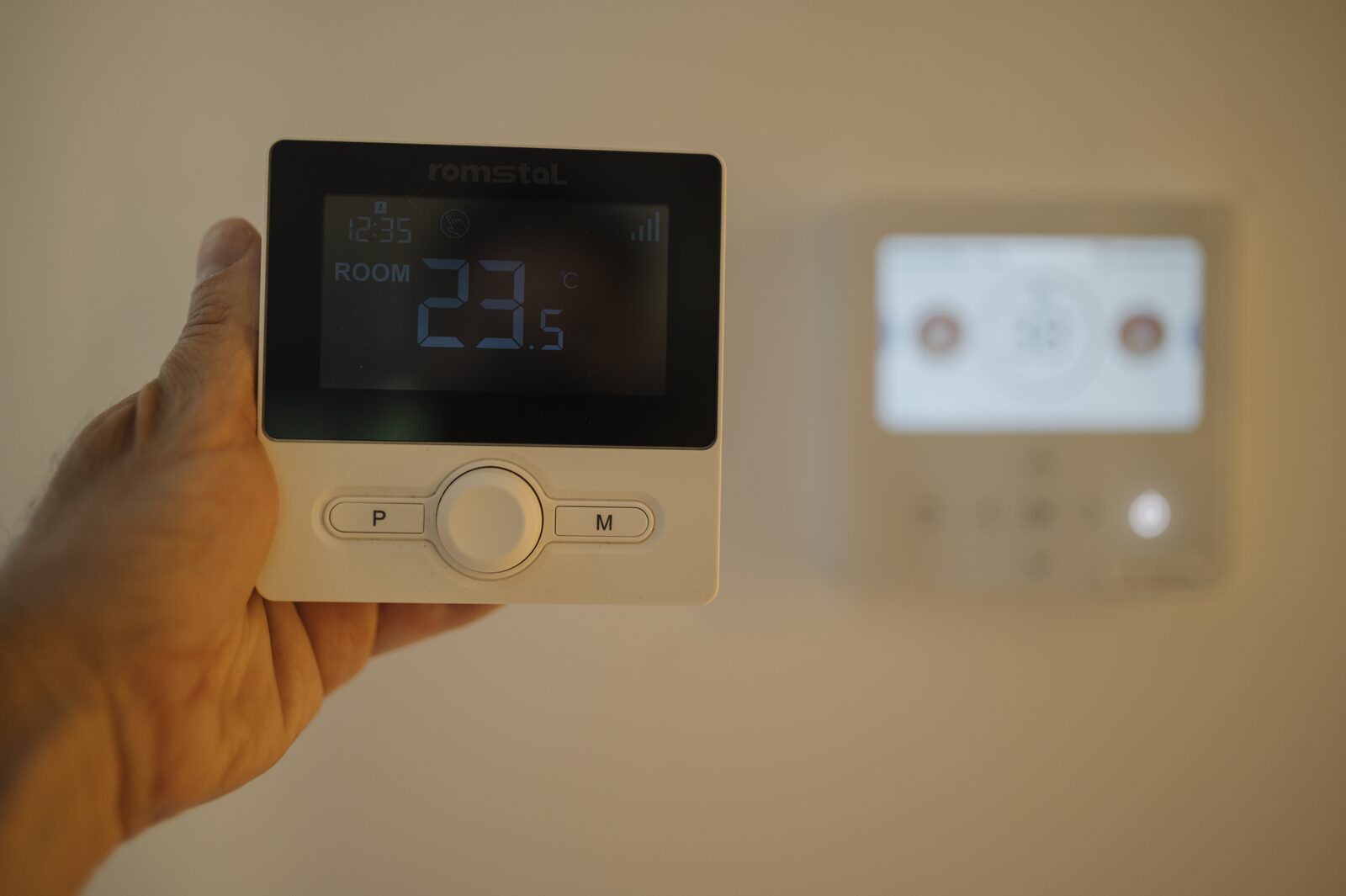

- Confirm the thermostat is in cooling mode.
- Record the current setpoint.
- Compare it with the usual setting.
- Check whether a schedule changed.
- Check whether vacation, hold, eco, or demand-response mode is active.
- Check whether the fan is set to
Auto,On, or another circulation mode. - Move lamps, televisions, and heat-producing electronics away from the thermostat.
- Confirm the thermostat is not receiving direct sun.
A thermostat near a heat source can make the AC run longer than needed.[1]
Part 3: Check the filter and airflow
Central system
- Turn the system off at the thermostat before handling the filter.
- Locate the correct filter.
- Check whether it is visibly dirty.
- Confirm the airflow arrow points in the correct direction.
- Replace or clean it according to the equipment instructions.
- Confirm supply vents are open and unobstructed.
- Confirm return grilles are not blocked by furniture, curtains, or stored items.
ENERGY STAR recommends checking the filter monthly during heavy-use seasons and changing it when dirty.[2]
Window or portable AC
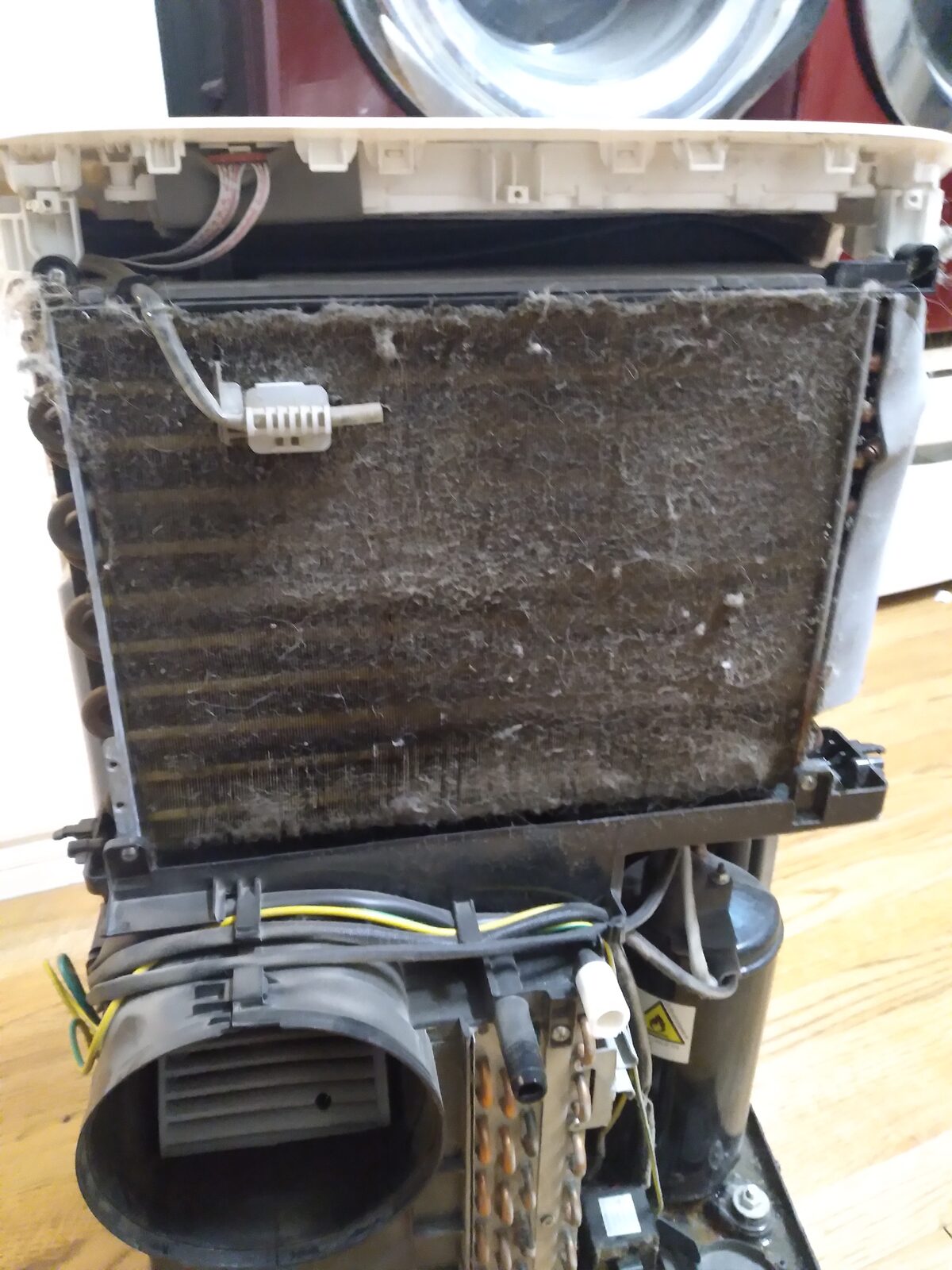
- Turn off and unplug the unit before removing a washable filter, if the manual requires it.
- Clean or replace the filter according to the manual.
- Confirm intake and outlet grilles are unobstructed.
- Look for unusual ice, water, noise, or odor.
- Confirm the thermostat sensor is not blocked.
Part 4: Check the outdoor equipment
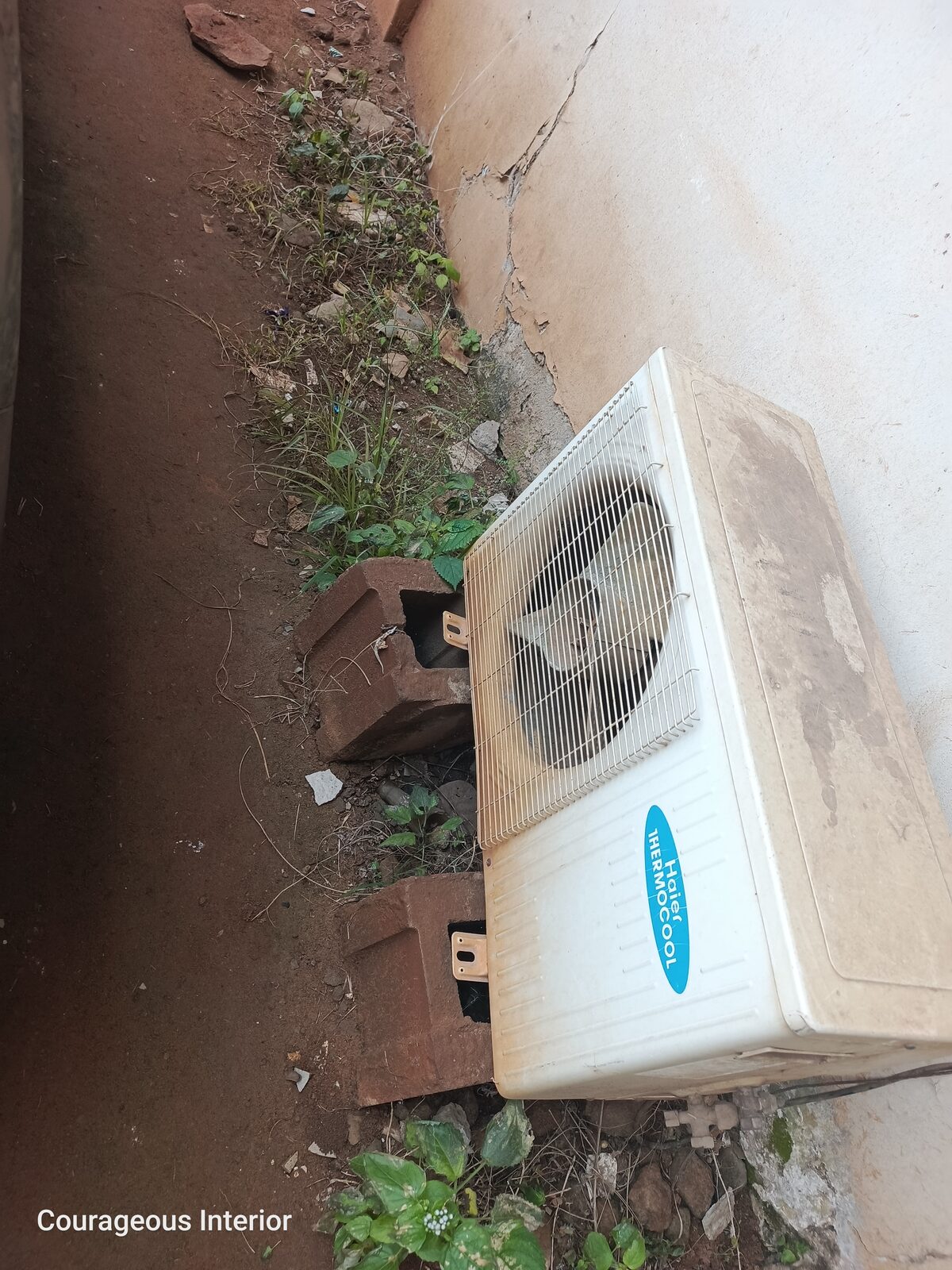

For central AC or a heat pump:
- Turn the system off before clearing nearby loose debris.
- Check for leaves, grass, lint, or plants obstructing airflow.
- Maintain the clearance required by the manufacturer.
- Look for visible ice or physical damage.
- Listen for new buzzing, grinding, or repeated rapid starting.
- Do not bend fins, open panels, or touch wiring.
Call a qualified technician if the system runs continuously without maintaining temperature, trips breakers, leaks where it should not, or shows electrical or refrigerant-related trouble.
ENERGY STAR recommends annual pre-season maintenance and identifies dirty coils, incorrect refrigerant charge, and airflow problems as causes of poor efficiency and higher cost.[2]
Part 5: Check window and portable AC installation
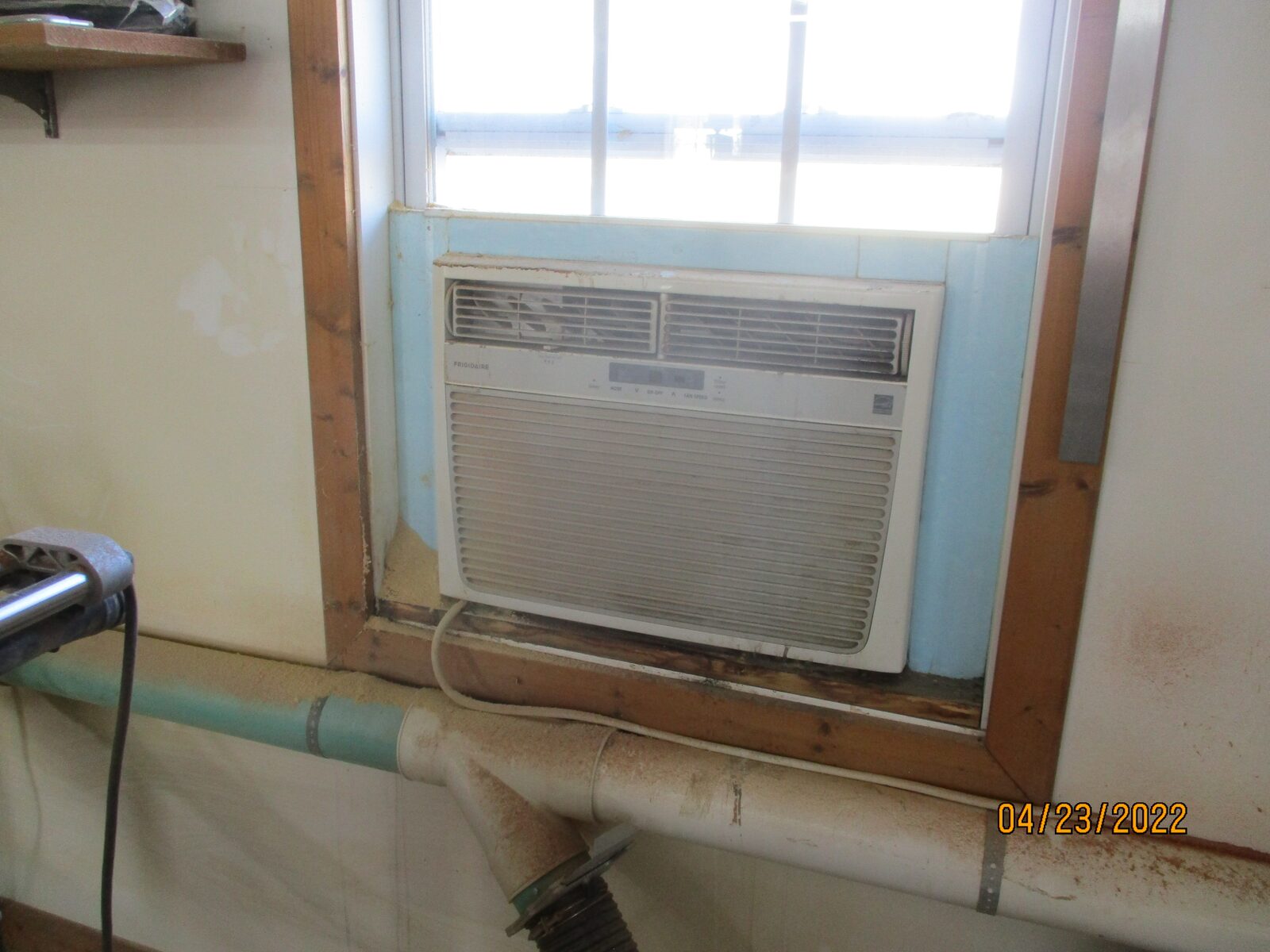

- Confirm the unit is installed as the manufacturer requires.
- Check foam and side panels for gaps.
- Confirm the window closes securely around the installation.
- Replace damaged sealing material.
- Check the portable-AC exhaust hose for disconnection, crushing, or sharp bends.
- Confirm the window kit is sealed.
- Confirm condensate drains or tanks are handled according to the manual.
- Keep curtains away from intakes, outlets, and hot exhaust components.
ENERGY STAR warns that a poorly installed room AC can leak significant air and increase energy use.[3]
Part 6: Check heat entering the home
Windows and sunlight
- Close shades or curtains on windows receiving strong sun.
- Check for obvious gaps around window frames.
- Check whether storm windows or weatherstripping are damaged.
- Note rooms that become much hotter than the rest of the home.
Doors
- Check exterior-door weatherstripping.
- Look for visible daylight around closed doors.
- Confirm frequently used doors close fully.
- Limit unnecessary door opening during extreme heat.
Attic and insulation clues
- Note unusually hot ceilings or upstairs rooms.
- Look for accessible, obvious missing insulation without disturbing hazardous material.
- Check whether an attic hatch closes and seals.
- Do not enter an unsafe attic or disturb suspected asbestos, vermiculite, mold, or damaged wiring.
DOE identifies air sealing, insulation, shading, and efficient windows as important parts of reducing cooling demand.[4]
Part 7: Check hidden or new electrical loads
Mark anything that changed during the bill period:
- Dehumidifier
- Pool or spa pump
- Electric vehicle charging
- Second refrigerator or freezer
- Portable freezer
- More clothes-dryer use
- More oven use
- Home office or gaming equipment
- Guests or additional occupants
- Electric water heating
- Well pump
- Sump pump
- Aquarium or terrarium equipment
- Medical equipment
- Workshop tools
- Space cooling added to a garage, attic, or basement
For compatible 120-volt plug-in devices, an electricity meter can record actual kWh. Follow the meter’s limits and the appliance instructions.
Part 8: Measure one room AC
Record:
- Unit wattage: __________ W
- Local electricity price: $__________ per kWh
- Estimated full-power hours per day: __________
- Days per month: __________
Calculate:
Formula: Monthly cost = (watts ÷ 1,000) × hours per day × days × price per kWh
Example for a 1,000-watt unit, six hours per day, 30 days, at $0.1844/kWh:
Formula: 1.0 × 6 × 30 × $0.1844 = $33.19
For model-specific guidance, use:
- How Much Does a Window AC Cost per Hour?
- How Much Does a Portable AC Cost to Run?
Part 9: Run a short observation test
Choose a representative hot day.
Record:
- Outdoor high temperature: __________
- Indoor starting temperature: __________
- Thermostat setpoint: __________
- Time cooling started: __________
- Time cooling stopped or cycled: __________
- Indoor temperature after one hour: __________
- Indoor temperature after three hours: __________
- Unusual sound, odor, water, or ice: __________
This is not a professional performance test. It creates a basic record for comparison or for a technician.
Stop the test if the equipment appears unsafe.
Part 10: Decide the next action
Call the utility when:
- The meter number is wrong.
- The reading type or correction is unclear.
- The rate plan changed unexpectedly.
- Daily usage data looks impossible.
- A large unexplained adjustment appears.
- You need a payment plan or energy-assistance referral.
Call an HVAC professional when:
- The AC cannot maintain a safe temperature.
- Airflow is weak after filter and vent checks.
- Ice forms.
- Breakers trip.
- The system makes a new electrical or mechanical noise.
- Water leaks from the system.
- The outdoor unit does not run correctly.
- The system is overdue for service.
- You suspect duct leakage or improper sizing.
Contact the landlord or property manager when:
- Cooling equipment supplied with the rental is malfunctioning.
- Windows, exterior doors, or building systems need repair.
- You cannot safely access the filter or equipment.
- The lease assigns HVAC maintenance to the owner.
- Indoor heat may violate local habitability requirements.
Document dates, temperatures, photographs, messages, and service requests.
Heat-safety check
- Confirm every household member has access to a safe cooled space.
- Check on older adults, infants, pregnant people, people living alone, and people with chronic conditions.
- Check pets.
- Know the nearest air-conditioned public location or cooling center.
- Keep drinking water available.
- Do not rely on fan-only cooling when indoor temperature is 90°F or higher.
CDC advises using air conditioning or moving to an air-conditioned location when needed. Even a few hours in a cool place can reduce heat risk.[5]
Seek emergency help for confusion, fainting, seizures, loss of consciousness, or suspected heat stroke.
One-page printable checklist
Bill
- Compare kWh per day
- Compare billing days
- Compare rate and fees
- Check actual versus estimated reading
- Verify account, meter, and rate plan
Cooling system
- Check thermostat setting and schedule
- Set fan mode correctly
- Check or replace filter
- Unblock vents and returns
- Clear outdoor-unit airflow
- Check room-AC or portable-AC seals
- Note ice, leaks, noise, odor, or weak airflow
Home
- Close shades against strong sun
- Check doors and windows for gaps
- Reduce oven and heat-producing appliance use
- Check new or seasonal electrical loads
- Measure compatible plug-in devices
- Record indoor temperature and AC behavior
Action
- Call utility for billing or meter problems
- Call technician for equipment problems
- Contact landlord for building or supplied-equipment problems
- Keep a safe cooling plan during extreme heat
Related guides and tool
- Diagnose a high summer electric bill
- Calculate window AC operating cost
- Calculate portable AC operating cost
- Compare fan and air-conditioner cost
- Decide whether to turn the AC off
- Compare household energy benchmarks
Source notes
- Top 11 Things You Didn’t Know About Saving Energy at Home: Summer EditionU.S. Department of Energy
- Maintenance ChecklistENERGY STAR
- Room Air ConditionersENERGY STAR
- Home CoolingU.S. Department of Energy
- About Heat and Your HealthCenters for Disease Control and Prevention
See something wrong or out of date? Report a correction.