
Can You Plug a Space Heater Into a Power Strip?
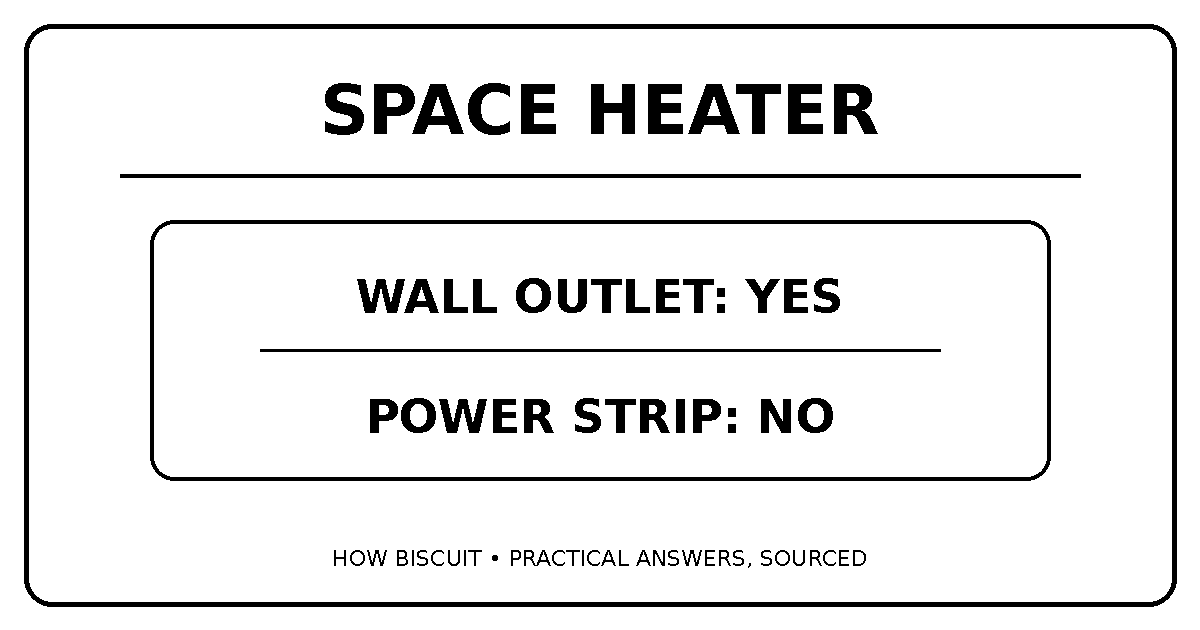
No. Plug a portable electric space heater directly into a wall outlet. Do not use a power strip or extension cord, and do not plug anything else into the same outlet if the heater’s instructions warn against it.
What to know
- Portable electric heaters should go directly into a wall outlet.
- Power strips and extension cords can overheat when asked to carry a heater’s sustained high load.
- Keep the heater at least three feet from combustible materials and turn it off before sleeping or leaving.
- If the factory cord will not reach safely, move the heater or use a different wall outlet rather than improvising.
A portable electric space heater should be plugged directly into a wall outlet. Do not plug it into a power strip, surge protector, cube tap, or extension cord. The U.S. Consumer Product Safety Commission gives that instruction explicitly because a heater can draw a large, sustained electrical load and overheat an intermediate cord or connection. [1]
That rule is inconvenient when the heater’s factory cord is short. It is still the safest answer.
Why a power strip is a bad match for a space heater
Many portable heaters are rated around 1,500 watts on their highest setting. On a typical 120-volt household circuit, that is a substantial continuous load. A power strip adds more contact points, internal wiring, a plug, and often a long flexible cord between the heater and the wall. Any undersized conductor, loose connection, damaged receptacle, or poor-quality component can become hot.
A strip having several empty outlets does not mean it has spare electrical capacity. The number of sockets is not the same thing as the amount of current the strip, outlet, or branch circuit can safely carry.
CPSC has repeatedly warned that defective or overloaded power strips can create fire and shock hazards. A 2026 recall, for example, involved strips that lacked supplementary overcurrent protection and could catch fire if overloaded. [2]
What about a surge protector?
A surge protector is still a type of cord-connected power strip. Its added components are intended to limit brief voltage surges. They do not turn the strip into a suitable heater circuit.
Surge protection addresses a different problem from sustained heating caused by current flowing through wiring and connections. A surge protector may protect electronics from certain transient voltage events, but it does not make plugging a 1,500-watt heater into a strip acceptable.
What to do when the heater cord will not reach
Use one of these options instead:
- Move the heater closer to a suitable wall outlet.
- Move furniture so the heater can sit safely without stretching its cord across a walkway.
- Use a different room or outlet on an appropriate circuit.
- Choose a heater whose factory cord and installation instructions fit the space.
- Ask a qualified electrician about adding or repairing a receptacle if the room lacks a safe one.
Do not run the cord under a rug, carpet, door, or furniture. Do not coil extra cord tightly while the heater operates. Keep the plug fully seated in the outlet.
Check the wall outlet while the heater is running
The wall connection itself can be a problem. Stop using the heater and unplug it if you notice:
- a hot plug or outlet face;
- discoloration;
- buzzing, crackling, or a burning smell;
- a plug that fits loosely;
- sparks;
- repeated breaker trips;
- a damaged cord or plug.
Do not keep resetting a breaker without finding the cause. A breaker is not an annoyance-removal button; it is reporting that something may be wrong.
The rest of the heater setup matters too
CPSC recommends keeping portable heaters at least three feet from bedding, drapes, furniture, and other combustible materials. It also advises turning heaters off while sleeping. [1]
Place the heater on a stable, level surface where it cannot be knocked over. Keep children and pets away. Do not use an indoor electric heater in a wet location unless the product is specifically designed and listed for that use.
Can two heaters share one circuit?
Even when each heater is plugged into a separate wall outlet, both outlets may be on the same branch circuit. Two high-power heaters can overload that circuit. If lights dim, a plug gets warm, or the breaker trips, stop and reassess rather than moving one plug to a nearby outlet and hoping the wiring has developed new physics.
Bottom line
Plug a portable electric space heater directly into a sound wall outlet. Do not use a power strip, surge protector, or extension cord. If the factory cord cannot reach, change the heater’s location or the electrical setup rather than inserting another cord between a high-load appliance and the wall.
Limits and cautions
- This guidance applies to ordinary portable electric space heaters in U.S. homes.
- Always follow the heater manufacturer’s instructions and rating label.
- Damaged, loose, hot, discolored, or sparking outlets require professional attention.
Source notes
- Keep Warm and Safe This Winter: Tips for Using Generators, Furnaces and Space HeatersU.S. Consumer Product Safety Commission
- CCCEI Brand Power Strips Recalled Due to Risk of Serious Injury or Death from FireU.S. Consumer Product Safety Commission
See something wrong or out of date? Report a correction.