
Can You Mix Bleach and Vinegar?
No. Never mix chlorine bleach with vinegar or any other cleaner. The combination can release toxic chlorine gas. If they were mixed, leave the area immediately for fresh air and get emergency or poison-control guidance.
What to know
- Never combine chlorine bleach and vinegar.
- Do not add another chemical to neutralize a mixture.
- After an accidental mix, leave for fresh air without lingering to clean up.
- Call emergency services for severe breathing trouble and contact Poison Control for case-specific guidance.
Never mix chlorine bleach and vinegar. Acidifying chlorine bleach can release chlorine gas, which can injure the eyes and airways. Poison Control specifically warns that mixing vinegar with chlorine bleach releases chlorine gas. [2] The CDC’s broader rule is never to mix household bleach with any other cleaner or disinfectant. [1]
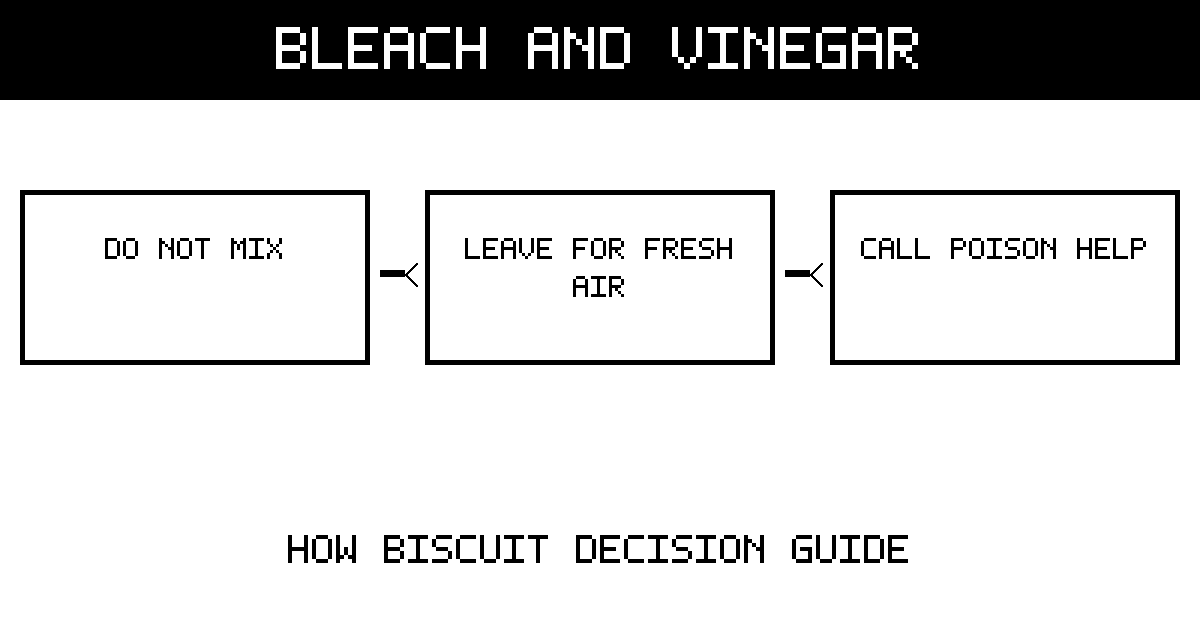
Treat the diagram as an emergency sequence, not a cleanup recipe: do not mix, leave for fresh air, and obtain case-specific help.
If the products have already been mixed
- Stop and leave the area immediately. Move to fresh air. Do not remain indoors to investigate the odor, take photographs, open containers, or finish cleaning.
- Get other people and pets out without delaying your own exit. Avoid sending someone else into the contaminated space.
- Call 911 for severe symptoms. Trouble breathing, chest tightness, collapse, confusion, or other severe distress needs emergency care.
- Contact Poison Control in the United States at 1-800-222-1222 or use Poison.org for case-specific guidance. They can ask what products, amounts, symptoms, and ventilation are involved.
- Do not re-enter merely because the odor seems weaker. A remote article cannot establish a safe concentration or safe re-entry time.
The CDC says that after an indoor chlorine release, a person should get out of the building and seek higher ground if that can be done safely, because chlorine gas is heavier than air. [3] Follow emergency responders or Poison Control rather than improvising ventilation in a contaminated room.
Do not try to neutralize it
Do not pour in baking soda, ammonia, alcohol, more vinegar, more bleach, or another household chemical. Adding material can create splashing, heat, or another hazardous reaction. Do not lean over the container, carry it through the home, or use a wet/dry vacuum on it.
If the mixture contacted skin or eyes, move away from the source and follow Poison Control or emergency instructions. The CDC chlorine guidance includes removing contaminated clothing and rinsing exposed skin, but exact action depends on the route of exposure and whether other chemicals are present. [3]
How accidental mixing happens
The obvious scenario is pouring vinegar into a bleach solution. Less obvious cases include applying bleach to a surface that still holds an acidic cleaner; using two toilet-bowl products in sequence; combining unlabeled spray bottles; pouring cleaners together in a bucket or drain; or assuming two familiar household products are compatible.
Vinegar is an acid. Product branding, scent, or a small quantity does not make the combination safe.
A safer cleaning rule
Use one product at a time and follow its label. Read the active ingredients and warnings before use. Provide the ventilation and personal protection the label specifies. If a surface needs a separate cleaning step before disinfection, complete it with an allowed product, rinse if the label requires it, and never overlap chemicals.
For ordinary bleach disinfection, the CDC recommends good ventilation, following label dilution instructions, using room-temperature water unless the label says otherwise, and making a fresh diluted solution on the recommended schedule. [1] Those instructions do not make bleach appropriate for every surface.
Store products in their original labeled containers. Never transfer cleaners into food or drink bottles, and keep them away from children and pets.
Bottom line
Bleach and vinegar are not a stronger cleaner together; they are an unsafe chemical combination. Never mix them, never add a third chemical to fix an accidental mixture, and do not linger to clean after a release. Move to fresh air, call emergency services for severe symptoms, and contact Poison Control for guidance tailored to the actual exposure.
Limits and cautions
- This article addresses household chlorine-bleach products; ingredient labels govern unidentified products.
- Exposure response depends on concentration, ventilation, symptoms, and individual health.
- Remote guidance cannot determine whether an indoor space is safe to re-enter.
Source notes
- Cleaning and Disinfecting with BleachCenters for Disease Control and Prevention
- VinegarPoison Control
- ChlorineCenters for Disease Control and Prevention
See something wrong or out of date? Report a correction.