
Why Does My GFCI Outlet Keep Tripping?
A GFCI usually trips because it detects current taking an unintended path. Unplug downstream devices, reset it once when the area is dry, and reconnect devices one at a time. If it will not reset or trips again with nothing connected, stop and call a qualified electrician.
What to know
- A GFCI trip is a protective response, not merely a nuisance.
- Unplug connected devices and correct visible moisture before one reset attempt.
- A single appliance that retriggers the GFCI should remain unplugged.
- A GFCI that will not reset or trips unloaded needs qualified inspection.
A GFCI outlet that keeps tripping is usually responding to current escaping its intended path. That can happen because of a wet connection, a damaged or faulty appliance, or a wiring problem. A GFCI compares current flowing out and back and opens the circuit when the difference indicates a possible ground fault. [1]
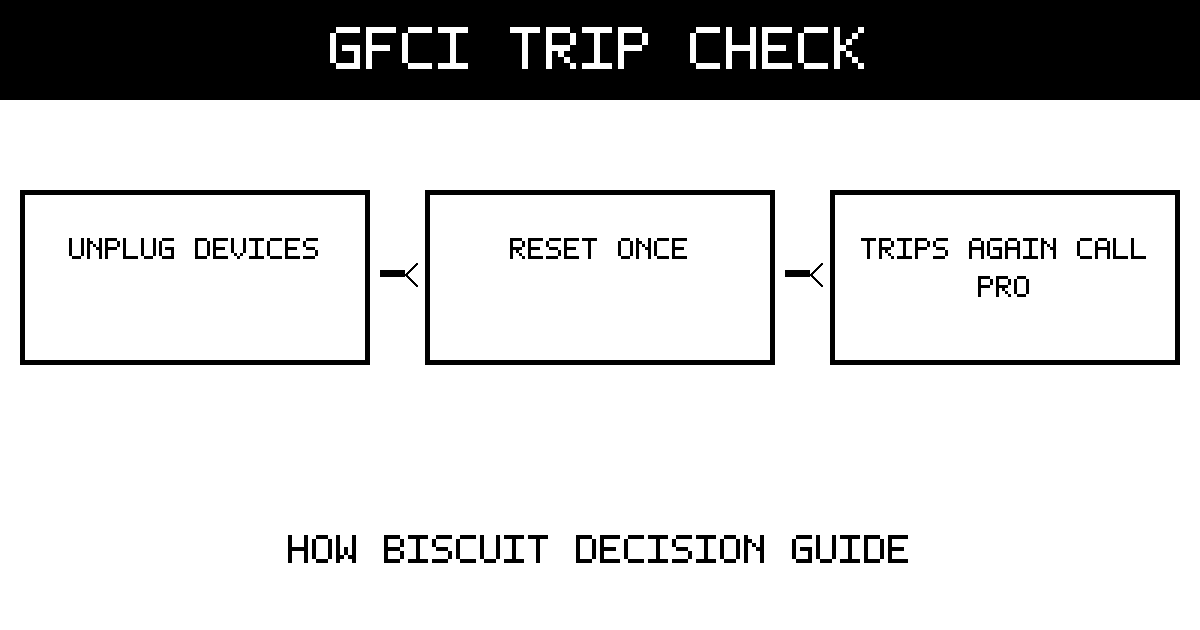
Use the diagram as a stop rule: unplug loads, make one controlled reset attempt, and escalate if the protection operates again.
First, check for immediate danger
Do not touch a wet receptacle, appliance, plug, or cord. If water is actively entering the area, keep away and have power made safe by a qualified person. Stop if you see scorching, melting, sparks, smoke, a burning smell, or a cracked receptacle. Those are not reset-and-observe situations.
A GFCI can protect more than the sockets on its face. Other receptacles or fixed equipment may be connected downstream, so “nothing plugged into this outlet” does not always mean the protected circuit is unloaded.
A safe isolation sequence
- Unplug portable devices on the affected protected circuit. Check nearby kitchen, bathroom, garage, basement, outdoor, and laundry receptacles that may have lost power at the same time.
- Let visible moisture conditions end. Do not use a hair dryer or improvised heat source on a receptacle.
- Press RESET once, with dry hands and from a dry location. Some devices require firm pressure. Follow the markings and manufacturer instructions.
- If it resets, reconnect one portable device at a time. Wait long enough to observe normal operation before adding the next device.
- If one device causes another trip, unplug and stop using that device. The trip identifies a suspect; it does not prove the exact internal defect.
- If the GFCI will not reset or trips again with portable loads removed, call a qualified electrician. Leviton’s homeowner guidance likewise recommends isolating appliances and obtaining professional help when repeated trips continue. [2]
Do not hold the reset button in, tape it, replace the device with an ordinary receptacle, or bypass its protection. Electrical Safety Foundation International notes that GFCIs are intended to reduce shock risk in areas where electricity and water may meet. [3]
What repeated timing can suggest
An immediate trip when one appliance is connected makes that appliance or its cord a useful suspect. A trip during rain may point toward moisture at an outdoor device or enclosure. A trip only when several appliances operate can reflect a different circuit problem. These patterns help a professional reproduce the fault; they are not a license to open wiring or declare a diagnosis.
Write down what was running, whether the area was damp, which outlets lost power, and whether the trip happened immediately or after several minutes. That evidence is more useful than repeated resets.
Test the device as directed
GFCI receptacles have TEST and RESET controls. Use the device manufacturer’s schedule and method; if the test does not cut power or the reset does not restore it as specified, arrange replacement by a qualified person. A successful button test confirms a limited protective function at that moment. It does not inspect every downstream connection.
Bottom line
One trip can be isolated cautiously. Repeated trips are information. Remove loads, correct obvious moisture without touching energized equipment, reset once, and reconnect devices one at a time. If the device will not reset, trips with loads removed, or shows damage, leave the circuit alone and call a qualified electrician.
Limits and cautions
- This is a safe isolation guide, not instructions for opening a receptacle or electrical panel.
- A reset cannot establish that concealed wiring is sound.
- Manufacturer test instructions and local electrical requirements control the installation.
Source notes
- What Are Ground Faults?Leviton
- What to Do When Your GFCI Trips: A Homeowner's GuideLeviton
- Home SafetyElectrical Safety Foundation International
See something wrong or out of date? Report a correction.