
Can You Freeze Milk?
Yes. Freeze pasteurized milk before its use-by date in a freezer-safe container with room for expansion. Thaw it in the refrigerator, not on the counter, and expect some separation or texture change.
What to know
- Freeze only fresh pasteurized milk in a freezer-safe container.
- Leave headspace because milk expands as it freezes.
- Thaw in the refrigerator and keep it cold.
- Shake or blend thawed milk if the fat and liquid separate.
Yes, you can freeze fresh pasteurized milk. Move it into a freezer-safe container if its original package is not suitable, leave space for expansion, and thaw it in the refrigerator. Freezing may cause the fat and liquid to separate, so thawed milk may need shaking or blending and may work better in cooking than as a drink. University of Missouri Extension gives those same preparation and quality cautions. [1]
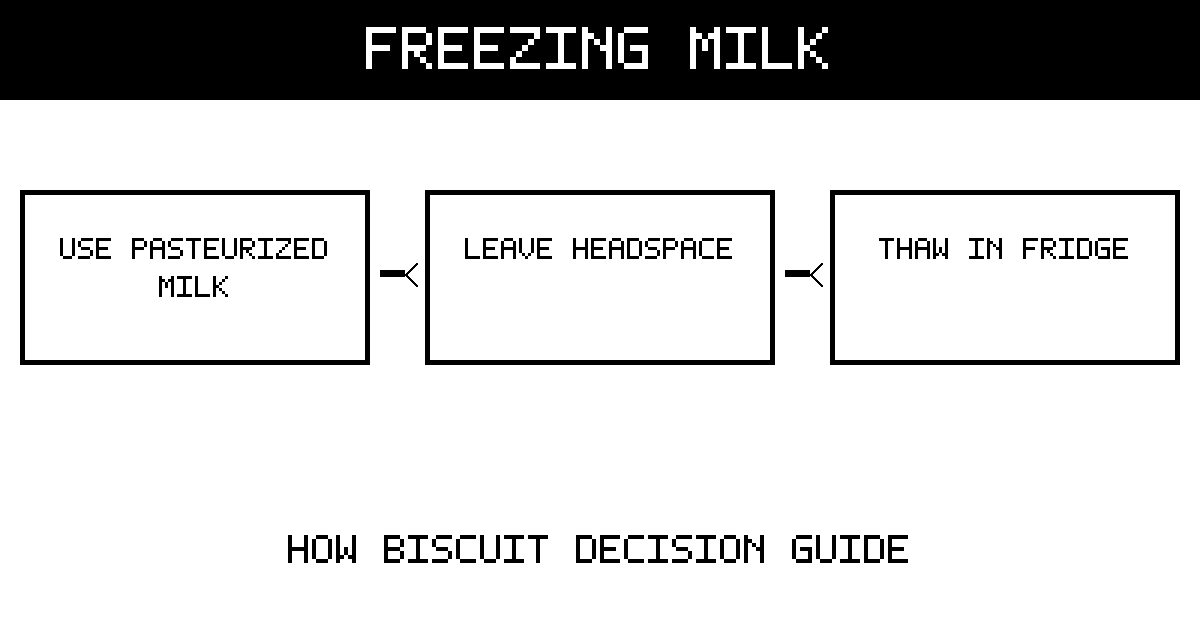
The diagram shows the three controls that matter most: start with safe milk, make room for expansion, and keep thawing cold.
Before freezing
Freeze milk while it is still fresh and within its labeled storage period. Freezing does not reverse spoilage, destroy every microorganism, or turn mishandled milk into safe milk.
Choose a clean container intended for freezer use. Liquid expands as it freezes, so do not fill a rigid container to the brim. Missouri Extension advises leaving headspace and notes that glass containers can break if they are overfilled or not freezer-safe. [2]
Smaller portions are practical because they freeze and thaw more evenly and let you thaw only what you need. Label each container with the contents and freezing date. Keep the freezer at 0°F or below, the standard home-freezer target cited in the extension guidance. [2]
What about the original carton?
A plastic jug may have some built-in expansion room, but package design varies. Paper cartons and some specialty packages may not tolerate freezing, expansion, or condensation well. The safest general rule is to follow the package instructions; if they do not address freezing, use a clean freezer-safe container and leave headspace.
Do not freeze a swollen, leaking, damaged, or previously opened container that has been left warm. Pouring milk into a new container does not erase its earlier temperature history.
How to thaw frozen milk
Thaw milk in the refrigerator. The National Center for Home Food Preservation identifies refrigerator thawing as a safe method because the food stays cold during the process. [3] A large container can take substantial time, so plan ahead.
Do not thaw milk on the kitchen counter or in warm water. The outside can warm into an unsafe temperature range while the center remains frozen. Keep the container over a plate or tray in case it leaks.
Once thawed, shake the closed container vigorously or blend the milk briefly if separation remains. University of Missouri Extension notes that the texture may not be identical to fresh milk even after remixing. [1] Separation is a quality change by itself, not proof of spoilage.
How long to keep it
Freezer time affects quality more than safety while the milk remains continuously frozen, but household guidance differs on a preferred quality window. Use the shorter period stated by the milk producer or your extension source, label the date, and rotate older containers first.
After refrigerator thawing, keep the milk refrigerated and use it promptly. Missouri Extension’s guide advises using thawed milk within a few days. [1] Discard it if it has a clearly spoiled odor, unusual curdling unrelated to ordinary separation, a damaged container, or an uncertain warm-storage history. Do not taste questionable milk to decide.
Best uses for thawed milk
If the texture is slightly grainy or separated, use it in soup, sauce, pancakes, bread, or another cooked recipe where texture is less noticeable. This is a quality suggestion, not a claim that cooking rescues spoiled milk.
Infant formula, human milk, medical nutrition products, and specialized dairy or nondairy beverages have product-specific handling rules. Follow their labels and professional guidance rather than applying this general milk article.
Bottom line
Freeze fresh pasteurized milk in clean freezer-safe portions with room to expand. Label it, keep it at 0°F or below, thaw it in the refrigerator, and shake or blend it after thawing. Expect a possible texture change and use thawed milk promptly while it remains cold.
Limits and cautions
- Freezing preserves milk but does not make spoiled milk safe.
- Quality after thawing varies with milk type, storage time, and use.
- Follow package directions for specialty, infant, or medically prescribed products.
Source notes
- Freezing Home-Prepared FoodsUniversity of Missouri Extension
- Freezing Offers Milk Lovers an Option for Stocking UpUniversity of Missouri Extension
- Thawing and Preparing Foods for ServingNational Center for Home Food Preservation
See something wrong or out of date? Report a correction.