
Why Is My Washing Machine Shaking or Walking?
Pause the washer first. Redistribute or reduce the load, confirm that all feet contact a firm level floor, and check the installation instructions for shipping bolts. Stop using the machine if it bangs violently, leaks, grinds, or continues moving after those checks.
What to know
- Pause a washer that begins moving or banging; do not brace it while it runs.
- Redistribute a tangled or one-sided load and avoid overloading.
- Confirm level footing and removal of shipping hardware using the manual.
- Persistent movement, leakage, grinding, or cabinet damage needs service.
A washing machine that starts shaking or “walking” should be paused, not held in place by hand. The common first checks are a lopsided load, too much laundry, feet that are not firmly and evenly supported, and shipping hardware that was never removed. Whirlpool’s troubleshooting guidance identifies those same installation and loading causes. [1]
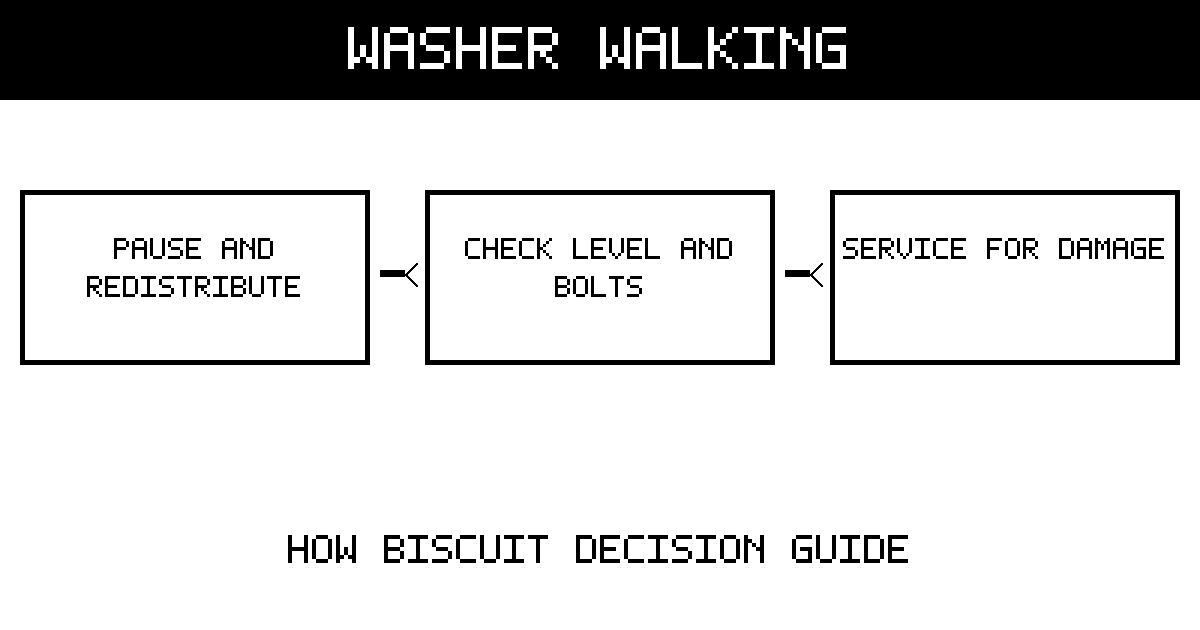
The diagram puts the checks in a safe order. Begin with the load, then the installation, and stop before an internal repair.
1. Pause the cycle
Use the washer’s control to pause or cancel. Wait for the basket or drum to stop and for the lid or door to unlock normally. Do not reach into a moving washer, lean against it, stand on it, or wedge an object beside it while it operates.
If water is leaking toward an outlet, plug, or cord, keep away from the wet electrical area. Use the home’s safe shutoff procedure only if you can do so without entering water or touching wet electrical equipment.
2. Redistribute the load
A single bulky item can hold water on one side. Sheets can wrap around other items. A small load can also clump instead of balancing. Separate tangled items, spread them around the basket or drum, and add or remove items only as the model’s instructions allow.
Do not pack the washer beyond its stated capacity. An overloaded load may not redistribute well and can stress the machine. Whirlpool recommends balancing items and avoiding overload as early checks for vibration. [1]
Resume at the appropriate point and observe from a safe distance. If the washer runs smoothly, the load distribution was a useful explanation, though recurring imbalance with ordinary loads may still deserve inspection.
3. Check the floor and feet
With the machine stopped, confirm that it does not rock when gently pressed at opposite top corners. All adjustable feet should contact a solid floor, and their lock nuts or locking features should be set according to the installation guide. Use a level in the directions specified by the manufacturer; a cabinet that looks square against a wall can still rock.
Do not improvise a stack of cardboard, loose wood, or folded material under a foot. A soft, flexible, or damaged floor can allow movement even when the cabinet is adjusted. The manufacturer’s product support notes that a washer should be level and all feet should contact the floor. [2]
4. Check for shipping hardware
Newly installed front-load washers commonly use shipping bolts or other transit material to immobilize the tub. Running the washer with that hardware still installed can create severe vibration. Consult the exact installation instructions before identifying or removing anything; the locations and retention requirements vary. Whirlpool lists failure to remove shipping bolts as a vibration cause. [1]
Keep removed shipping parts if the manual says they are needed for a future move. Do not remove ordinary structural fasteners because they resemble a picture from another model.
5. Know when to stop
Arrange service if the washer walks or bangs after a balanced load and correct leveling; makes grinding, scraping, or repeated metal impacts; leaks, smells burned, or shows a damaged cord or plug; has a visibly loose drum, damaged cabinet, or broken foot; or began shaking suddenly after previously normal operation.
Internal suspension, bearing, drive, or mounting problems cannot be distinguished safely from the outside in every model. Unplugging alone does not make disassembly appropriate.
Bottom line
Most user-level fixes are simple and external: stop, redistribute, reduce the load, and verify firm level footing and correct installation. Do not physically restrain a running washer. If movement persists after the manual’s load and installation checks—or if there is leakage, grinding, damage, or an electrical warning sign—leave it off and arrange qualified service.
Limits and cautions
- Exact leveling, shipping-hardware, and load instructions vary by model.
- This guide does not authorize removing panels or working under an energized appliance.
- Structural floor movement and internal mechanical faults require separate diagnosis.
Source notes
See something wrong or out of date? Report a correction.