
Air Fryer vs. Oven Electricity Cost
Compare wattage multiplied by active time for the amount of food you actually cook. In one hypothetical example, a 1,500-watt air fryer running 20 minutes costs about 9 cents, while a 3,000-watt oven running at full power for 45 minutes costs about 41 cents at 18.44 cents per kWh. Those are examples, not universal appliance costs.
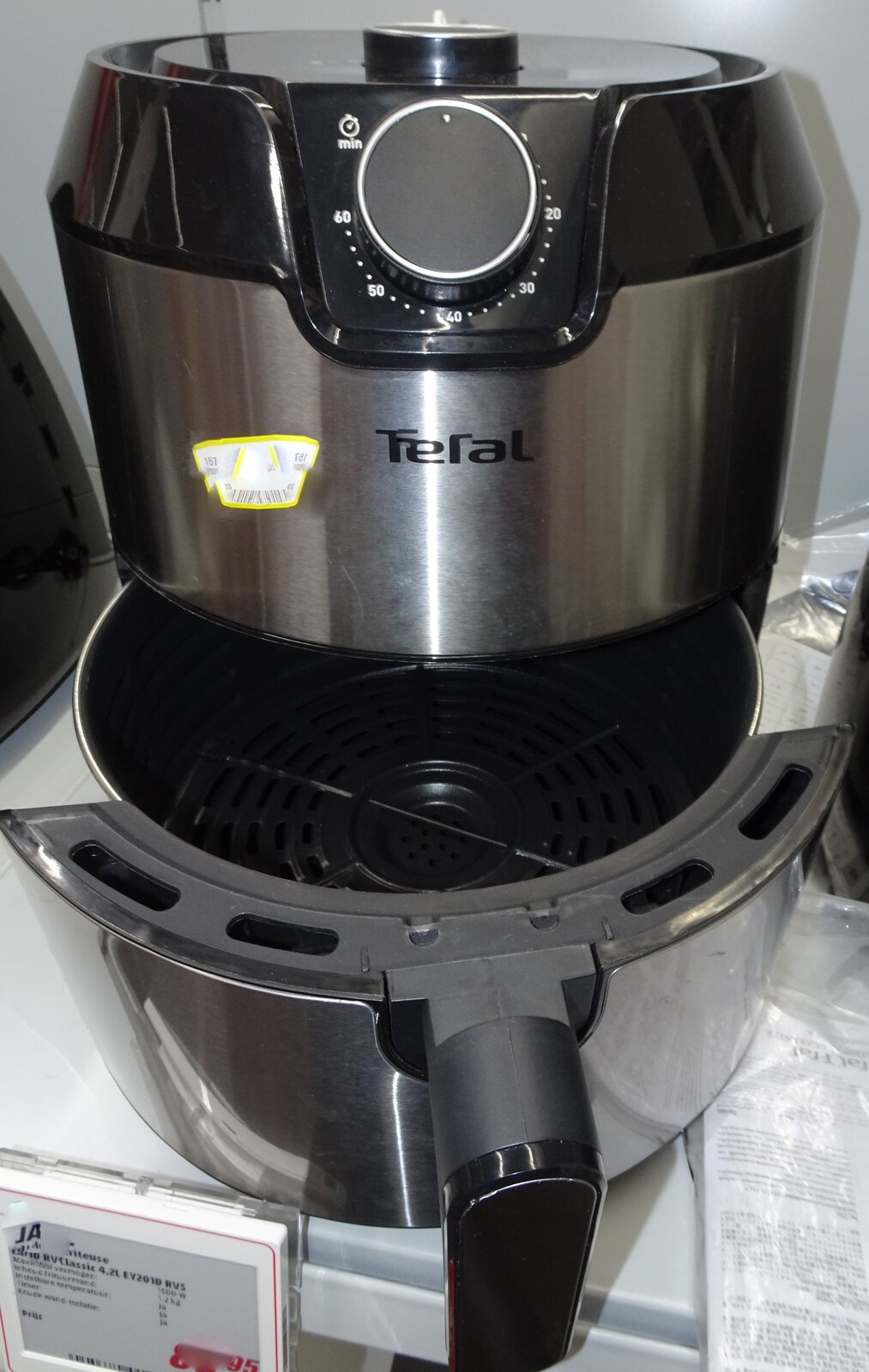

An air fryer often uses less electricity than a full-size electric oven for a small quantity of food because:
- It heats a smaller space.
- It may preheat faster or not require separate preheat.
- It may cook the food in less time.
But the air fryer is not automatically cheaper.
If it requires several batches, the oven may be more efficient per serving.
Quick answer: Compare wattage multiplied by active time for the amount of food you actually cook. In one hypothetical example, a 1,500-watt air fryer running 20 minutes costs about 9 cents, while a 3,000-watt oven running at full power for 45 minutes costs about 41 cents at 18.44 cents per kWh. Those are examples, not universal appliance costs.
The comparison formula
For each appliance:
Cost =
\frac(watts)(1,000)
×
hours
×
rate
Then compare:
- Total cost per batch
- Cost per serving
- Number of batches
- Preheat
- Cooking time
Hypothetical air-fryer example
Suppose:
- Air fryer: 1,500 watts
- Cooking time: 20 minutes
- Electricity: $0.1844 per kWh
Convert time:
20 ÷ 60 = 0.333 hourEnergy:
1.5 × 0.333 = 0.50 kWhCost:
0.50 × $0.1844 = $0.0922About 9 cents.
This assumes continuous 1,500-watt draw. Real controls may cycle.
Hypothetical oven example
Suppose:
- Oven active power: 3,000 watts
- Total active time: 45 minutes
- Electricity: $0.1844 per kWh
3 × 0.75 = 2.25 kWh2.25 × $0.1844 = $0.4149About 41 cents.
Again, a real oven cycles. The full-power estimate may overstate actual energy.
Compare the same amount of food
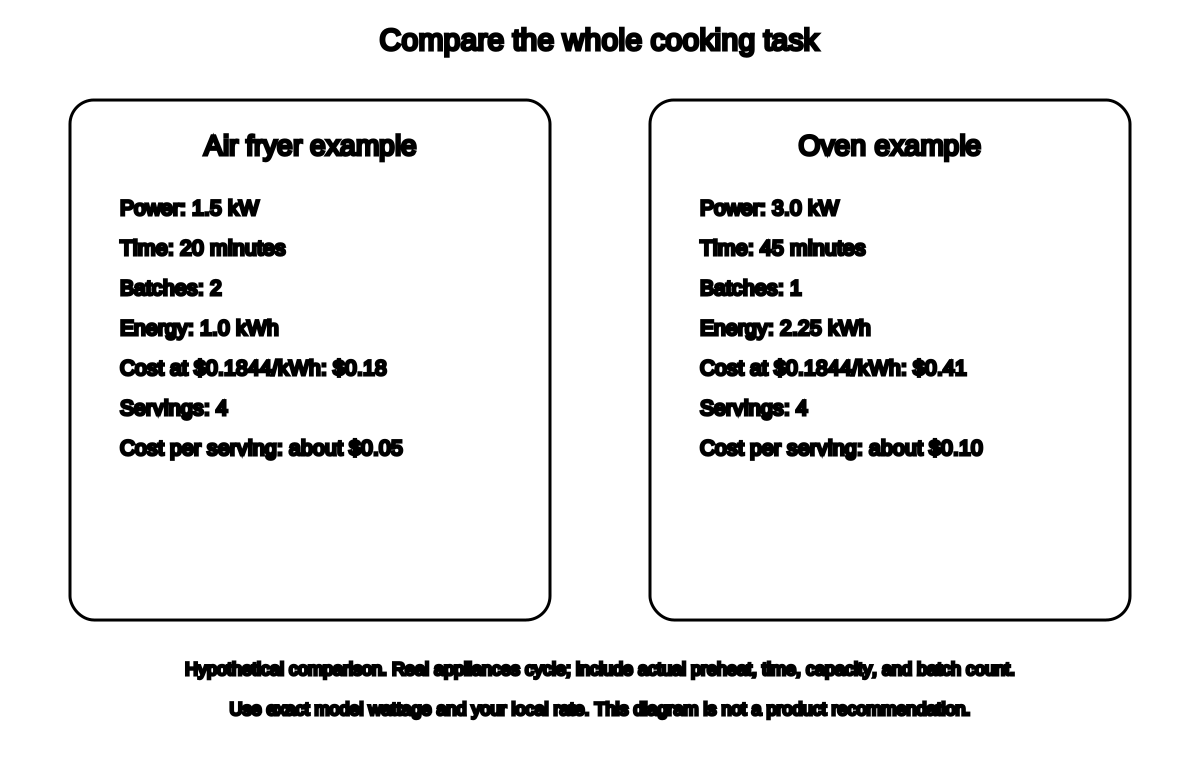
Hypothetical comparison. Use the exact wattage, time, capacity, and local rate for your appliances.
A fair comparison uses the same:
- Food
- Starting temperature
- Doneness
- Serving count
- Recipe
- Safe internal temperature where required
An air fryer cooking two servings is not directly comparable with an oven cooking eight servings.
Cost per serving
Suppose the air-fryer batch makes two servings:
$0.0922 ÷ 2 = $0.0461About 5 cents per serving.
Suppose the oven makes four servings:
$0.4149 ÷ 4 = $0.1037About 10 cents per serving.
If the air fryer needs two batches for four servings:
2 × $0.0922 = $0.1844$0.1844 ÷ 4 = $0.0461Still lower in this hypothetical example, but the margin is smaller.
Change the wattage, time, batches, and rate, and the result changes.
Find exact wattage
For an air fryer, look at:
- Rating label
- Manual
- Manufacturer specification
For an oven, look at:
- Manual
- Specification sheet
- Rating plate
Do not use:
- Breaker size
- Total range maximum load
- Another model’s wattage
- A generic online chart
Air fryers do not generally have EnergyGuide labels
FTC’s current list of EnergyGuide-covered appliances includes refrigerators, dishwashers, clothes washers, and several heating and cooling products, but not countertop air fryers.[1]
That makes model wattage, time, and measured kWh more important.
Use a plug-in meter only when:
- Air fryer is a compatible 120-volt plug-in appliance
- Meter is rated for its load
- Manual permits ordinary plug-in connection
- Outlet and cord are undamaged
Many air fryers draw high current. Do not use an undersized extension cord, power strip, or unapproved smart plug.
Preheat
Some air-fryer recipes require preheat; others do not.
Full-size ovens often require a longer preheat because the cavity and materials are larger.
Include preheat in the comparison:
total energy =
preheat energy
+
cooking energy
Do not omit preheat from one appliance while including it for the other.
Cooking time
Air movement can reduce cooking time for suitable foods.
The result depends on:
- Food shape
- Thickness
- Basket loading
- Temperature
- Appliance
- Recipe
- Desired texture
Do not shorten cooking below safe internal-temperature requirements.
Capacity and batch count
Air-fryer baskets need airflow. Overfilling can:
- Slow cooking
- Reduce browning
- Require shaking
- Produce uneven results
- Force a second cycle
A full-size oven can handle larger trays and multiple dishes.
Compare the whole meal, not one basket.
Heat added to the kitchen
A full-size oven generally releases more heat into the room because it heats a larger appliance and cavity.
During summer, that heat can add to cooling demand.
The exact effect on the electric bill depends on:
- Kitchen ventilation
- Air conditioning
- Weather
- Oven insulation
- Cooking duration
- Air-fryer placement
Do not add a universal “AC penalty” to the calculation.
Food quality and practicality
The lowest electricity cost is not the only criterion.
Consider:
- Texture
- Capacity
- Cleanup
- Noise
- Counter space
- Cooking vessel
- Recipe suitability
- Purchase cost
- Existing appliance ownership
Buying an air fryer solely to save 20 cents per meal can require many meals to recover the purchase cost.
Purchase-payback example
Suppose:
- Air fryer costs $100
- It saves a hypothetical $0.25 per use
- It is used only for meals that otherwise use the oven
Simple uses to recover purchase price:
$100 ÷ $0.25 = 400 usesThis excludes:
- Maintenance
- Replacement
- Financing
- Lost counter space
- Different food quantities
- Meals that would use a microwave or stovetop instead
Do not present a purchase as “free after savings” without a real usage pattern.
When the air fryer likely wins
- Small portion
- Short cooking time
- Little or no preheat
- One batch
- High local electricity price
- Full-size oven would otherwise be used
When the oven may win
- Large meal
- Multiple trays
- Several dishes at one temperature
- Air fryer requires repeated batches
- Oven is already hot
- Convection mode shortens the event
- Food does not fit safely in the basket
Frequently asked questions
Does an air fryer always use less electricity?
No. It often does for small meals, but capacity and repeated batches matter.
Can I compare only wattage?
No. Multiply wattage by time and include preheat and batch count.
Does the oven draw full power continuously?
Usually not. It cycles heating elements.
Can I measure an air fryer with a watt meter?
Only with a meter rated for the appliance and used according to both products’ instructions.
Is buying an air fryer worth it for energy savings?
Calculate purchase payback from your actual meal pattern. Convenience and food quality may matter more than electricity savings.
Related appliance and household-energy guides
Source notes
- How To Use the EnergyGuide Label To Shop for Home AppliancesFederal Trade Commission
- Electric Cooking ProductsENERGY STAR
- Residential Electric Cooking Products Key Product CriteriaENERGY STAR
- Electric Power Monthly: Sales, Revenue, and Average Price of Electricity to Ultimate Customers for May 2026U.S. Energy Information Administration
- Full Text GlossaryU.S. Department of Energy
See something wrong or out of date? Report a correction.