
Does Turning the AC Off Save Money?
For a normal workday, raising the cooling setpoint is usually safer and easier than shutting the system down completely. For a room AC in an unused room, turning it off usually saves energy. During extreme heat, keep people, pets, and the building safe first.
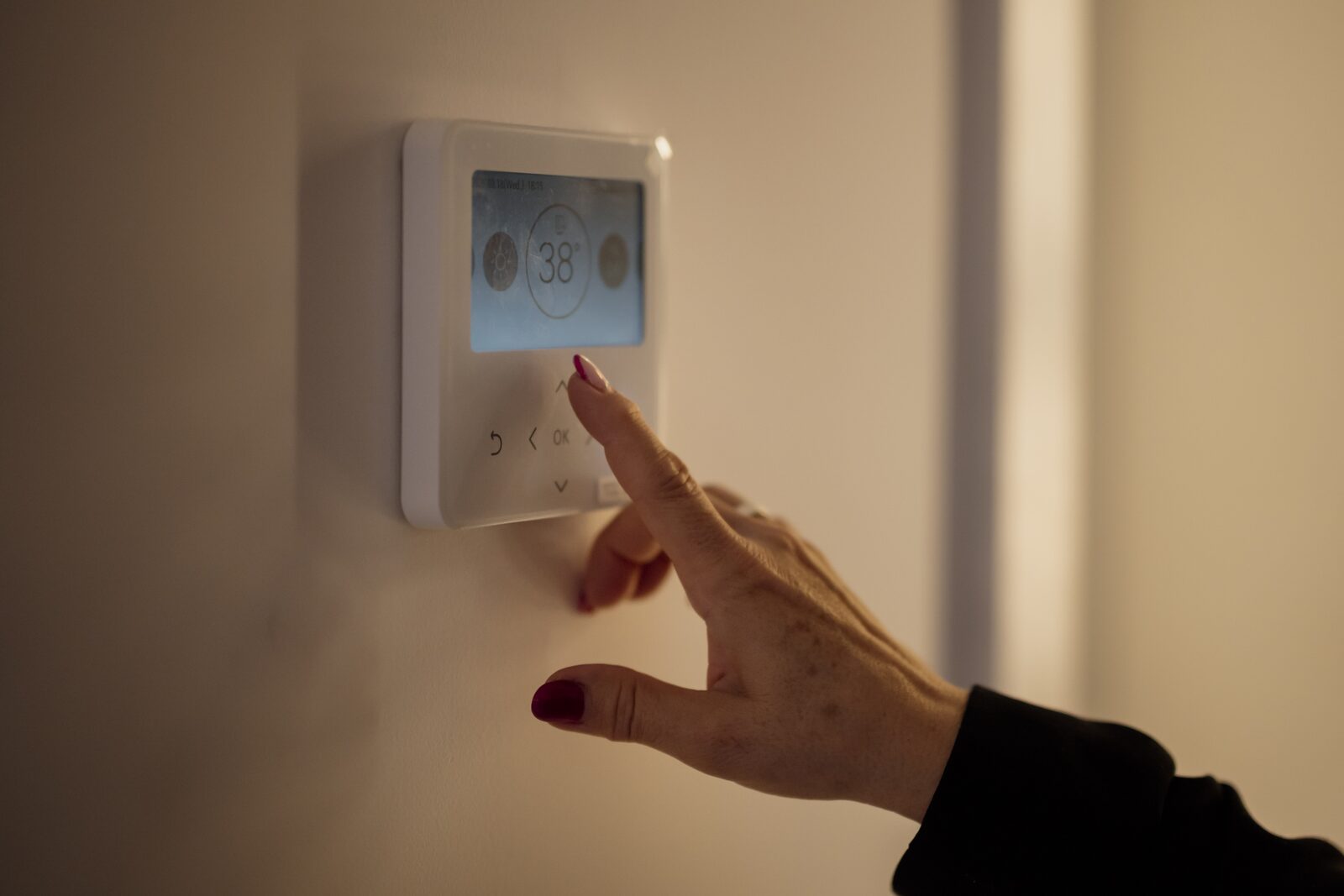

Yes. Turning the air conditioner off, or setting it to a higher temperature while the home is empty, usually reduces electricity use. The longer the AC remains off or at a higher setpoint, the less time the compressor runs.
But “turn it completely off” is not always the best household rule. Extreme heat, humidity, pets, medications, plants, electronics, building conditions, and the length of the absence all matter.
For many homes, the practical compromise is:
- Raise the thermostat while the home is empty
- Schedule cooling to resume before people return
- Keep a safe upper temperature
- Avoid cooling an empty room more than necessary
Quick answer: For a normal workday, raising the cooling setpoint is usually safer and easier than shutting the system down completely. For a room AC in an unused room, turning it off usually saves energy. During extreme heat, keep people, pets, and the building safe first.
Why easing off the AC saves energy
Heat flows from a hotter place toward a cooler place. A simplified heat-flow model is:
Formula: heat-flow rate = UA(T outside - T inside)
where:
- \dotQ is the rate of heat entering
- U represents how easily heat passes through the building
- A represents exposed area
- T outside - T inside is the temperature difference
If the home is held at 72°F while it is 95°F outside, the temperature difference is 23°F.
If the empty home is allowed to rise to 82°F, the difference falls to 13°F. Heat still enters, but more slowly. The AC also spends less time removing that heat while nobody is home.
Re-cooling the home later requires energy, but that does not usually erase the energy avoided during the setback period.
DOE advises using programmable or smart thermostats to reduce heating and cooling when it is not needed. DOE states that setting a thermostat back 7°F to 10°F for eight hours per day can save as much as 10% per year on heating and cooling, though actual savings vary.[1]
“But doesn’t the AC work harder when I get home?”
It may run continuously for a while, but running longer later is not the same as using more energy overall.
Consider two simplified strategies:
Strategy A: Maintain 72°F all day
The AC cycles throughout the day to remove heat as it enters.
Strategy B: Allow the empty home to warm, then cool it later
The AC remains off or runs less during the absence. Because the indoor-outdoor temperature difference is smaller for part of the day, less heat enters than it would have if the home were held at 72°F continuously.
The system may run steadily when cooling resumes, but it is removing accumulated heat rather than paying all day to prevent the temperature from rising.
This assumes the system is functioning normally and the setback does not create another problem.
Off versus higher setting
Turn it off when:
- It is a room AC serving an empty room
- You will be away long enough for the reduced runtime to matter
- Indoor heat and humidity will remain safe
- No pet, person, plant, medication, or equipment needs cooling
- The building does not have a known moisture problem
Use a higher setpoint when:
- Outdoor temperatures are extreme
- Humidity is high
- Pets remain home
- The home contains heat-sensitive medications or equipment
- You want cooling to resume before returning
- The building heats rapidly
- You are concerned about moisture
- You will be away for only part of the day
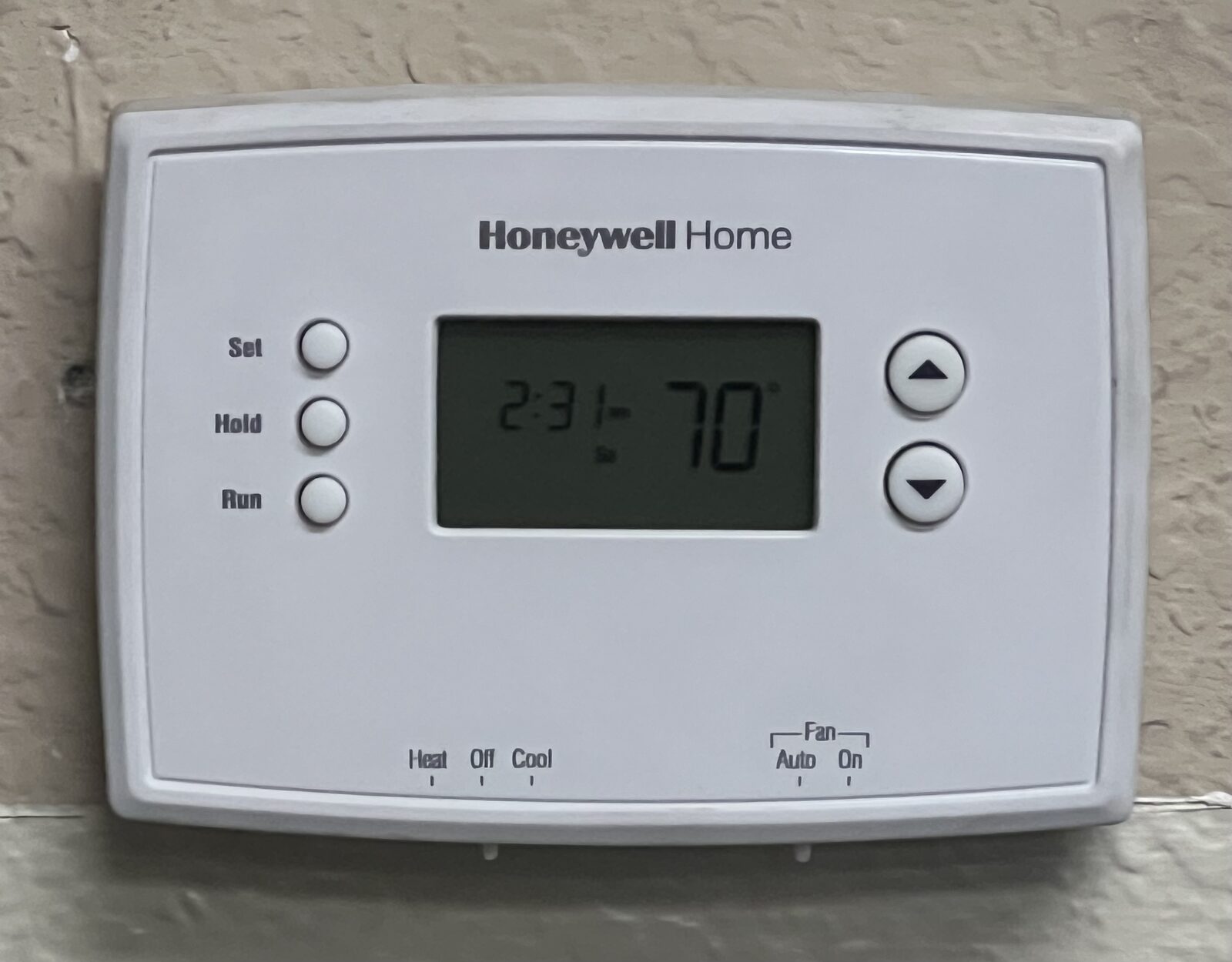
ENERGY STAR smart thermostats can raise the cooling setting when the home is empty and resume cooling before occupants return. Certified models must demonstrate energy savings using real-world field data.[2][3]

What temperature should you use while away?
There is no universal number.
A reasonable away setting depends on:
- Outdoor temperature
- Indoor humidity
- Insulation and air leakage
- Sun exposure
- Pets
- Health conditions
- Building materials
- How long you will be gone
- How quickly your system can recover
- Utility time-of-use pricing
Use the highest temperature that remains safe for the household and property.
Do not blindly copy a thermostat number from another climate or building.
For a one- or two-hour absence
The savings from a major temperature change may be small. Raising the setting a few degrees can still reduce runtime, but convenience and recovery time matter.
Do not repeatedly switch a compressor off and immediately back on. Many modern thermostats include anti-short-cycle protection. Follow equipment instructions.
For a normal workday
This is the strongest case for a scheduled setback.
A simple schedule might:
- Raise the setting shortly before the home becomes empty
- Maintain the higher setting during the day
- Resume cooling before occupants return
Smart thermostats may use schedules, occupancy sensors, or geofencing. A basic programmable thermostat can do the same thing on a fixed schedule.
For a vacation
Avoid cooling an empty home to the same temperature used when occupied, but do not ignore:
- Indoor humidity
- Pets or house sitters
- Medication storage
- Aquariums
- Houseplants
- Electronics
- Plumbing and building conditions
- Security systems
- Local extreme-heat forecasts
A vacation setpoint or smart-thermostat mode is usually more sensible than simply cutting power to the HVAC system.
Window and portable AC units
For a room AC, the basic logic is straightforward:
- Empty room: turn it off or raise its setpoint
- Occupied room: run it as needed
- Door open to a much larger space: expect longer runtime
- Strong sun or poor sealing: expect longer runtime
A plug-in thermostat or built-in schedule can automate operation, but it must be rated for the appliance. Do not use an ordinary low-power timer or smart plug with a high-current AC unless the device and AC manufacturer explicitly permit it.
Humidity changes the decision
An air conditioner removes moisture while cooling. In a humid climate, turning it off for a long period can allow indoor humidity to rise.
Persistent high humidity can:
- Feel uncomfortable
- Encourage condensation
- Contribute to mold and material damage
- Make the home take longer to feel comfortable after cooling resumes
If moisture is a known problem, use a safe higher setpoint rather than a full shutdown, or use a properly selected dehumidification strategy. A dehumidifier also consumes electricity and adds heat to the room, so it is not a free substitute.
Pets and heat-sensitive occupants
Do not assume an empty-looking home has no cooling needs.
Account for:
- Dogs, cats, birds, and other animals
- Older adults
- Infants
- Pregnancy
- Heart, lung, kidney, or neurologic conditions
- Medications that affect hydration or heat tolerance
- Limited mobility
CDC advises using air conditioning or finding an air-conditioned location during dangerous heat. Fans should be used for body cooling only when indoor temperatures are below 90°F.[4]
How much could a setback save?
The honest answer is: it depends.
Savings vary with:
- Climate
- Building envelope
- HVAC efficiency
- Setpoint change
- Hours away
- Humidity
- Electricity price
- Equipment sizing
- Occupancy
ENERGY STAR reports that certified smart thermostats save about 8% of heating and cooling bills, or roughly $50 per year on average; homes with high heating and cooling bills or long unoccupied periods may save more.[5]
That is an average across homes, not a guarantee for yours.
A practical rule
Use this decision sequence:
-
Is anyone or anything heat-sensitive staying home?
Keep a safe temperature. -
Will indoor humidity become a problem?
Prefer a higher setpoint over full shutdown. -
Will the home be empty for several hours?
Raise the setting or turn off a room AC. -
Can the thermostat restore comfort before you return?
Use a schedule, geofencing, or remote control. -
Is the system running properly?
A struggling system may need maintenance rather than a clever schedule.
Frequently asked questions
Is it cheaper to leave the AC at one temperature all day?
Usually no. Reducing cooling while the home is empty generally reduces runtime and energy use.
Will setting the thermostat very low cool the home faster?
A conventional single-stage system usually cools at the same rate regardless of how far below room temperature the thermostat is set. A very low setting may simply make it run longer and overshoot your comfort target.
Should I turn off central AC at the breaker?
Not for ordinary daily setbacks. Use the thermostat. Cutting power may disable controls, crankcase heaters, condensate management, or other functions. Follow the manufacturer’s instructions.
Should I leave the fan setting on?
For most forced-air systems, Auto runs the blower when heating or cooling is active. On may run it continuously and use more electricity. Some systems have specialized circulation modes.
Can a smart thermostat save money?
An ENERGY STAR certified model has demonstrated energy savings in field data, but savings depend on correct installation, compatibility, schedules, climate, and household behavior.[2][3]
Related guides and tool
- Diagnose a high summer electric bill
- Compare fan and air-conditioner cost
- Calculate window AC operating cost
- Use the printable home energy check
Source notes
- Home UpgradesU.S. Department of Energy
- Smart ThermostatsENERGY STAR
- Smart Thermostats Key Product CriteriaENERGY STAR
- About Heat and Your HealthCenters for Disease Control and Prevention
- Smart Thermostats FAQs for EEPSENERGY STAR
See something wrong or out of date? Report a correction.