
Fan vs. Air Conditioner Cost: How Much Cheaper Is a Fan?
Use a fan when air movement is enough to keep an occupied room comfortable. Use air conditioning when the room itself must be cooled or when heat conditions make fan-only cooling unsafe. Combining a fan with AC can improve comfort and may let you raise the thermostat.
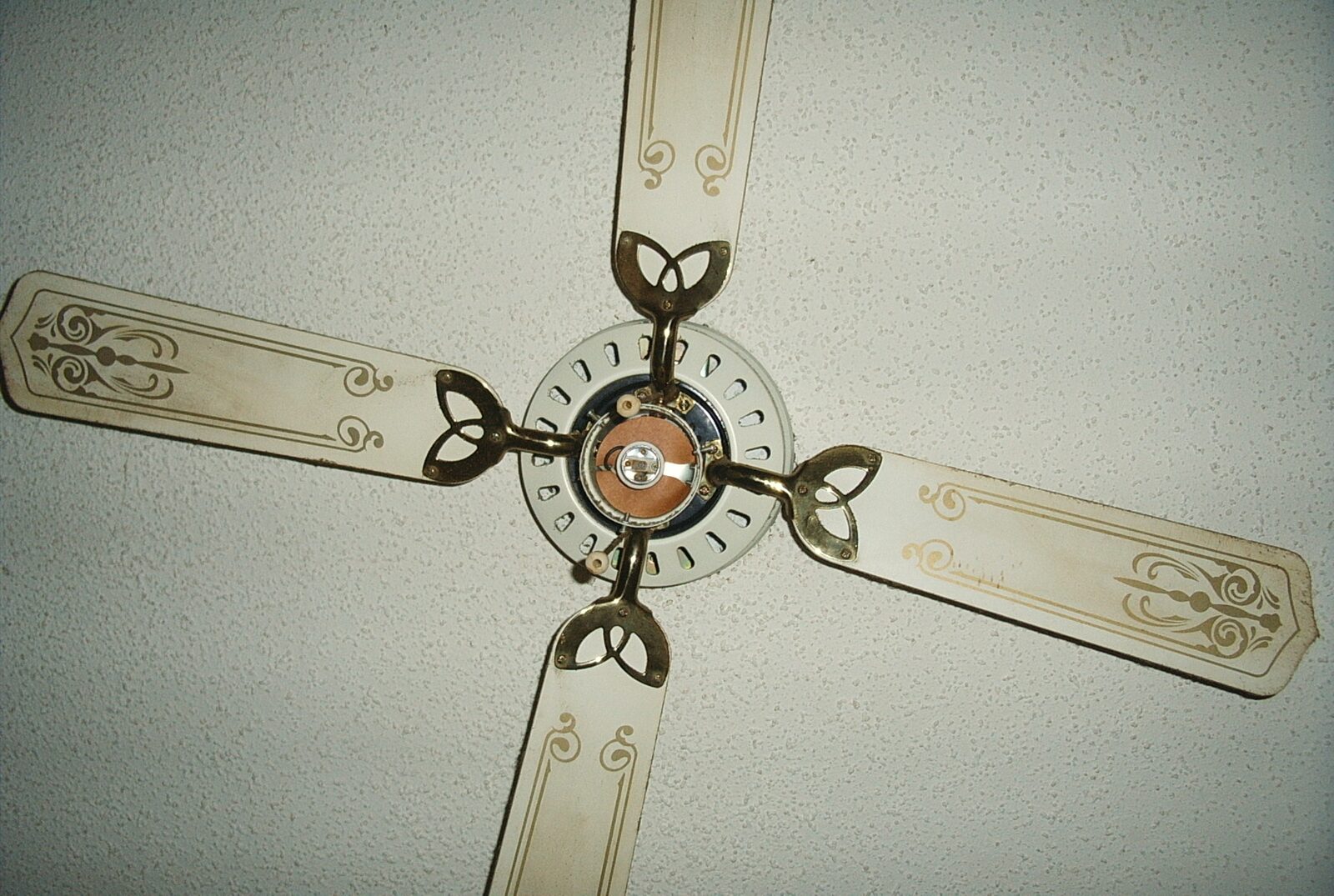

A fan is usually much cheaper to run than an air conditioner because the fan only moves air, while the air conditioner uses a compressor to remove heat and moisture from the room.
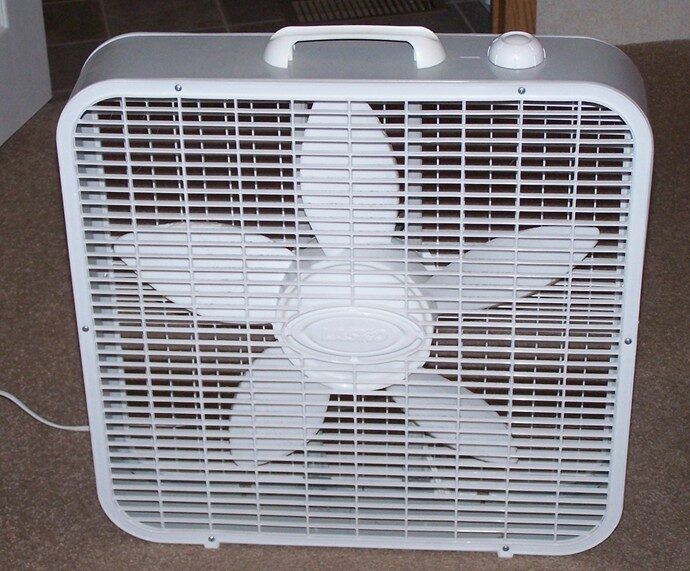

At 18.44 cents per kWh:
- A 50-watt fan costs about 0.9 cents per hour
- A 500-watt window AC costs about 9.2 cents per full-power hour
- A 1,000-watt portable AC costs about 18.4 cents per full-power hour[1]
But this is not a fair comfort comparison in every situation. A fan can make people feel cooler through air movement and evaporation; it does not lower the room’s air temperature. Air conditioning actually transfers heat outdoors and can reduce humidity.
Quick answer: Use a fan when air movement is enough to keep an occupied room comfortable. Use air conditioning when the room itself must be cooled or when heat conditions make fan-only cooling unsafe. Combining a fan with AC can improve comfort and may let you raise the thermostat.
Cost comparison
The examples below assume each device draws the listed power for eight hours per day over 30 days.
| Device example | Power | Cost per hour at $0.1844/kWh | Monthly cost at 8 hours/day |
|---|---|---|---|
| Small or medium fan | 50 watts | $0.009 | $2.21 |
| Window AC | 500 watts | $0.092 | $22.13 |
| Portable AC | 1,000 watts | $0.184 | $44.26 |
The AC figures represent full-power hours. Thermostat-controlled compressors may cycle off, reducing actual energy use. Fan power also varies substantially by size and speed.
Use your own wattage and rate:
Formula: Cost = (watts ÷ 1,000) × hours × price per kWh
Why a fan feels cooler without cooling the room
A fan moves air across your skin. That can:
- Increase evaporation of sweat
- Carry away warm air next to the body
- Make the same room temperature feel more tolerable
The fan motor adds a small amount of heat to the room. When nobody is present, the fan is not providing meaningful cooling comfort. DOE summarizes the rule neatly: fans cool people, not rooms.[2]
Turn fans off in empty rooms.
What an air conditioner does differently
An air conditioner:
- Draws warm indoor air across a cold coil
- Transfers heat to refrigerant
- Rejects that heat outdoors
- Circulates cooled air back into the room
- Removes some moisture as condensate
This requires much more energy than spinning a fan blade, but it changes the indoor environment rather than only changing how moving air feels.
When a fan is the better choice
A fan may be enough when:
- The indoor temperature is moderate
- Air movement makes you comfortable
- Humidity is not overwhelming
- You are sitting in the airflow
- Outdoor air is cooler and safe to bring inside
- The room will be occupied for a short time
- You want to distribute air from a nearby AC
A window fan may help exchange indoor and outdoor air when outdoor conditions are cooler. Do not pull in smoke, severe outdoor air pollution, or very hot humid air merely because the fan fits in the window. Check local conditions.
When air conditioning is the better choice
Use AC when:
- The room temperature itself needs to fall
- Humidity is high
- Heat persists overnight
- The household includes people at elevated heat risk
- Medication or a medical condition affects heat tolerance
- The indoor temperature approaches unsafe levels
- A fan no longer provides relief
CDC advises that fans be used for body cooling only when indoor temperatures are below 90°F. At higher indoor temperatures, fan use can increase body temperature.[3]
That safety threshold is more important than a few dollars of energy savings.
The cheapest practical strategy is often fan plus AC
The devices do not have to be competitors.
DOE states that using a ceiling fan with air conditioning may allow the thermostat setting to be raised by about 4°F without reducing comfort, provided the fan is turned off when the room is empty.[2]
A practical approach:
- Set the AC to the highest temperature that remains comfortable and safe.
- Run a fan where people are present.
- Aim airflow across occupants rather than at an empty wall.
- Turn the fan off when the room is empty.
- Keep doors and windows closed while the AC is actively cooling unless the system is designed otherwise.
The exact savings depend on climate, building conditions, equipment, and how much the thermostat setting changes.
Worked example: fan alone versus AC alone
Suppose:
- Fan: 50 watts
- Window AC: 500 watts
- Electricity: $0.1844 per kWh
- Runtime: eight hours
Fan:
Formula: 0.05 × 8 × $0.1844 = $0.07376
About 7 cents.
Window AC at full power:
Formula: 0.5 × 8 × $0.1844 = $0.7376
About 74 cents.
The window AC costs roughly ten times as much in this illustration, but it is performing a different job.
Worked example: fan plus less AC runtime
Suppose using a fan allows the window AC to accumulate five full-power compressor hours instead of eight.
Fan cost for eight hours:
Formula: 0.05 × 8 × $0.1844 = $0.07376
AC cost for five hours:
Formula: 0.5 × 5 × $0.1844 = $0.461
Combined:
Formula: $0.07376 + $0.461 = $0.53476
That is about 53 cents, compared with about 74 cents for eight full-power AC hours.
This is only an example. The fan does not guarantee a particular reduction in compressor runtime.
Box fan, ceiling fan, or tower fan?
For energy-cost calculations, use the actual wattage. The style matters less than:
- Motor power
- Speed setting
- Airflow
- Where the air goes
- Noise
- Safety and stability
- Whether people are actually in the airflow
Ceiling fans can circulate air over a broad occupied area. A box or pedestal fan can provide strong directional airflow. A small desk fan may use less power and work well for one person.
Do not operate a damaged fan, place it where children can reach moving blades, or use it in wet conditions unless it is rated for that use.
How to choose without guessing
Ask three questions:
1. Is the room temperature safe?
If not, use AC or go to a cooled location.
2. Is air movement enough to make the occupied space comfortable?
If yes, a fan may be the lowest-cost option.
3. Can a fan let you raise the AC setpoint?
If yes, the combination may reduce cost while preserving comfort.
Frequently asked questions
Is it cheaper to run a fan all night or an AC?
A fan generally uses much less electricity. But use AC if the room remains dangerously hot or if fan-only cooling is inadequate for the occupants.
Does a fan cool a room after I leave?
No. It circulates air and adds a small amount of motor heat. Turn it off in an empty room.
Can a fan make AC work better?
A fan can distribute cooled air and improve comfort. That may let you use a higher thermostat setting or cool only the occupied area.
Is a ceiling fan cheaper than a box fan?
It depends on wattage and speed. Read the label or measure energy use.
Is sleeping with a fan safe during extreme heat?
Do not rely on fan-only cooling when the indoor temperature is 90°F or higher. CDC advises using air conditioning or moving to an air-conditioned location when necessary.[3]
Related guides and tool
- Diagnose a high summer electric bill
- Calculate window AC operating cost
- Calculate portable AC operating cost
- Decide whether to turn the AC off
Source notes
- Electric Power Monthly: Sales, Revenue, and Average Price of Electricity to Ultimate Customers for May 2026U.S. Energy Information Administration
- Top 11 Things You Didn’t Know About Saving Energy at Home: Summer EditionU.S. Department of Energy
- About Heat and Your HealthCenters for Disease Control and Prevention
- Home CoolingU.S. Department of Energy
See something wrong or out of date? Report a correction.