
How Much Does a Window AC Cost per Hour?
Find the AC’s watts on its nameplate, EnergyGuide label, manual, or manufacturer specification. Divide watts by 1,000 and multiply by your local price per kWh. Because the compressor cycles, one hour with the unit switched on does not always equal one full-power hour.
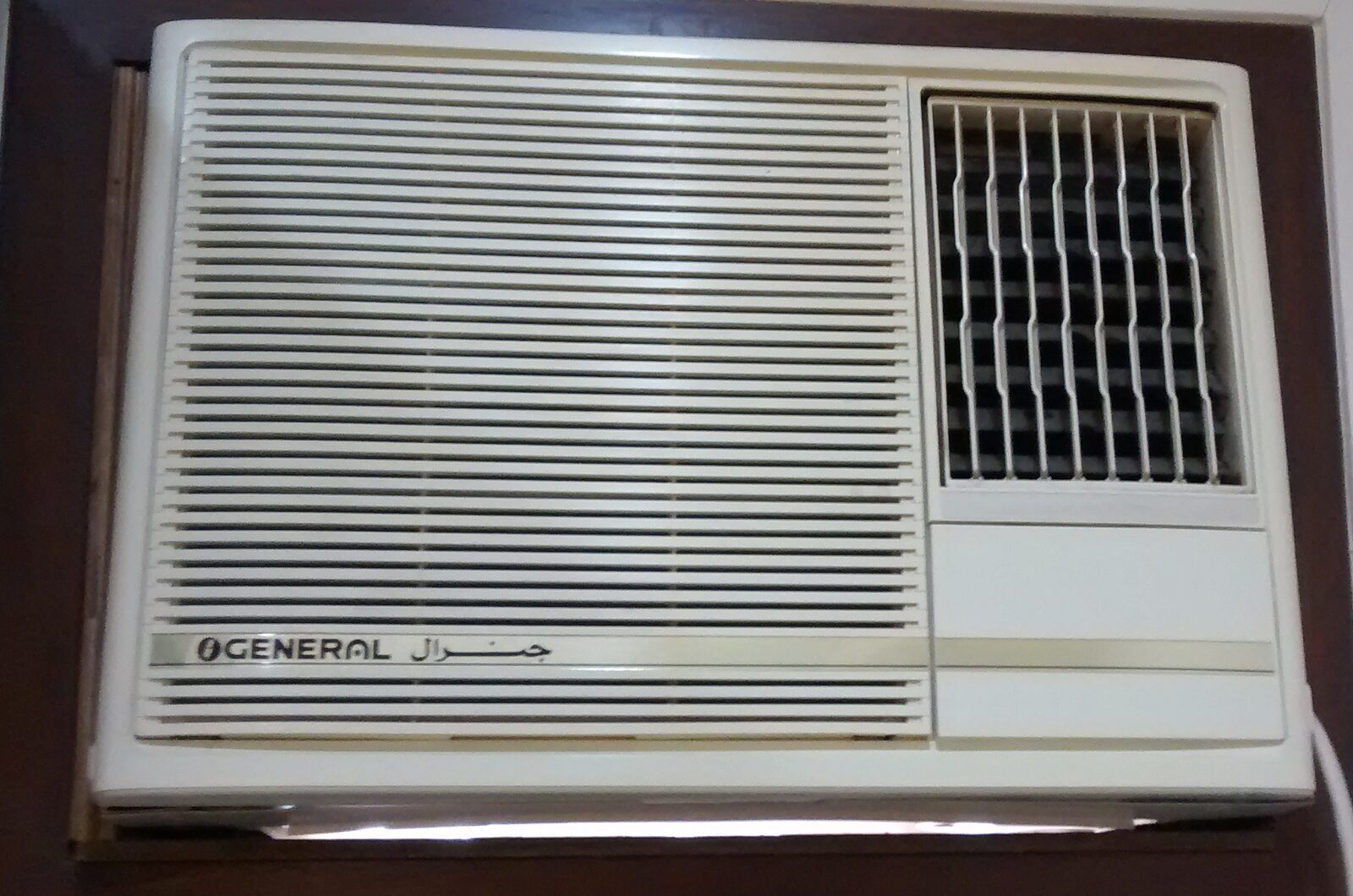

A window air conditioner’s hourly cost depends on two numbers:
- Its electrical power in watts
- Your electricity price per kilowatt-hour
Use:
Formula: Hourly cost = (watts ÷ 1,000) × price per kWh
At the May 2026 U.S. residential average of 18.44 cents per kWh, a 500-watt window AC costs about 9.2 cents per full-power hour. An 800-watt unit costs about 14.8 cents per full-power hour.[1]
Those are worked examples, not national promises. Your local rate and your unit’s actual wattage determine your cost.
Quick answer: Find the AC’s watts on its nameplate, EnergyGuide label, manual, or manufacturer specification. Divide watts by 1,000 and multiply by your local price per kWh. Because the compressor cycles, one hour with the unit switched on does not always equal one full-power hour.
Window AC cost examples
The table below assumes the unit draws the listed power continuously while the compressor is running.
| Window AC power | Cost per full-power hour at $0.1844/kWh | Cost for 8 full-power hours | Cost for 8 hours/day for 30 days |
|---|---|---|---|
| 500 watts | $0.09 | $0.74 | $22.13 |
| 800 watts | $0.15 | $1.18 | $35.40 |
Actual monthly cost can be lower because the compressor turns off after the room reaches the set temperature. It can also be higher if:
- Your electricity rate is higher
- The unit draws more power
- The compressor runs longer than eight hours per day
- The room is sunny, poorly sealed, or too large
- The filter or coils are dirty
- The thermostat is set very low
Step 1: Find the wattage
Look for a label on the side, back, or behind the front grille. It may list:
- Watts
- Cooling input
- Rated input
- Amps and volts
- Annual kWh
- CEER
- Cooling capacity in Btu/h
If watts are listed, use that number.
If only volts and amps are listed, you can make a rough upper estimate:
Formula: watts ≈ volts × amps
For example:
Formula: 115 volts × 6.5 amps = 747.5 watts
This can overstate real running power because alternating-current appliances may have a power factor below 1 and because the rated current can describe a maximum condition. A plug-in electricity meter gives a better measurement for a compatible 120-volt unit.
Never exceed the meter’s current or wattage rating. Do not use a damaged extension cord, power strip, or undersized outlet circuit for an air conditioner. Follow the manufacturer’s installation instructions.
Step 2: Find your electricity price
Use the price on your electric bill, expressed in dollars per kWh.
Examples:
- 15 cents per kWh =
$0.15 - 18.44 cents per kWh =
$0.1844 - 25 cents per kWh =
$0.25
Some bills separate supply and delivery charges. For a quick estimate, divide applicable electricity charges by the number of kWh. Fixed monthly charges complicate this calculation because you pay them even if the AC uses no energy.
EIA publishes state and national average electricity-price data, but your utility bill is the correct source for your personal calculation.[1][2]
Step 3: Estimate compressor runtime
A window AC does not necessarily draw full cooling power for every minute it is turned on.
The compressor cycles based on:
- Indoor temperature
- Outdoor temperature
- Humidity
- Thermostat setting
- Unit size
- Sun exposure
- Air leakage
- Insulation
- Number of occupants
- Heat from cooking and electronics
A unit may be switched on for eight hours but accumulate only five hours of compressor operation. A unit that is undersized or fighting a poorly sealed room may run nearly continuously.
The safest calculation is to show a range:
Formula: Low estimate = full-power hourly cost × estimated compressor hours
Formula: High estimate = full-power hourly cost × total hours switched on
A plug-in energy meter can measure cumulative kWh over a day or week, which automatically captures cycling.
Worked example
Suppose your window AC is rated at 620 watts and your electricity price is 21 cents per kWh.
Formula: 620 ÷ 1,000 = 0.62 kW
Formula: 0.62 × $0.21 = $0.1302
The full-power cost is about 13 cents per hour.
If the compressor runs an estimated five hours per day:
Formula: $0.1302 × 5 = $0.651
That is about 65 cents per day.
Over 30 days:
Formula: $0.651 × 30 = $19.53
If the unit instead runs at full cooling power for ten hours per day, the estimated monthly cost doubles.
What the EnergyGuide label tells you
The yellow EnergyGuide label shows estimated annual energy use or operating cost under a standardized test assumption. It is useful for comparing similar models, but it is not a prediction of your exact bill. FTC notes that actual cost depends on local energy prices and how the appliance is used.[3]
Use the label to compare models, then use your own rate and expected usage for a household estimate.
For shopping comparisons, also look at:
- Cooling capacity in Btu/h
- CEER
- Annual kWh
- Variable-speed operation
- Window dimensions
- Noise
- Controls
- Installation and sealing materials
ENERGY STAR certified room air conditioners are more efficient than minimum federal standards, and many current certified units use variable-speed compressors.[4][5]
Size matters
An oversized AC is not automatically better. ENERGY STAR warns that an oversized room air conditioner can cost more, waste energy, and control humidity poorly.[4]
Its sizing guide gives these baseline capacities for rooms with 8-foot ceilings:
| Room area | Baseline cooling capacity |
|---|---|
| 100–150 sq. ft. | 5,000 Btu/h |
| 150–250 sq. ft. | 6,000 Btu/h |
| 250–300 sq. ft. | 7,000 Btu/h |
| 300–350 sq. ft. | 8,000 Btu/h |
| 350–400 sq. ft. | 9,000 Btu/h |
| 400–450 sq. ft. | 10,000 Btu/h |
| 450–550 sq. ft. | 12,000 Btu/h |
Adjustments may be needed for strong sun, heavy shade, kitchens, high ceilings, and additional occupants.[4]
How to reduce window AC cost
Seal the installation
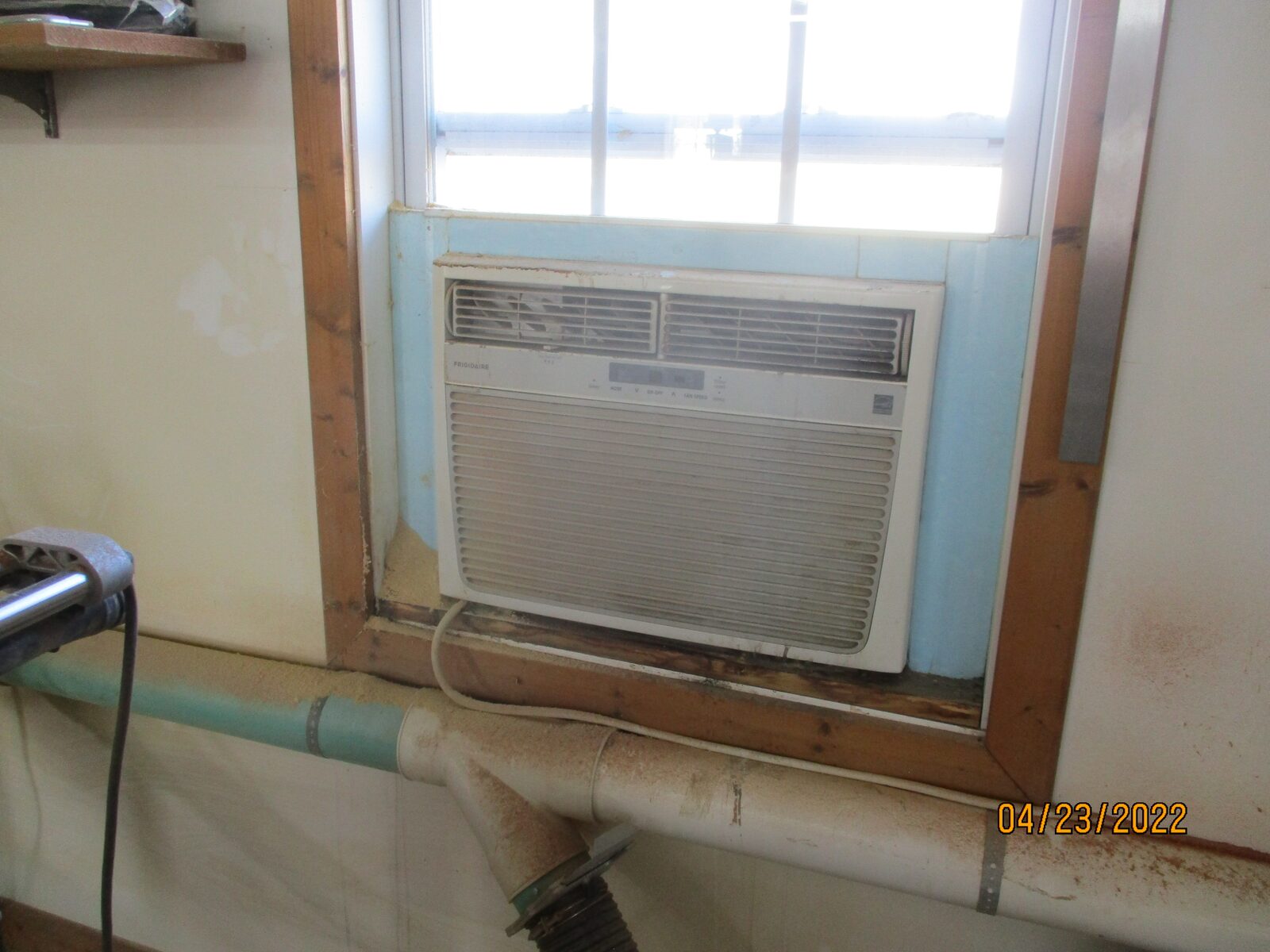
A poorly sealed window unit lets hot outdoor air enter around the chassis and window panels. Use the manufacturer’s included foam and insulation materials. ENERGY STAR states that an improperly installed room AC can leak as much air as a six-square-inch hole.[4]

Clean the filter
Check the filter regularly and clean or replace it according to the manual. Restricted airflow makes cooling slower and can increase runtime.
Block direct sun
Close shades or curtains on sun-facing windows during the hottest hours. Exterior shading can be even more effective where practical.
Use a fan in the occupied room
A fan can improve comfort and may let you raise the AC setpoint. Turn the fan off when the room is empty because fans cool people, not rooms.[6]
Avoid unnecessary indoor heat
During the hottest hours:
- Use the microwave or toaster oven instead of the full-size oven when practical
- Turn off unused lights
- Move lamps and electronics away from the AC thermostat
- Close doors to spaces you are not trying to cool
Set the temperature as high as is comfortable and safe
A lower setting increases the difference between indoor and outdoor temperature and usually increases compressor runtime. Do not sacrifice heat safety for savings.
Window AC versus portable AC cost
A portable AC can have a similar nameplate wattage, but it uses an exhaust hose and a removable window kit. The practical result depends heavily on model efficiency, installation, hose setup, room conditions, and rated power.
Do not assume one format is always cheaper. Compare:
- Nameplate watts
- EnergyGuide annual kWh
- Rated cooling capacity
- Your expected runtime
- Your room and window constraints
See How Much Does a Portable AC Cost to Run? for the same calculation applied to portable units.
Frequently asked questions
How much does a 500-watt window AC cost per hour?
At 18.44 cents per kWh:
Formula: 0.5 × $0.1844 = $0.0922
That is about 9.2 cents per full-power hour.
Does “8 hours on” mean eight full-power hours?
Not necessarily. The compressor may cycle off while the fan continues. A plug-in energy meter is the easiest way to measure actual kWh over time.
Is BTU the same as watts?
No. Btu/h describes cooling capacity. Watts describe electrical power input. Efficiency ratings relate cooling delivered to electricity consumed.
Does a higher-BTU unit always cost more to operate?
Often, but not always. Efficiency, cycling, room size, and operating conditions matter. Compare watts, CEER, annual kWh, and proper sizing.
Can I run a window AC through an extension cord?
Follow the manufacturer’s instructions. Many manufacturers require a direct, properly grounded wall outlet and prohibit ordinary extension cords or power strips. Electrical fires are not an acceptable energy-saving experiment.
Related guides and tool
- Diagnose a high summer electric bill
- Calculate portable AC operating cost
- Compare fan and air-conditioner cost
- Decide whether to turn the AC off
- Compare household energy benchmarks
Source notes
- Electric Power Monthly: Sales, Revenue, and Average Price of Electricity to Ultimate Customers for May 2026U.S. Energy Information Administration
- Average Price of Electricity to Ultimate Customers by End-Use Sector, by StateU.S. Energy Information Administration
- How To Use the EnergyGuide Label To Shop for Home AppliancesFederal Trade Commission
- Room Air ConditionersENERGY STAR
- Room Air Conditioners Key Product CriteriaENERGY STAR
- Top 11 Things You Didn’t Know About Saving Energy at Home: Summer EditionU.S. Department of Energy
See something wrong or out of date? Report a correction.