
Home Humidity and Dehumidifier Checklist
Measure first, identify moisture sources, apply free fixes, and consider equipment only after those steps.
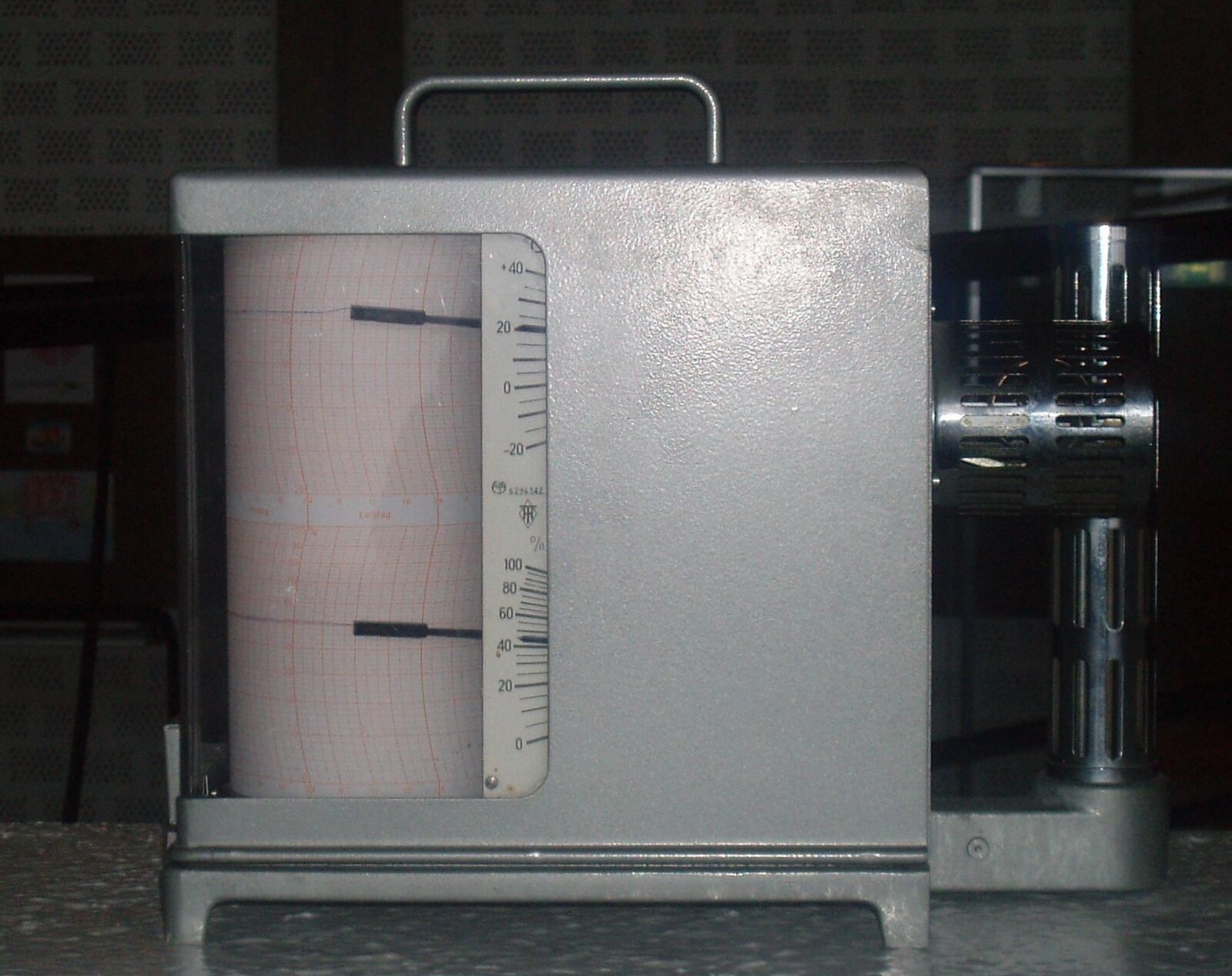

Use this checklist before buying, replacing, or continuously running a dehumidifier.
The goal is to determine:
- Which rooms are humid
- When RH rises
- Whether water is entering
- Whether ventilation or cooling helps
- What capacity is appropriate
- Whether an existing unit is working
- Whether professional repair is needed
Download: Home Humidity and Dehumidifier Checklist PDF
Printable PDF, no email address required.
Before you start
Gather:
- Hygrometer
- Thermometer, if separate
- Tape measure
- Flashlight
- Dehumidifier manual
- Utility rate
- Notebook or printable log
- Camera for documenting damage
- Model and serial information for recall checks
Do not enter:
- Flooded electrical areas
- Unsafe crawl spaces
- Areas with sewage
- Structurally damaged rooms
- Confined spaces
- Rooms with active smoke or electrical burning
Use qualified help.
Part 1: Three-day room log
Record three times each day:
- Morning
- Afternoon
- Evening
Also record after:
- Shower
- Cooking
- Laundry
- Rain
- HVAC change
- Window opening
- Dehumidifier operation
| Date/time | Room | Temperature | RH | HVAC mode | Windows | Moisture activity | Condensation/odor |
|---|---|---|---|---|---|---|---|
Use the same hygrometer location for each comparison.
Part 2: Interpret the RH
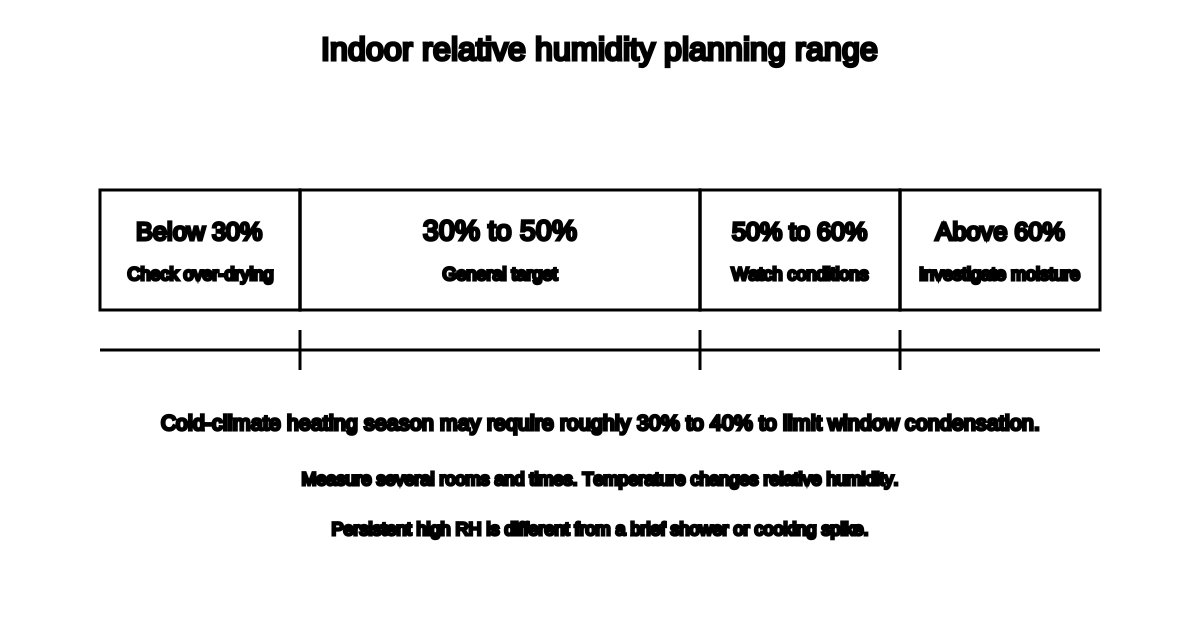
- Below 30%
- 30% to 50%
- 50% to 60%
- Above 60%
- Above 75%
- Above 90%
General interpretation:
- 30-50%: ordinary target
- Above 60%: investigate persistent moisture
- 75-90%: very damp
- 90-100%: wet or severe moisture condition
Do not respond to one short shower spike as though the entire home has failed.
Part 3: Check moisture sources
Exterior water
- Roof leak
- Gutter overflow
- Downspout near foundation
- Poor grading
- Window leak
- Foundation crack
- Groundwater seepage
- Flooding
- Crawl-space ground moisture
Plumbing and equipment
- Supply leak
- Drain leak
- Water heater leak
- Sump problem
- HVAC condensate problem
- Refrigerator or ice-maker leak
- Washing-machine hose
- Dishwasher leak
- Toilet seal
- Pipe condensation
Indoor moisture
- Showering
- Cooking
- Indoor laundry drying
- Unvented dryer
- Aquarium
- Humidifier
- Many plants
- Open windows during humid weather
- Combustion appliance
- Wet stored materials
Repair the source before relying on dehumidification.
Part 4: Ventilation and HVAC check
- Bathroom fan runs
- Bathroom fan exhausts outdoors
- Kitchen hood works
- Kitchen hood exhausts outdoors
- Dryer exhausts outdoors
- Dryer duct is intact
- AC drain is working
- AC filter is appropriate and clean
- HVAC is not short-cycling
- Exterior doors and windows close
- Outdoor air is not being added during high humidity
Record what changes RH.
Part 5: Measure the dehumidified area
Room 1:
- Length: ______ ft
- Width: ______ ft
- Area: ______ sq. ft.
Room 2:
- Length: ______ ft
- Width: ______ ft
- Area: ______ sq. ft.
Connected total:
Total area =
area 1
+
area 2
+
\cdots
Total: ______ sq. ft.
Include open connected spaces.
Do not include closed rooms the unit cannot reach.
Part 6: Classify dampness
Slightly to moderately damp
- 50-75% RH
- Occasional musty odor
- Damp feeling
- No active seepage
Very damp
- 75-90% RH
- Consistent damp odor
- Damp spots
- Moist surfaces
Wet
- 90-100% RH
- Sweating walls or floor
- Seepage
- High laundry or water load
Part 7: Portable capacity starting point
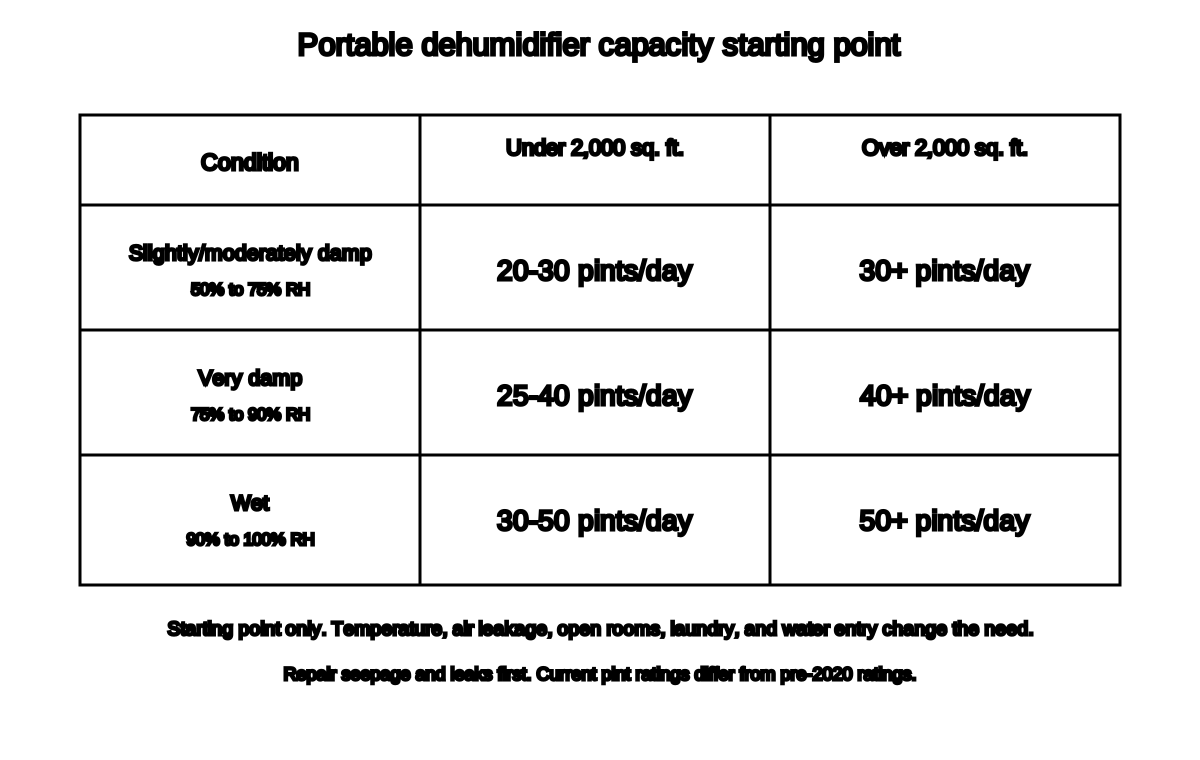
| Condition | Under 2,000 sq. ft. | Over 2,000 sq. ft. |
|---|---|---|
| Slightly/moderately damp | 20-30 pints/day | 30+ |
| Very damp | 25-40 pints/day | 40+ |
| Wet | 30-50 pints/day | 50+ |
Adjust for:
- Low temperature
- High ceiling
- Open stairs
- Laundry
- Air leakage
- Several rooms
- Continuous water entry
- Whole-home need
Part 8: Product and support check
- Current pint capacity
- ENERGY STAR certification
- IEF
- Low-temperature operation
- Defrost
- Humidistat
- Bucket capacity
- Gravity drain
- Pump
- Filter access
- Noise
- Warranty
- Firmware/app requirement, if any
- Current support
- CPSC recall search completed
Do not buy by old pint labels or retail square-foot claims alone.
Part 9: Placement
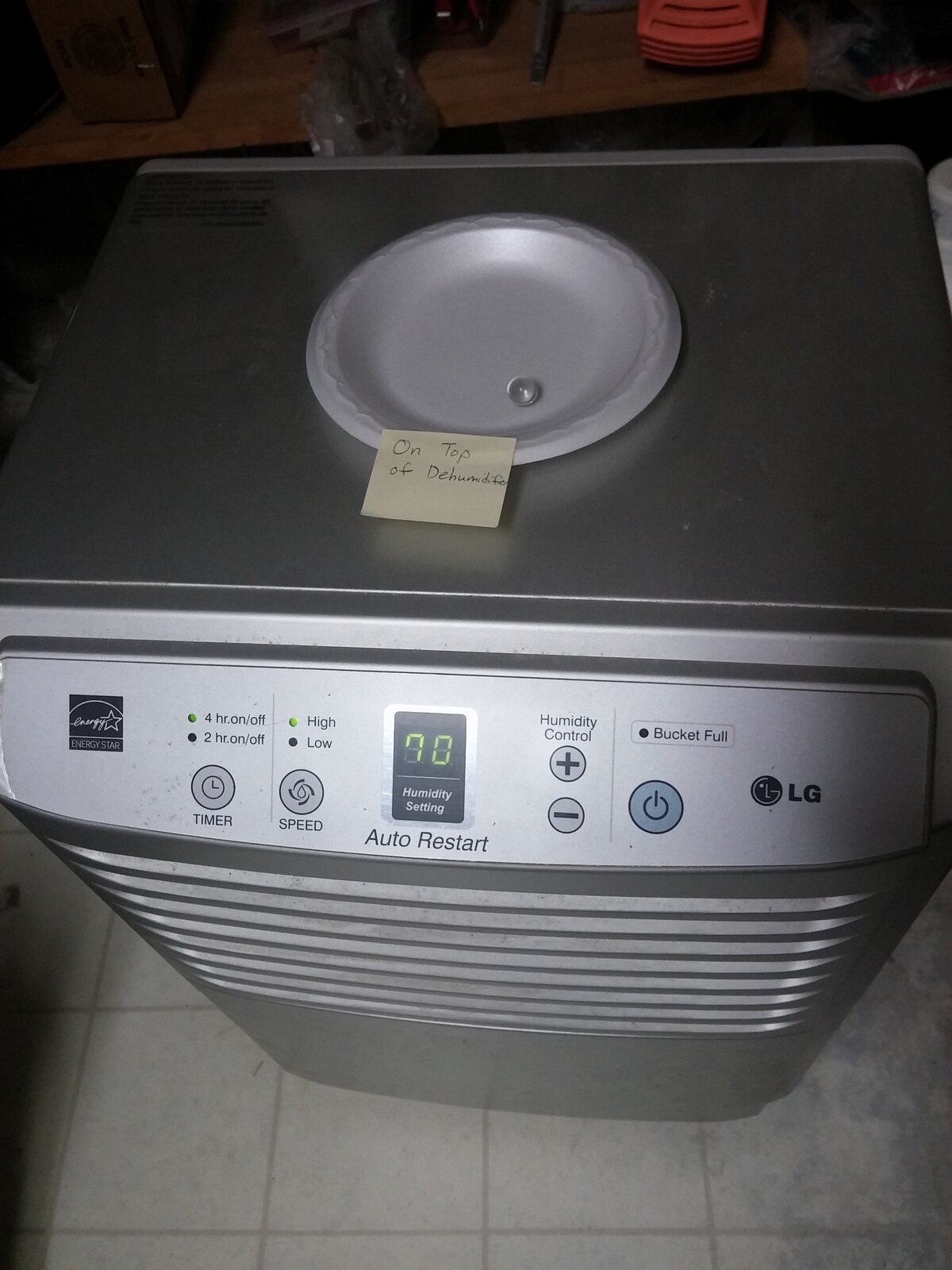

- Stable level surface
- Dry floor
- Correct wall clearance
- Intake clear
- Discharge clear
- Not on deep carpet if vents can be blocked
- Not beside heat source
- Not exposed to freezing temperature
- Cord reaches wall outlet directly
- No extension cord or power strip unless expressly permitted
- Bucket accessible
- Drain route safe
Part 10: Drainage
Bucket
- Empty and clean
- Correctly seated
- Float moves correctly
- No crack
- Full-bucket switch works
Gravity drain
- Correct hose
- Downward slope
- No kink
- No clog
- Outlet not submerged
- Drain permitted
- No trip hazard
Pump
- Pump mode correct
- Pump hose secure
- Lift height within limit
- Pump tested
- Overflow plan
Part 11: Operating log
| Date/time | Room RH before | Setpoint | Runtime | Water removed | RH after | Notes |
|---|---|---|---|---|---|---|
Use measured RH, not bucket volume alone.
Part 12: Maintenance
- Filter checked
- Filter cleaned as instructed
- Grilles clear
- Bucket cleaned
- Hose flushed
- Drain inspected
- Coils not iced
- Cord and plug undamaged
- Outlet cool and secure
- Recall status checked
Do not open the sealed refrigeration or electrical enclosure.
Part 13: Stop and seek help
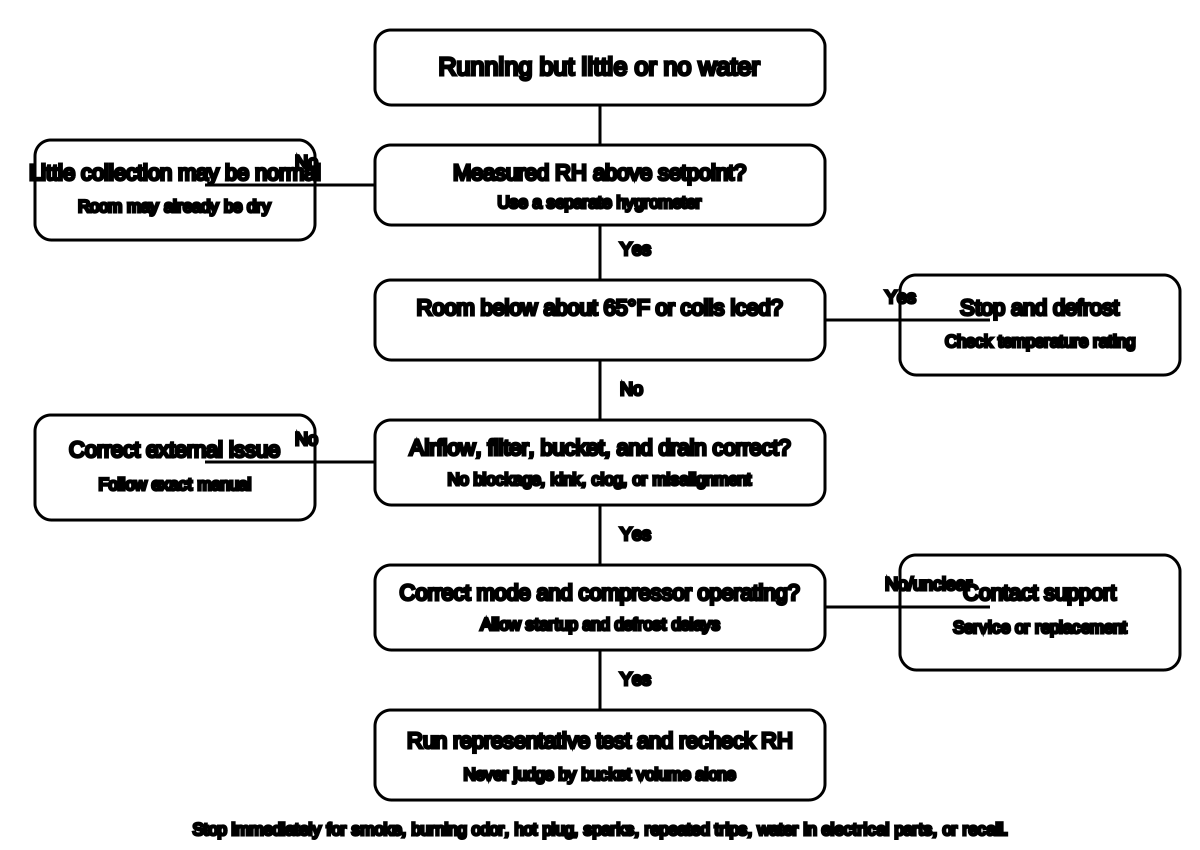
Stop using the unit for:
- Smoke
- Burning odor
- Melted plug
- Hot outlet
- Sparks
- Repeated breaker trips
- Water in electrical parts
- Damaged cabinet
- Recalled model
Seek building or remediation help for:
- Active seepage
- Floodwater
- Sewage
- Extensive mold
- Structural damage
- Wet electrical system
- Unsafe crawl space
- RH cannot be controlled after source repair
- Whole-home system needed
Final decision
- No equipment needed; RH is in range
- Improve ventilation
- Repair leak or drainage
- Use portable dehumidifier
- Replace malfunctioning dehumidifier
- Evaluate whole-home dehumidification
- Evaluate air-conditioning or HVAC issue
- Get professional moisture or mold assessment
Best target RH: ______%
Selected capacity range: ______ pints/day
Next action: ________________________________________
Frequently asked questions
How long should I log humidity?
At least three representative days, including the period when the room is usually most humid.
Should I buy from square footage alone?
No. Use space size and dampness condition.
Is bucket water the best measure?
No. Room RH and moisture conditions are more important.
Can I use this after flooding?
Use emergency and professional water-damage guidance. The checklist does not replace flood, sewage, electrical, or structural safety procedures.
Does the PDF require an email?
No. It should download directly.
Related guides
- What Humidity Should Your House Be?
- How Much Does a Dehumidifier Cost to Run?
- What Size Dehumidifier Do You Need?
- Why Is My Dehumidifier Running but Not Collecting Water?
- Dehumidifier vs. Air Conditioner: Which Do You Need?
Source notes
- Biological Contaminants and Indoor Air QualityU.S. Environmental Protection Agency
- Mold Course Chapter 2U.S. Environmental Protection Agency
- DehumidifiersENERGY STAR
- Dehumidifier Testing and CapacityENERGY STAR
- Dehumidifier Not DrainingFrigidaire
- RecallsU.S. Consumer Product Safety Commission
See something wrong or out of date? Report a correction.