
How Much Does a Dehumidifier Cost to Run?
A hypothetical 500-watt dehumidifier costs about 9 cents per full-power hour at 18.44 cents per kWh. Eight full-power hours would cost about 74 cents. Actual cost is often lower or higher because the compressor cycles and the fan may continue running.
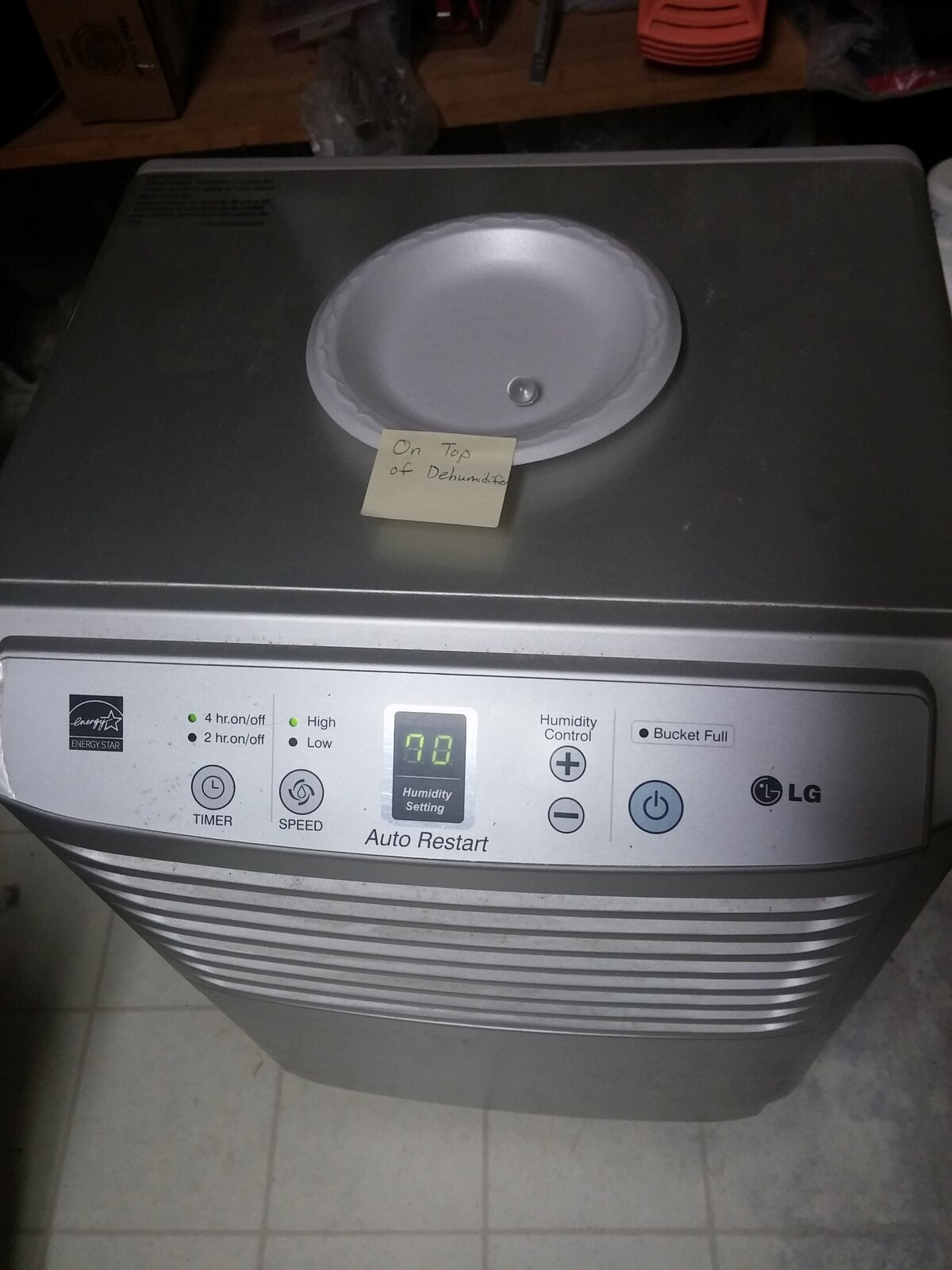

A dehumidifier’s electricity cost depends on:
- Electrical input
- Compressor runtime
- Fan runtime
- Humidity setting
- Room temperature
- Moisture load
- Unit efficiency
- Local electricity price
Use actual measured kWh or model-specific annual energy data when available.
Quick answer: A hypothetical 500-watt dehumidifier costs about 9 cents per full-power hour at 18.44 cents per kWh. Eight full-power hours would cost about 74 cents. Actual cost is often lower or higher because the compressor cycles and the fan may continue running.
Full-power hourly formula
Hourly cost =
\frac(watts)(1(,)000)
\times
electricity price per kWh
For a hypothetical 500-watt unit:
500 \div 1(,)000 = 0.5 kWAt $0.1844 per kWh:
0.5 \times \$0.1844 = \$0.0922About 9 cents per full-power hour.
Daily and monthly example
At eight full-power hours per day:
0.5 \times 8 = 4 kWh per day4 \times \$0.1844 = \$0.7376About 74 cents per day.
For 30 days:
\$0.7376 \times 30 = \$22.13This is a full-power example, not a prediction for every home.
Why actual cost differs
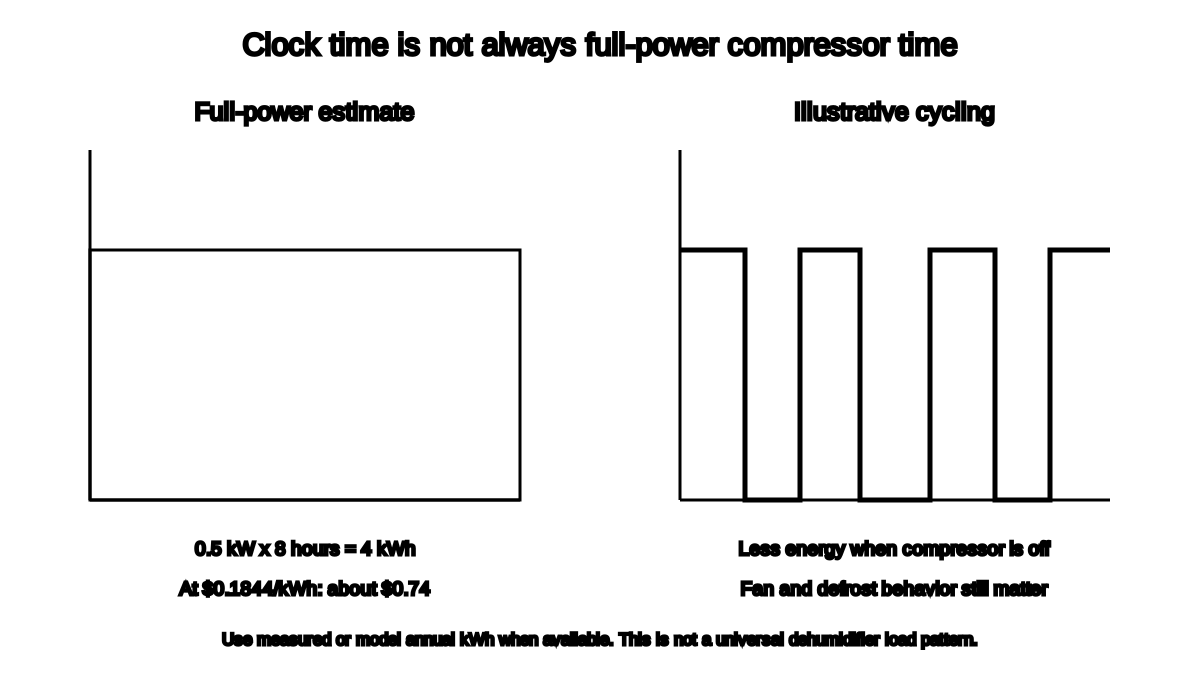
A dehumidifier may:
- Run its compressor continuously during initial drying
- Cycle the compressor after reaching the setpoint
- Run the fan between compressor cycles
- Enter defrost mode
- Shut off when the bucket is full
- Stop because the room is too cold
- Operate longer because moisture keeps entering
The number of hours the unit is switched on is not always the number of full-power compressor hours.
Best calculation methods
Use the strongest available method.
1. Model-specific annual kWh
ENERGY STAR Product Finder includes annual energy consumption for certified models.[1]
Use:
Annual cost =
annual kWh
\times
your rate
This standardized figure is useful for comparing models. Household use can differ substantially.
2. Safely measured kWh
A compatible plug-in electricity meter can record cumulative kWh for many portable 120-volt dehumidifiers.
Use only when:
- The dehumidifier uses a standard compatible plug
- The meter’s voltage, current, and wattage ratings cover the appliance
- The manufacturer permits ordinary plug-in operation
- The outlet and cord are undamaged
- No extension cord, power strip, adapter, or unapproved smart plug is introduced
Measure for several representative days rather than one hour.
Do not use an ordinary meter on hardwired or whole-home equipment.
3. Watts multiplied by time
Use the full-power formula when the exact electrical input and active time are known.
Label it clearly as an estimate.
4. Utility interval data
If the dehumidifier is a major load, compare utility hourly or daily data during:
- Similar weather
- Similar occupancy
- Similar HVAC use
- Dehumidifier on versus off
This is less precise when several household loads change at once.
Find the electrical input

Look at:
- Rating label
- Owner’s manual
- Manufacturer specification
- Certified model data
Do not use:
- Breaker size
- Cord rating
- Extension-cord rating
- Maximum outlet capacity
- Another model’s wattage
- Pint capacity as though it were electrical power
A 50-pint dehumidifier does not necessarily draw the same watts as another 50-pint model.
Integrated Energy Factor
Dehumidifier efficiency is reported as Integrated Energy Factor, or IEF, in liters of water removed per kilowatt-hour.
Higher IEF means more water removed per unit of energy under the standardized test.
ENERGY STAR Version 6.0 criteria, effective October 1, 2025, use different minimum IEF levels by portable capacity.[2]
Use IEF to compare similarly sized products.
Do not use IEF alone to predict exact household cost because:
- Room conditions differ from the test
- Moisture load varies
- Temperature varies
- Runtime varies
- Fan behavior varies
- Drainage and defrost behavior vary
ENERGY STAR savings
ENERGY STAR states that a certified dehumidifier uses about 20% less energy than a similarly sized conventional unit while removing the same amount of moisture.[1]
That is a program-level comparison, not a guaranteed dollar saving for one household.
Savings depend on:
- Model
- Runtime
- Rate
- Capacity
- Setpoint
- Room condition
Humidity setting affects cost
A lower setpoint generally causes more runtime.
For example:
- Setting 55% may require less operation than 45%.
- A room with active seepage may never reach 45%.
- A cold basement may enter defrost rather than remove water efficiently.
- An oversized unit may reach the target faster but cycle differently.
Use the highest RH target that:
- Keeps the space within the practical 30% to 50% goal
- Prevents condensation
- Controls musty dampness
- Meets building and occupant needs
Do not set 35% simply because the control permits it.
Room temperature affects cost and performance
ENERGY STAR warns that frost can form on coils below about 65°F and reduce moisture removal.[1]
A dehumidifier that repeatedly defrosts may:
- Run the fan
- Cycle the compressor
- Collect little water
- Use electricity without controlling the room effectively
Choose equipment rated for the actual temperature or address the space condition.
Continuous drainage
A gravity drain can reduce bucket-empty downtime, but it does not inherently reduce the energy used per operating hour.
Check:
- Hose slopes downward
- No kinks
- No clog
- Correct connection
- Drain is safe and permitted
- Condensate cannot back up
A pump-equipped model adds another electrical component and maintenance requirement.
Moisture sources dominate runtime
Cost can remain high when moisture enters through:
- Foundation seepage
- Plumbing leak
- Open humid-air path
- Unvented dryer
- Indoor laundry drying
- Showering
- Cooking
- Wet materials
- Crawl space
- Poor drainage
Fixing the source can save more electricity than changing the dehumidifier setting.
A dehumidifier is not a substitute for repair.
Dehumidifier and air conditioner together
An air conditioner removes heat and some moisture.
A dehumidifier removes moisture but adds its electrical energy and the heat released during condensation back to the room.
Running both may:
- Improve humidity control
- Increase electrical use
- Add heat the air conditioner must remove
Use both only when the humidity problem remains after correct HVAC operation and source control.
Cost per amount of water removed
IEF can be used for a standardized efficiency comparison.
A model with an IEF of 2.0 L/kWh removes two liters of water per kWh under the test conditions.
At $0.1844 per kWh, the test-condition energy cost would be:
\$0.1844 \div 2.0 = \$0.0922 per literThat is about nine cents of electricity per liter under the test condition.
Real household cost per liter can be higher because conditions and cycling differ.
Fixed charges and time-of-use rates
A fixed monthly utility charge remains even if the dehumidifier is unplugged.
For time-of-use rates:
Total cost =
(off-peak kWh \times off-peak rate)
+
(peak kWh \times peak rate)
Humidity control may need to operate when moisture is present, not only when electricity is cheapest.
Do not delay necessary drying of wet materials to chase a cheaper rate.
Safety and recalls
Some older dehumidifiers have been recalled for fire hazards.
Before using an older or secondhand unit:
- Record exact brand and model
- Record date code and serial range
- Search the CPSC recall database
- Follow the recall remedy
- Stop using recalled equipment
Stop and unplug the unit if it:
- Smokes
- Smells like burning
- Has a hot or damaged plug
- Sparks
- Repeatedly trips the breaker
- Leaks water near electrical parts
- Shows melted plastic
Do not open the refrigeration or electrical enclosure.
Frequently asked questions
How much does a 500-watt dehumidifier cost per hour?
At 18.44 cents per kWh, about 9.2 cents per full-power hour.
Does a dehumidifier use full wattage all day?
Not necessarily. The compressor cycles, the fan may run separately, and the unit may defrost or shut off.
Is continuous mode expensive?
It can be when the unit runs constantly. Use a humidistat after the initial high-humidity condition is controlled.
Do ENERGY STAR models save money?
They use less energy than similarly sized conventional models under the program comparison, but household savings depend on use and rates.
Should I turn the unit off when the bucket is empty?
An empty bucket does not prove the room is dry. Check RH, setting, temperature, airflow, drainage, and operation.
- Estimate appliance electricity cost with the free calculator
- See residential electricity prices by state
Related guides
- What Humidity Should Your House Be?
- What Size Dehumidifier Do You Need?
- Why Is My Dehumidifier Running but Not Collecting Water?
- Dehumidifier vs. Air Conditioner: Which Do You Need?
- Calculate appliance electricity cost
Source notes
- DehumidifiersENERGY STAR
- Dehumidifiers Key Efficiency CriteriaENERGY STAR
- Certified DehumidifiersENERGY STAR
- Consumer DehumidifiersU.S. Department of Energy
- Electric Power Monthly: Sales, Revenue, and Average Price of Electricity to Ultimate Customers for May 2026U.S. Energy Information Administration
- RecallsU.S. Consumer Product Safety Commission
See something wrong or out of date? Report a correction.