
What Size Dehumidifier Do You Need?
For a small-to-medium space under 2,000 square feet, ENERGY STAR recommends roughly 20-30 pints per day for slightly to moderately damp conditions, 25-40 pints for very damp conditions, and 30-50 pints for wet conditions. Larger spaces generally need more capacity.[@batch7-energystar-dehumidifiers]
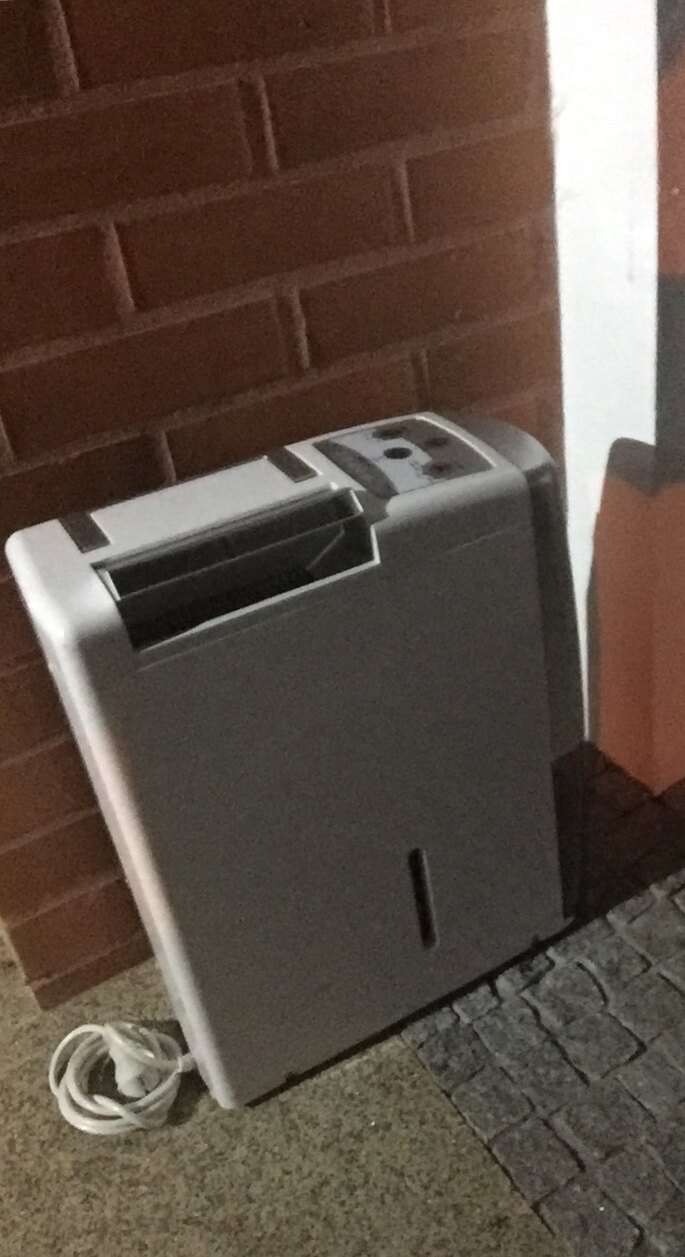

Dehumidifier size is measured by water-removal capacity, usually pints per 24 hours under standardized test conditions.
Choose capacity from two factors:
- The size of the space
- How damp the space is before dehumidification
Quick answer: For a small-to-medium space under 2,000 square feet, ENERGY STAR recommends roughly 20-30 pints per day for slightly to moderately damp conditions, 25-40 pints for very damp conditions, and 30-50 pints for wet conditions. Larger spaces generally need more capacity.[1]
Current ENERGY STAR sizing table
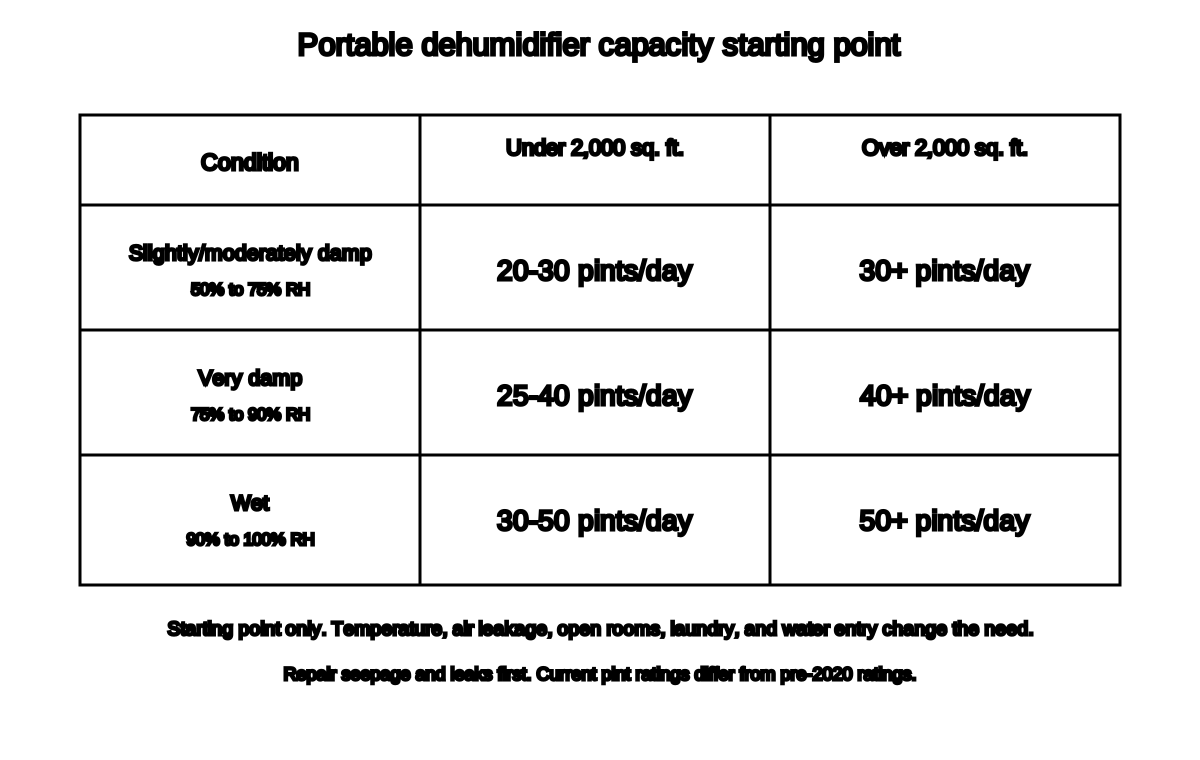
| Condition without dehumidification | Under 2,000 sq. ft. | Over 2,000 sq. ft. |
|---|---|---|
| Slightly to moderately damp, 50-75% RH, intermittent musty odor | 20-30 pints/day | 30+ pints/day |
| Very damp, 75-90% RH, consistent dampness or spots | 25-40 pints/day | 40+ pints/day |
| Wet, 90-100% RH, sweating walls/floors or seepage | 30-50 pints/day | 50+ pints/day |
This is a starting point.
The correct selection also depends on:
- Temperature
- Ceiling height
- Open doors
- Stairways
- Air exchange
- Laundry
- Groundwater
- Leaks
- HVAC
- Drainage
- Desired RH
- Whether several rooms are connected
Measure the space correctly
For a simple rectangular room:
Area =
length
\times
width
For several connected areas:
- Divide the floor plan into rectangles.
- Calculate each area.
- Add them.
- Include open hallways and stairways that share air.
- Do not include closed rooms the unit cannot effectively reach.
For example:
- Main basement: 30 ft by 20 ft = 600 sq. ft.
- Open utility area: 10 ft by 12 ft = 120 sq. ft.
Total:
600 + 120 = 720 sq. ft.The area falls under the small-to-medium column, but dampness still determines capacity.
Classify the moisture condition
Slightly to moderately damp
Signs:
- RH around 50% to 75%
- Occasional musty odor
- Damp feeling
- Mild seasonal problem
- No active standing water
- No sweating walls or floor
ENERGY STAR range under 2,000 sq. ft.:
20-30 pints/day
Very damp
Signs:
- RH around 75% to 90%
- Consistent musty odor
- Damp spots
- Moist surfaces
- Laundry load
- Condensation
- Moisture returns quickly
ENERGY STAR range under 2,000 sq. ft.:
25-40 pints/day
Wet
Signs:
- RH around 90% to 100%
- Sweating walls or floor
- Seepage
- Persistent wet surfaces
- High laundry-drying load
- Water entering the space
ENERGY STAR range under 2,000 sq. ft.:
30-50 pints/day
A dehumidifier does not repair active water entry.
Wet conditions require source control.
Why old pint ratings look different
DOE changed the dehumidifier test procedure to use cooler, more realistic conditions.
ENERGY STAR explains that capacity labels beginning around 2020 became lower even for products comparable to older models.[2]
Approximate examples from ENERGY STAR:
| Old rating through 2019 | Approximate newer rating |
|---|---|
| 30 pints/day | 20 pints/day |
| 40 pints/day | 25 pints/day |
| 50 pints/day | 30 pints/day |
| 70 pints/day | 40-45 pints/day |
| 90 pints/day | 55 pints/day |
Do not compare an old 70-pint unit with a current 70-pint unit as though the labels used the same test.
Use the current product-capacity rating and test basis.
Bigger is often better than too small, within reason
ENERGY STAR says it is better to oversize than undersize.[1]
A somewhat larger unit may:
- Reach target RH faster
- Spend less time at maximum operation
- Handle temporary moisture loads
- Provide more capacity for connected space
But the largest available machine is not automatically best.
Potential downsides include:
- Higher purchase price
- Larger physical size
- More noise
- Higher full-power draw
- More frequent cycling
- Larger bucket
- Outlet and circuit demands
- Unnecessary whole-home complexity
Choose enough capacity for the actual load.
Low temperature changes sizing and performance
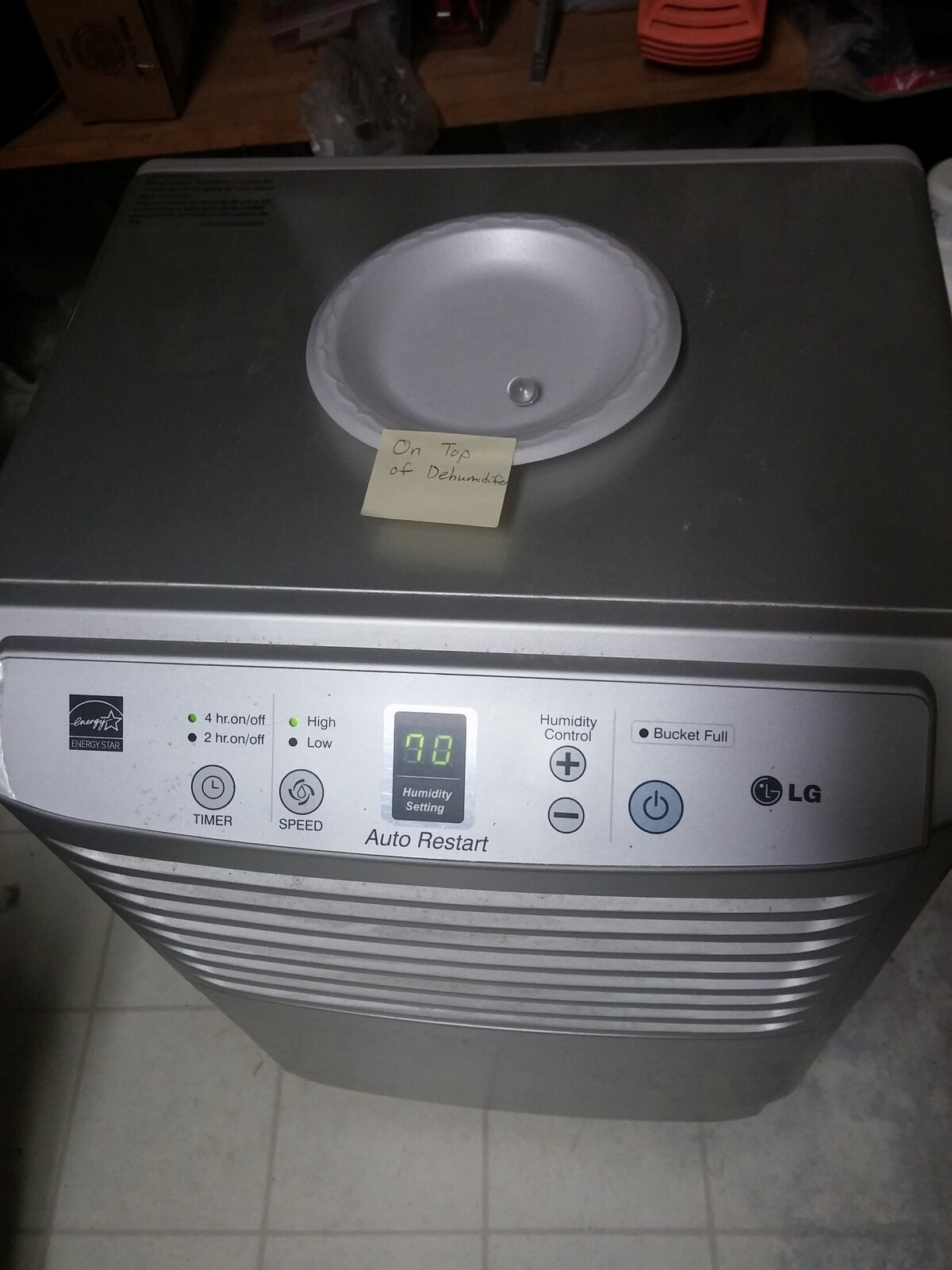

ENERGY STAR warns that frost can form on coils when room temperature falls below about 65°F.[1]
Cold basements may need:
- A model rated for low-temperature use
- Automatic defrost
- Better source control
- Some space heating
- A different dehumidification strategy
A larger ordinary unit that repeatedly frosts may perform worse than a properly selected low-temperature model.
Portable versus whole-home
Portable dehumidifier
Best suited for:
- One room
- One basement
- Temporary problem
- Rental
- Limited budget
- Easy plug-in setup
Limits:
- Bucket emptying
- Drain placement
- Noise
- One-space circulation
- Visible floor space
- Manual maintenance
Whole-home dehumidifier
May make sense when:
- RH remains above 55% through much of the home
- Central ductwork exists
- The home is relatively well sealed
- Several rooms need control
- Portable units would be scattered around the house
- Professional sizing and installation are available
ENERGY STAR states that whole-home systems should be sized and installed properly by a qualified contractor.[1]
Do not buy a whole-home system from square footage alone.
Ceiling height and open space
The ENERGY STAR table uses floor area, but unusual volume matters.
A 1,000-square-foot room with a 20-foot ceiling contains much more air than one with an 8-foot ceiling.
Also consider:
- Open stairwell
- Vaulted ceiling
- Unfinished basement
- Open crawl space
- Multiple connected rooms
- High outdoor-air leakage
For unusual buildings, use professional sizing.
Laundry and moisture generation
Add capacity when the space contains:
- Indoor laundry drying
- Washing machine
- Shower
- Large aquarium
- Frequent wet equipment
- Unvented combustion
- Commercial activity
- Many occupants
- Open soil or crawl-space connection
Source control still comes first.
A clothes dryer should exhaust outdoors according to its instructions and building requirements.
Drainage can determine practical size
A larger unit may collect water quickly.
Choose a water-removal method:
Bucket
Useful when:
- No safe drain exists
- You want to observe water collected
- Unit is moved often
Limits:
- Must be emptied
- Unit stops when full
- Can be heavy
- Spill risk
Gravity hose
Useful when:
- Drain is below outlet
- Hose can slope continuously
- Drain is safe and permitted
Limits:
- Kinks
- Clogs
- Backflow
- Sump condition
- Trip hazard
Condensate pump
Useful when:
- Water must move uphill
- Sink or drain is higher
Limits:
- Pump noise
- Pump maintenance
- More failure points
- Overflow risk
- More electricity
Do not let a drain hose create a walkway hazard.
Noise and placement
Check:
- Sound rating
- Fan speeds
- Compressor cycling
- Bedroom use
- Office use
- Vibration
- Clearance
Most top-discharge portable units may sit nearer a wall, but side- or rear-discharge units need more clearance.
Follow the exact manual.
Product comparison fields
Compare:
- Current pint capacity
- IEF
- ENERGY STAR certification
- Low-temperature rating
- Humidistat
- Defrost
- Bucket size
- Gravity drain
- Pump
- Filter
- Noise
- Warranty
- Support
- Recall status
- Dimensions
- Weight
- Cord requirements
Do not buy from pint capacity alone.
Worked selection examples
Example 1: 600 sq. ft. moderately damp basement
Conditions:
- 65% RH
- Mild musty odor
- No active seepage
- Temperature 68°F
ENERGY STAR starting range:
20-30 pints/day
A current 25- or 30-pint certified unit may be a reasonable category to investigate.
This is category guidance, not a product recommendation.
Example 2: 1,500 sq. ft. very damp basement
Conditions:
- 80% RH
- Damp spots
- Laundry nearby
- Several connected rooms
ENERGY STAR starting range:
25-40 pints/day
The upper end may be more appropriate because of the large connected area and moisture load.
Example 3: 2,400 sq. ft. wet open basement
Conditions:
- Seepage
- Sweating floor
- 90% RH
ENERGY STAR table:
50+ pints/day
But the first action is water-source repair, drainage, and drying.
A portable unit alone is not an adequate building-water solution.
When to call a professional
Use qualified help when:
- Water enters through foundation
- Mold is extensive or recurring
- Sewage is involved
- Electrical system is wet
- Crawl space is unsafe
- Whole-home equipment is considered
- Ductwork is involved
- Several units cannot control RH
- Structural wood stays damp
- Drainage needs modification
Frequently asked questions
Is a 50-pint dehumidifier too big for a bedroom?
It may be unnecessarily large, noisy, and power-hungry for a small bedroom. Use current room and moisture conditions.
What size for a basement?
Measure the connected area and classify dampness. Many basements fall in the 20-50 pint range under current ENERGY STAR guidance.
Why does my old 70-pint unit compare with a new 50-pint unit?
The federal test procedure changed. Current capacity ratings are lower under cooler test conditions.
Can one portable dehumidifier handle several floors?
Usually not effectively. Air movement, doors, stairways, and moisture sources limit it.
Should I size from gallons of water collected?
Actual collection can help judge moisture load, but standardized pint capacity remains the product-comparison metric.
Related guides
- What Humidity Should Your House Be?
- How Much Does a Dehumidifier Cost to Run?
- Why Is My Dehumidifier Running but Not Collecting Water?
- Home Humidity and Dehumidifier Checklist
- Dehumidifier vs. Air Conditioner: Which Do You Need?
Source notes
- DehumidifiersENERGY STAR
- Dehumidifier Testing and CapacityENERGY STAR
- Dehumidifiers Key Efficiency CriteriaENERGY STAR
- Consumer DehumidifiersU.S. Department of Energy
- Biological Contaminants and Indoor Air QualityU.S. Environmental Protection Agency
See something wrong or out of date? Report a correction.