
Can You Refreeze Food After a Power Outage?
Ice crystals or a measured temperature of 40°F or below mean the food can generally be refrozen or cooked. Safety and quality are different: the food may remain safe but lose texture, moisture, or flavor.
.jpg)
Yes. Food can generally be safely refrozen after a power outage if it:
Evaluate each package separately.
Discard perishable food that was above 40°F for more than two hours or that was contaminated by raw meat juices.
Quick answer: Ice crystals or a measured temperature of 40°F or below mean the food can generally be refrozen or cooked. Safety and quality are different: the food may remain safe but lose texture, moisture, or flavor.
The ice-crystal rule
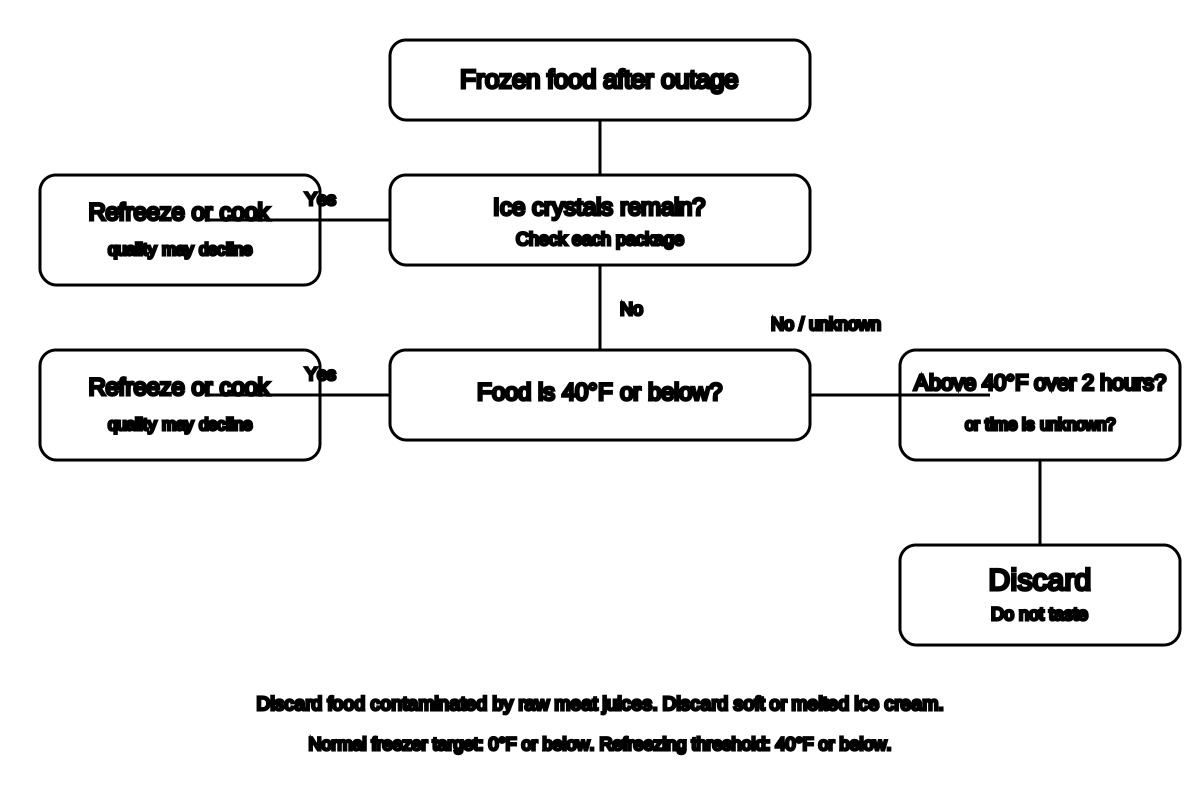
Check each package for ice crystals or a measured temperature of 40°F or below; discard perishable food after unsafe warming or uncertainty.
If frozen food still contains ice crystals and feels as cold as refrigerated food, USDA says it can generally be safely refrozen.[1][2]
Ice crystals show that the food did not fully warm through.
Do not use one icy package to judge the entire freezer. Food near the door or in thin packages may thaw sooner.
The 40°F rule
If the food measures 40°F or below, it can generally be refrozen or cooked.[2][3]
Use a clean food thermometer to check an individual package when needed.
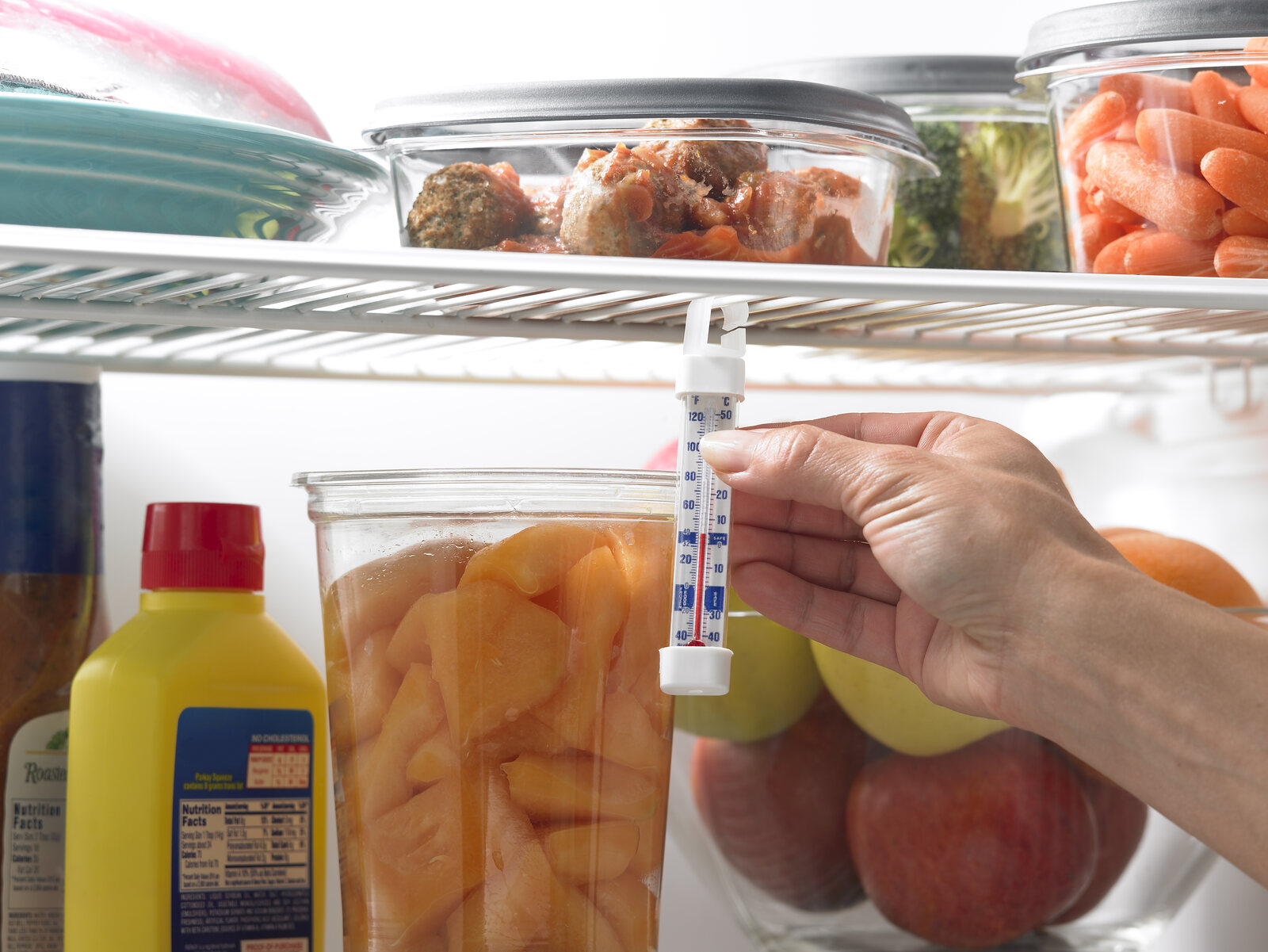
An appliance thermometer shows the compartment temperature. A food thermometer measures the food itself.
What if the food completely thawed?
.jpg)
Fully thawed food can still be safe to refreeze if it remained at 40°F or below.
Quality may decline, especially in foods whose structure is damaged by ice crystals and moisture loss.
Examples can include:
- Meat losing juice
- Vegetables becoming soft
- Sauces separating
- Baked goods becoming soggy
- Dairy changing texture
Safety does not guarantee pleasant texture.
What if the food was above 40°F?
Discard perishable food that was above 40°F for more than two hours.[2][4]
If the surrounding temperature was above 90°F and the food was outside controlled refrigeration, use the one-hour limit.[4][5]
If you do not know the time, discard it.
Can you cook it instead of refreezing?
You may cook food that remains within safe time and temperature limits.
Cooking does not rescue food that has already spent too long warm. FDA warns that temperature-abused perishable food may cause illness even after thorough cooking.[3]
Raw meat and poultry
Raw meat and poultry may be refrozen when they:
- Still contain ice crystals, or
- Remained at 40°F or below.
They do not have to be cooked before refreezing.[2]
Discard packages that leaked raw juices onto other foods or that exceeded the time and temperature limit.
Seafood
Seafood may be refrozen when it remains within the ice-crystal or 40°F rule.
Texture and flavor may decline.
Discard it after unsafe warming.
Soups, stews, and casseroles
These may be refrozen when still icy or at 40°F or below.
Dense foods can warm unevenly. Check the center when possible.
Milk and cheese
USDA’s chart distinguishes types.
- Milk can be refrozen when still icy or cold enough, though texture may change.
- Soft and semi-soft cheese may lose texture.
- Hard cheese is generally more tolerant.
- Ice cream and frozen yogurt should be discarded when soft or melted.[6]
Fruits and vegetables
Frozen fruit and vegetables may often be refrozen while still icy or cold enough.
Quality may decline. Some vegetables become soft, and fruit can release more liquid.
Discard items that show fermentation, mold, contamination, or unsafe temperature history.
Bread and baked goods
Many breads, rolls, and ordinary baked goods can be refrozen.
Cream-filled, custard, cheese-filled, or other perishable baked goods require stricter handling.
Use the USDA chart for the exact food.
Refreezing and power restoration
Do not rush to rearrange every package the moment power returns.
First:
- Read the freezer thermometer.
- Check the warmest or most exposed packages.
- Separate leaking raw foods.
- Photograph or record uncertain items.
- Refreeze or cook safe food.
- Discard unsafe food.
- Clean contaminated surfaces.
Minimize the time the freezer remains open.
Does refreezing create harmful bacteria?
Refreezing does not kill all bacteria. It stops or slows growth while the food is frozen.
The safety question is what happened while the food was thawed.
If it remained at 40°F or below, it can generally be refrozen. If it stayed warmer too long, refreezing does not make it safe again.
Frequently asked questions
Can I refreeze chicken after a power outage?
Yes, if it still contains ice crystals or remained at 40°F or below. Discard it if it was above 40°F for more than two hours.
Can I refreeze ice cream?
USDA recommends discarding soft or melted ice cream and frozen yogurt.
Can I refreeze vegetables?
Often yes when they remain icy or at 40°F or below, though texture may suffer.
Can I refreeze leftovers?
Yes, if they remain icy or at 40°F or below. Discard them after unsafe warming.
Can I rely on smell?
No. Use temperature, ice crystals, time, and official item-specific guidance.
Related power-outage food-safety guides
- Use the freezer outage timeline
- Check which foods to throw away
- Choose and place appliance thermometers
- Open the printable food-safety chart
Source notes
- Three Ways to Keep Food Safe When You Lose PowerFoodSafety.gov
- Freezing and Food SafetyUSDA Food Safety and Inspection Service
- Food and Water Safety During Power Outages and FloodsU.S. Food and Drug Administration
- Keeping Food Safe During an EmergencyUSDA Food Safety and Inspection Service
- Are You Storing Food Safely?U.S. Food and Drug Administration
- A Consumer’s Guide to Food Safety: Severe Storms and HurricanesUSDA Food Safety and Inspection Service
See something wrong or out of date? Report a correction.