
How Long Will Food Stay Frozen During a Power Outage?
Keep the freezer closed. Plan around 48 hours if it is full and 24 hours if it is half-full. After power returns, food that still contains ice crystals or is 40°F or below can generally be refrozen or cooked.
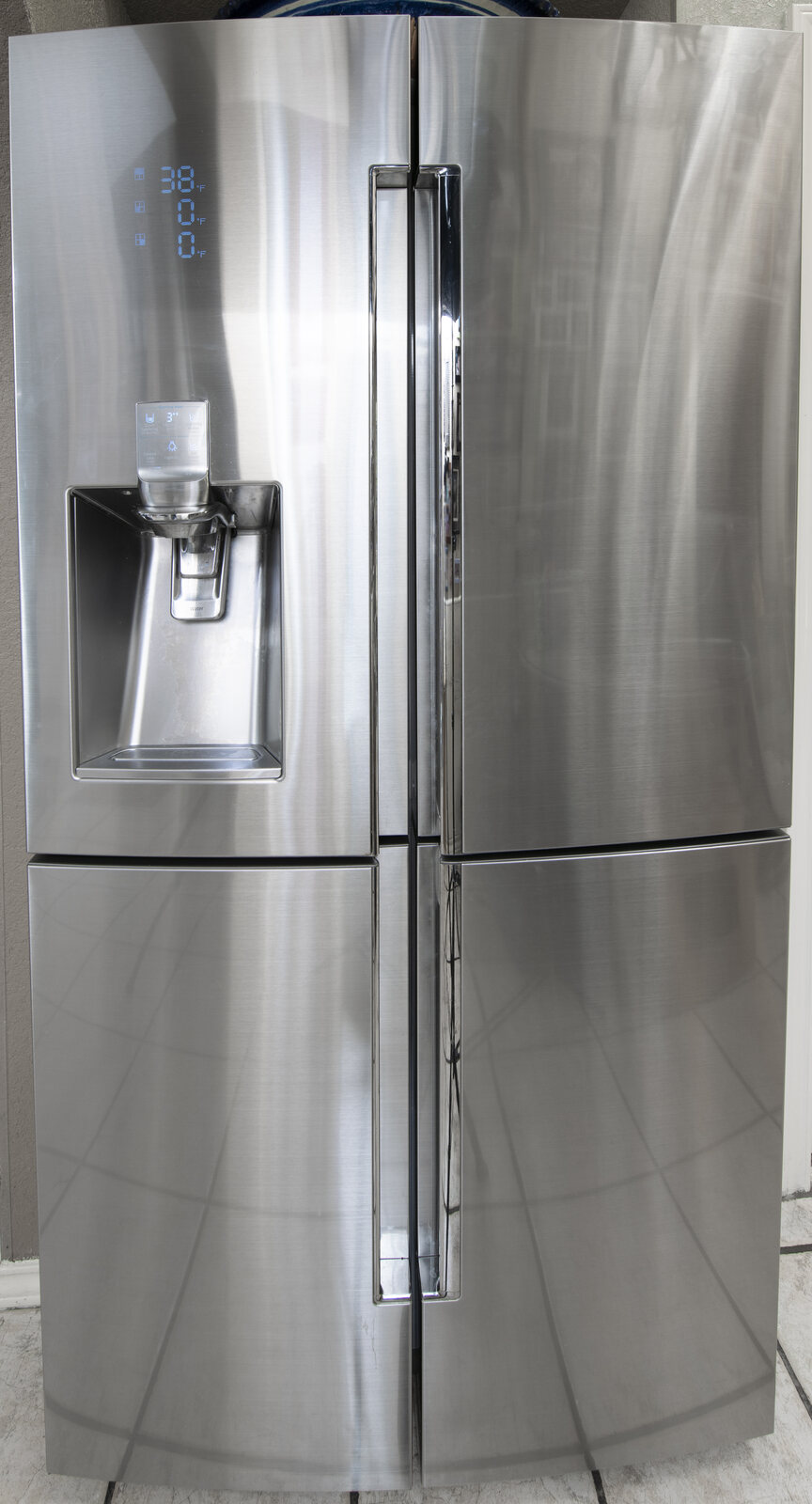
.jpg)
A full freezer will hold its temperature for about 48 hours during a power outage if the door stays closed. A half-full freezer will hold its temperature for about 24 hours.[1][2][3]
These are planning estimates, not guarantees. Freezer type, room temperature, starting temperature, door openings, food arrangement, and equipment condition all matter.
Quick answer: Keep the freezer closed. Plan around 48 hours if it is full and 24 hours if it is half-full. After power returns, food that still contains ice crystals or is 40°F or below can generally be refrozen or cooked.
Why a full freezer lasts longer
Frozen food acts as stored cold mass. A full freezer contains more frozen material and less warm air that can move in when the door opens.
Before an expected outage:
- Group frozen foods together.
- Fill empty space with frozen containers of water.
- Freeze gel packs.
- Freeze refrigerated items you will not need immediately.
- Make sure the freezer starts at 0°F or below.[2][4]
Do not block required air vents or overpack the appliance so tightly that it cannot cool properly before the outage.
Keep the door closed
The most useful action during the outage is also the least exciting: leave the freezer alone.
Do not open it to:
- Count food
- Touch packages
- Look for frost
- Read every label
- Check whether the light is off
Write down the outage start time and wait until you need to make a real decision.
Full freezer: about 48 hours
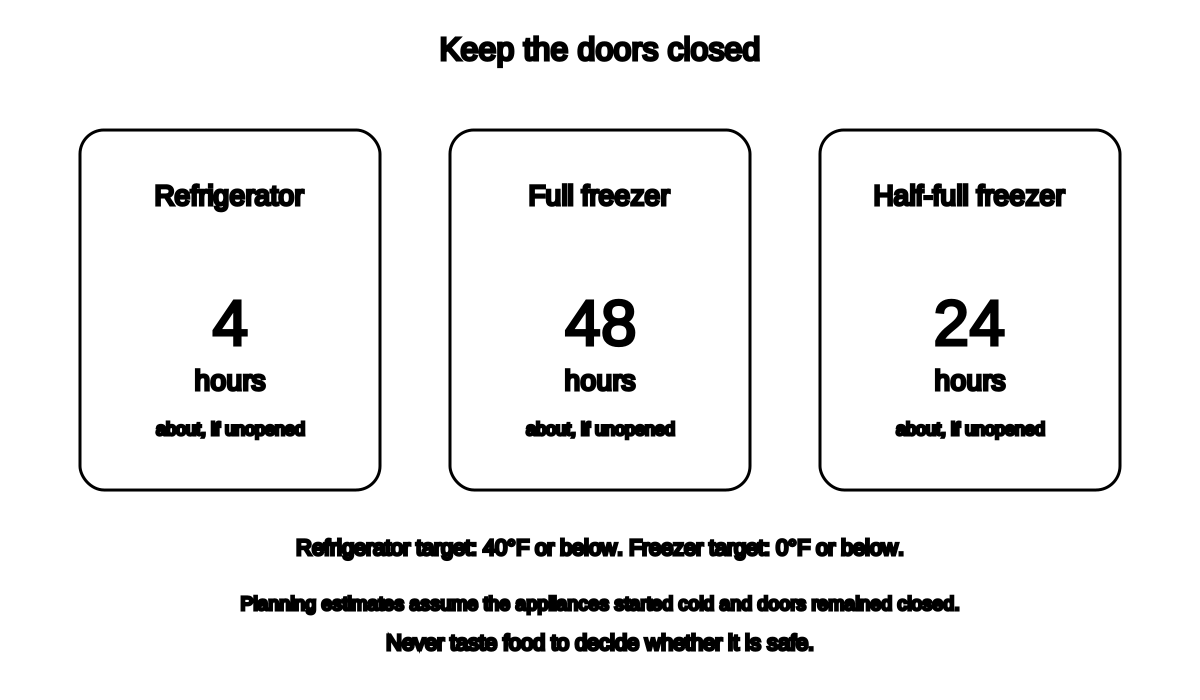
Approximate household planning limits when appliances start cold and doors remain closed.
A full, unopened freezer is expected to maintain a safe temperature for approximately 48 hours.[1][2][3]
“Full” means substantially stocked with frozen food or frozen water containers, not merely that the shelves look busy.
Half-full freezer: about 24 hours
A half-full, unopened freezer is expected to maintain a safe temperature for approximately 24 hours.[1][2][3]
Food in:
- The door
- The front
- Small or thin packages
- Areas with more warm-air exposure
may thaw faster than large, dense packages toward the back or bottom.[2]
What if the freezer is nearly empty?
Do not assume the 24-hour half-full estimate applies comfortably to a mostly empty freezer.
Before an outage, use frozen water containers or gel packs to add cold mass. Leave room for water to expand when freezing.
During an unexpected outage, keep the door closed and arrange for ice, dry ice, or alternate freezer space if the outage will be prolonged.
Can you add dry ice?
USDA and FDA state that about fifty pounds of dry ice can hold an 18-cubic-foot full freezer cold for about two days.[2][4]
Dry ice can cause serious cold burns and releases carbon dioxide gas.
Rules include:
- Do not touch it with bare hands.
- Use insulated gloves or tongs.
- Do not place it directly against unwrapped food.
- Do not store it in an airtight container.
- Provide ventilation.
- Keep it away from children and pets.
- Follow the supplier’s instructions.
Do not use dry ice casually in a small unventilated room or vehicle.
Block ice and bagged ice
Block ice, bagged ice, and frozen gel packs can also help.
Use clean, food-safe handling:
- Keep food protected from meltwater.
- Use a thermometer.
- Separate raw meat from ready-to-eat food.
- Avoid contaminating packages.
- Replace melting ice as needed.
Visible ice does not prove every package remained safe.
What should you do when power returns?
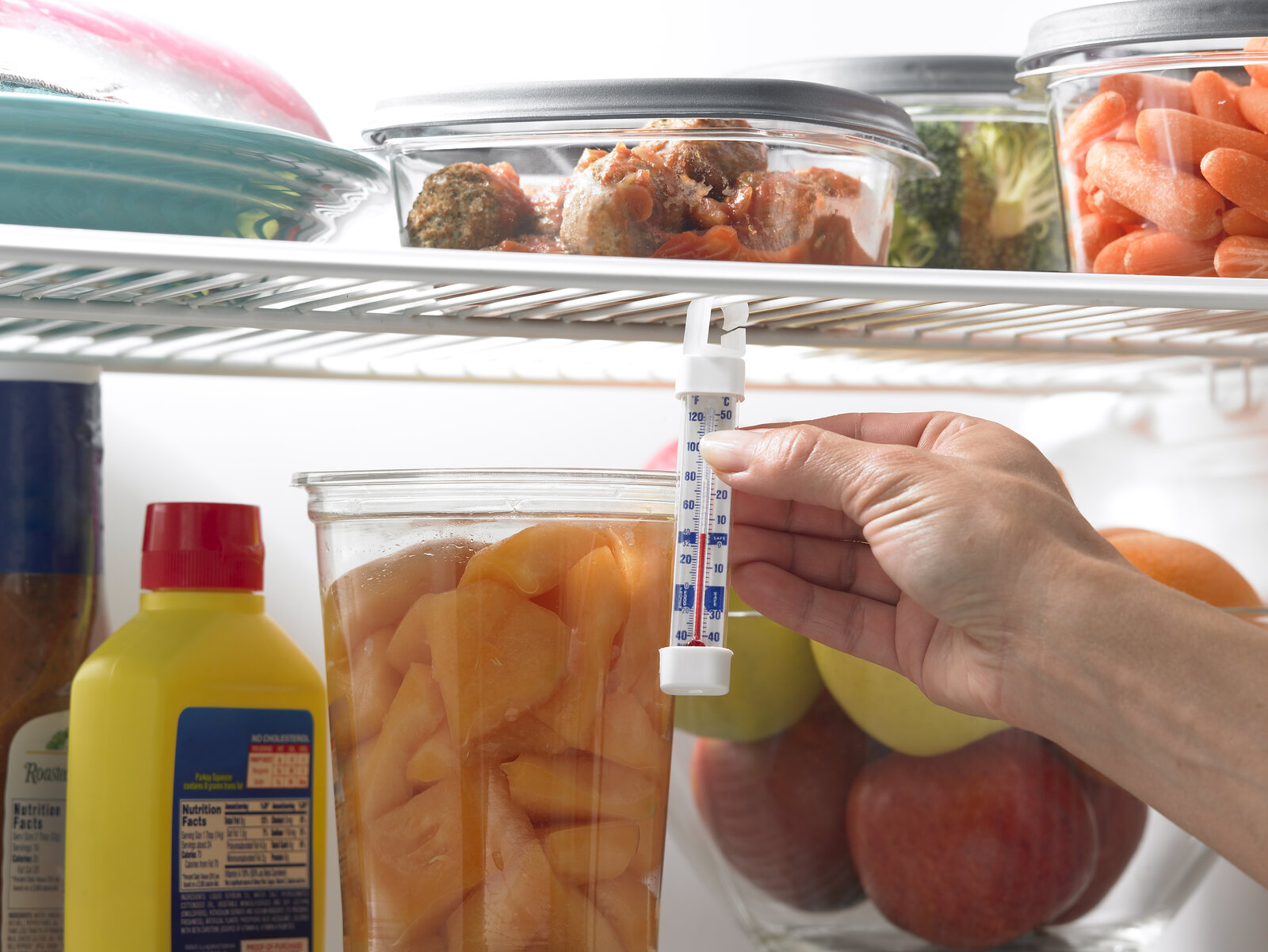
.jpg)
If the freezer thermometer reads 40°F or below
The food is safe and may be refrozen.[4][5]
Quality may decline because thawing and refreezing can change texture and moisture.
If a package still contains ice crystals
It may generally be safely refrozen or cooked, even if it partially thawed.[1][5]
Check each package separately.
If the food is fully thawed but still 40°F or below
It may generally be refrozen or cooked.[4][5]
Again, quality may suffer.
If perishable food was above 40°F for more than two hours
If you do not know how long it was warm, discard it.
Do not judge by smell or appearance
You cannot see, smell, or taste all dangerous bacteria.
Never taste thawed food to decide whether it is safe.[1][2]
Some freezer foods need special treatment
USDA’s item-specific chart includes different recommendations.
Examples:
- Meat, poultry, seafood, soups, and casseroles may be refrozen if they still contain ice crystals or remain as cold as refrigerated.
- Ice cream and frozen yogurt should be discarded if they become soft or melt.
- Hard cheese may be more forgiving than soft cheese.
- Bread and many baked goods may remain safe even when thawed.
- Food contaminated by raw meat juices should be discarded.[5][7]
Use the official chart for the exact item.
Should you move food to another freezer?
If a neighbor, relative, or community facility has reliable power, transferring food can help.
Use clean insulated containers and keep food at or below 40°F during transport.
Do not move food into a freezer whose temperature or power stability is unknown.
Should you put frozen food outside?
No.
USDA warns that outdoor temperature changes, sunlight, animals, and contamination make snow or a porch unreliable food storage.[2][5]
Make ice outdoors in clean containers instead.
Frequently asked questions
How long does a chest freezer stay cold?
Public-health guidance uses the same full-versus-half-full estimates. Chest freezers may hold cold differently, but do not extend the official 48- or 24-hour planning rule without verified temperature measurements.
Can I open the freezer once?
Every opening releases cold air. Open it only when necessary and keep the opening brief.
Is food safe if it is still hard?
Food that remains frozen is generally safe. For partially thawed food, check for ice crystals or a temperature of 40°F or below.
Can I refreeze meat that thawed?
Yes, if it still contains ice crystals or remained at 40°F or below. Discard it if it was above 40°F for more than two hours.
Does refrozen food taste the same?
Not always. Ice crystals and moisture loss can reduce quality even when the food remains safe.
Related power-outage food-safety guides
- Decide whether thawed food can be refrozen
- Choose and place appliance thermometers
- Open the printable food-safety chart
- Use the refrigerator outage timeline
Source notes
- Three Ways to Keep Food Safe When You Lose PowerFoodSafety.gov
- Keep Your Food Safe During Emergencies: Power Outages, Floods & FiresUSDA Food Safety and Inspection Service
- What to Do to Protect Yourself During a Power OutageCenters for Disease Control and Prevention
- Food and Water Safety During Power Outages and FloodsU.S. Food and Drug Administration
- Keeping Food Safe During an EmergencyUSDA Food Safety and Inspection Service
- Freezing and Food SafetyUSDA Food Safety and Inspection Service
- A Consumer’s Guide to Food Safety: Severe Storms and HurricanesUSDA Food Safety and Inspection Service
See something wrong or out of date? Report a correction.