
How Much Does a Portable AC Cost to Run?
Read the unit’s wattage or measured kWh, not only the advertised BTU number. A portable AC drawing 1,000 watts for eight full-power hours per day would cost about $44.26 over 30 days at 18.44 cents per kWh.

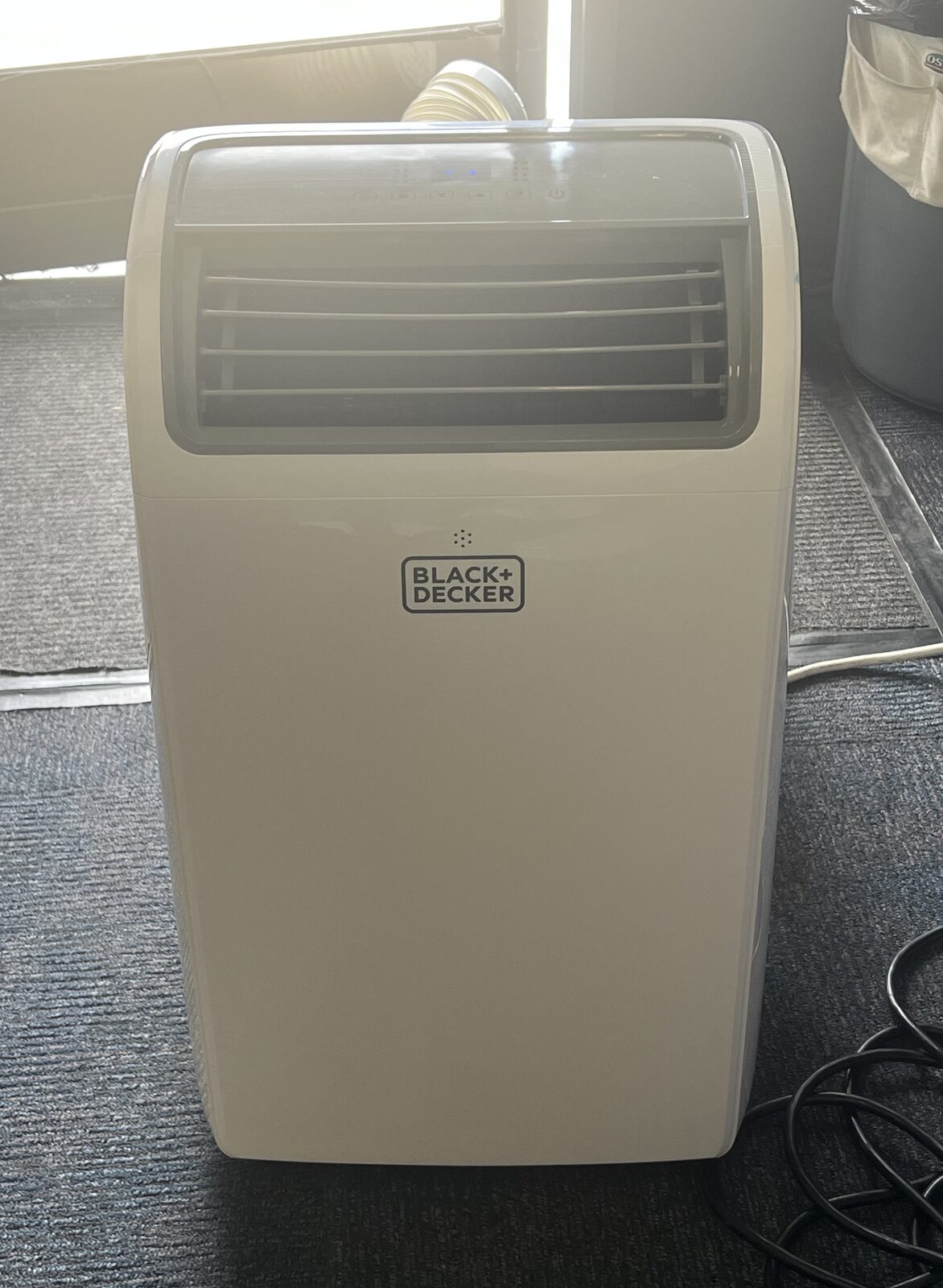
To estimate the cost of running a portable air conditioner, multiply its power in kilowatts by its operating time and your electricity price:
Formula: Cost = (watts ÷ 1,000) × hours × price per kWh
At the May 2026 U.S. residential average of 18.44 cents per kWh:
- A 1,000-watt portable AC costs about 18.4 cents per full-power hour
- A 1,300-watt portable AC costs about 24.0 cents per full-power hour[1]
Your actual cost depends on the model, your utility rate, compressor cycling, room conditions, thermostat setting, and how well the hose and window kit are installed.
Quick answer: Read the unit’s wattage or measured kWh, not only the advertised BTU number. A portable AC drawing 1,000 watts for eight full-power hours per day would cost about $44.26 over 30 days at 18.44 cents per kWh.
Portable AC cost examples
| Portable AC power | Cost per full-power hour at $0.1844/kWh | Cost for 8 full-power hours | Cost for 8 hours/day for 30 days |
|---|---|---|---|
| 1,000 watts | $0.18 | $1.48 | $44.26 |
| 1,300 watts | $0.24 | $1.92 | $57.53 |
These figures assume full rated power for every counted hour. A thermostat-controlled unit may cycle below full cooling power after the room reaches the set temperature.
Where to find the correct power number
Check:
- The appliance nameplate
- The owner’s manual
- The manufacturer specification
- The yellow EnergyGuide label
- A compatible plug-in energy meter
The nameplate may show watts directly. It may also show volts and amps.
A rough estimate is:
Formula: watts ≈ volts × amps
For example:
Formula: 115 × 11 = 1,265 watts
This is an estimate, not a laboratory measurement. A plug-in energy meter that records cumulative kWh is better because it captures compressor cycling.
Portable ACs are subject to federal test procedures and efficiency standards. DOE’s test method measures portable-air-conditioner energy consumption under standardized conditions.[2] FTC EnergyGuide labels use DOE test procedures to provide estimated operating cost or energy-use information.[3]
Do not calculate from BTU alone
Cooling capacity and electrical input are different quantities.
- Btu/h describes cooling capacity
- Watts describe electrical power input
- SACC is a DOE-tested portable-AC cooling-capacity measure
- CEER relates cooling performance to energy use under a standardized test
Two units with similar advertised cooling capacity can draw different power. Two units with similar wattage can perform differently in a particular room.
For operating cost, watts or measured kWh are the useful numbers.
Worked example
Suppose a portable AC draws 1,180 watts and your electricity rate is 23 cents per kWh.
Convert watts to kilowatts:
Formula: 1,180 ÷ 1,000 = 1.18 kW
Calculate the full-power hourly cost:
Formula: 1.18 × $0.23 = $0.2714
That is about 27 cents per full-power hour.
If the compressor accumulates six full-power hours per day:
Formula: $0.2714 × 6 = $1.6284
Over 30 days:
Formula: $1.6284 × 30 = $48.85
If your electricity rate is lower or the compressor cycles more, the cost falls. If the unit runs longer, the rate is higher, or the installation leaks hot air, the cost rises.
Why the real cost can differ from the simple estimate
Compressor cycling
When the room reaches the set temperature, the compressor may switch off while the fan continues. The appliance then draws less than full cooling power.
Hose and window-kit installation
A portable AC removes heat through its exhaust hose. Gaps around the window kit allow outdoor air and heat to enter. Install the kit according to the manual, keep the hose unobstructed, and seal the intended gaps with the supplied materials.
Do not cover vents, modify the hose beyond manufacturer instructions, or create a fire or condensate hazard in pursuit of theoretical efficiency.
Room size and sun exposure
A large, sunny room requires more cooling than a small shaded room. Open doors can expand the cooling load beyond the space the unit was selected for.
Humidity
Cooling equipment also removes moisture. Humid conditions can increase runtime and condensate production. Follow the manual’s drainage instructions.
Filter and coil condition
A dirty filter restricts airflow. Check and clean it on the schedule required by the manufacturer. Keep intake and outlet grilles unobstructed.
How to use the EnergyGuide label
FTC says EnergyGuide operating-cost estimates are based on typical use and a national average energy price; they are designed mainly to compare similar models. Your actual cost depends on your local rate and how you use the unit.[4]

A better household estimate is:
Formula: Your annual cost estimate = EnergyGuide annual kWh × your price per kWh
If the label shows 900 kWh per year and your electricity price is $0.22 per kWh:
Formula: 900 × $0.22 = $198
That calculation adjusts the label’s energy estimate to your local price, though your personal runtime may still differ from the standardized use assumption.
How to lower portable AC operating cost
Cool the smallest useful space
Close doors to rooms you are not using, provided doing so does not block required return airflow or create a safety problem.
Seal the window kit
Use the manufacturer’s panels, foam, and seals. Replace damaged material rather than stuffing the opening with flammable or unstable improvised materials.
Block direct sun
Close curtains or shades before strong sunlight heats the room.
Keep the hose short and unobstructed
Use the hose configuration allowed by the manual. Sharp bends and crushed sections can interfere with exhaust flow.
Clean the filter
Restricted airflow can increase runtime and reduce cooling.
Use a fan with the AC
A fan can distribute cooled air and improve comfort. It may allow a higher setpoint. Turn the fan off when the room is empty.
Avoid adding heat
Reduce oven use, unnecessary lighting, and heat-producing electronics during the hottest hours.
Measure actual kWh
A compatible electricity meter provides a much better estimate than guessing how often the compressor cycles. Record at least several representative hot days.
Portable AC versus window AC
A window AC places the heat-rejection side outside the room. A portable AC keeps the appliance indoors and sends heat out through a hose. Which one costs less in your home depends on:
- Rated electrical input
- Tested efficiency
- Cooling capacity
- Window constraints
- Installation quality
- Room conditions
- Runtime
- Local electricity price
If both are practical, compare EnergyGuide labels and calculate cost from annual kWh or watts. Do not compare only the largest BTU number printed on the box.
Heat safety
Portable AC cost matters, but extreme heat can be dangerous. CDC recommends using air conditioning or spending time in an air-conditioned location when needed. Fans alone should not be relied on when indoor temperatures are 90°F or higher.[5]
If the unit cannot keep the room safe:
- Move to a cooler location
- Contact local public-health or emergency-management resources
- Check on vulnerable household members
- Seek medical help for signs of heat-related illness
Frequently asked questions
How much does a 1,000-watt portable AC cost per hour?
At 18.44 cents per kWh:
Formula: 1.0 × $0.1844 = $0.1844
That is about 18.4 cents per full-power hour.
Does a portable AC use electricity when the compressor is off?
Yes. The fan, controls, display, and pumps may continue to use power, though typically less than full cooling mode.
Is the number on the EnergyGuide label exact?
No. It is a standardized estimate for comparison. Your rate, weather, room, installation, and usage determine your actual cost.
Should I use an extension cord?
Follow the manufacturer’s instructions. Portable air conditioners are high-power appliances. Ordinary extension cords and power strips may overheat or violate the product instructions.
Why does my portable AC run constantly?
Possible reasons include extreme heat, an oversized room, strong sun, open doors, poor window-kit sealing, a dirty filter, restricted airflow, a low thermostat setting, or equipment trouble.
Related guides and tool
- Diagnose a high summer electric bill
- Calculate window AC operating cost
- Compare fan and air-conditioner cost
- Compare household energy benchmarks
Source notes
- Electric Power Monthly: Sales, Revenue, and Average Price of Electricity to Ultimate Customers for May 2026U.S. Energy Information Administration
- Portable Air ConditionersU.S. Department of Energy
- EnergyGuide Labeling: FAQs for Appliance ManufacturersFederal Trade Commission
- How To Use the EnergyGuide Label To Shop for Home AppliancesFederal Trade Commission
- About Heat and Your HealthCenters for Disease Control and Prevention
See something wrong or out of date? Report a correction.