
How Much Electricity Does a Microwave Use?
A hypothetical microwave drawing 1,500 input watts for 10 minutes uses 0.25 kWh. At 18.44 cents per kWh, that costs about 5 cents.
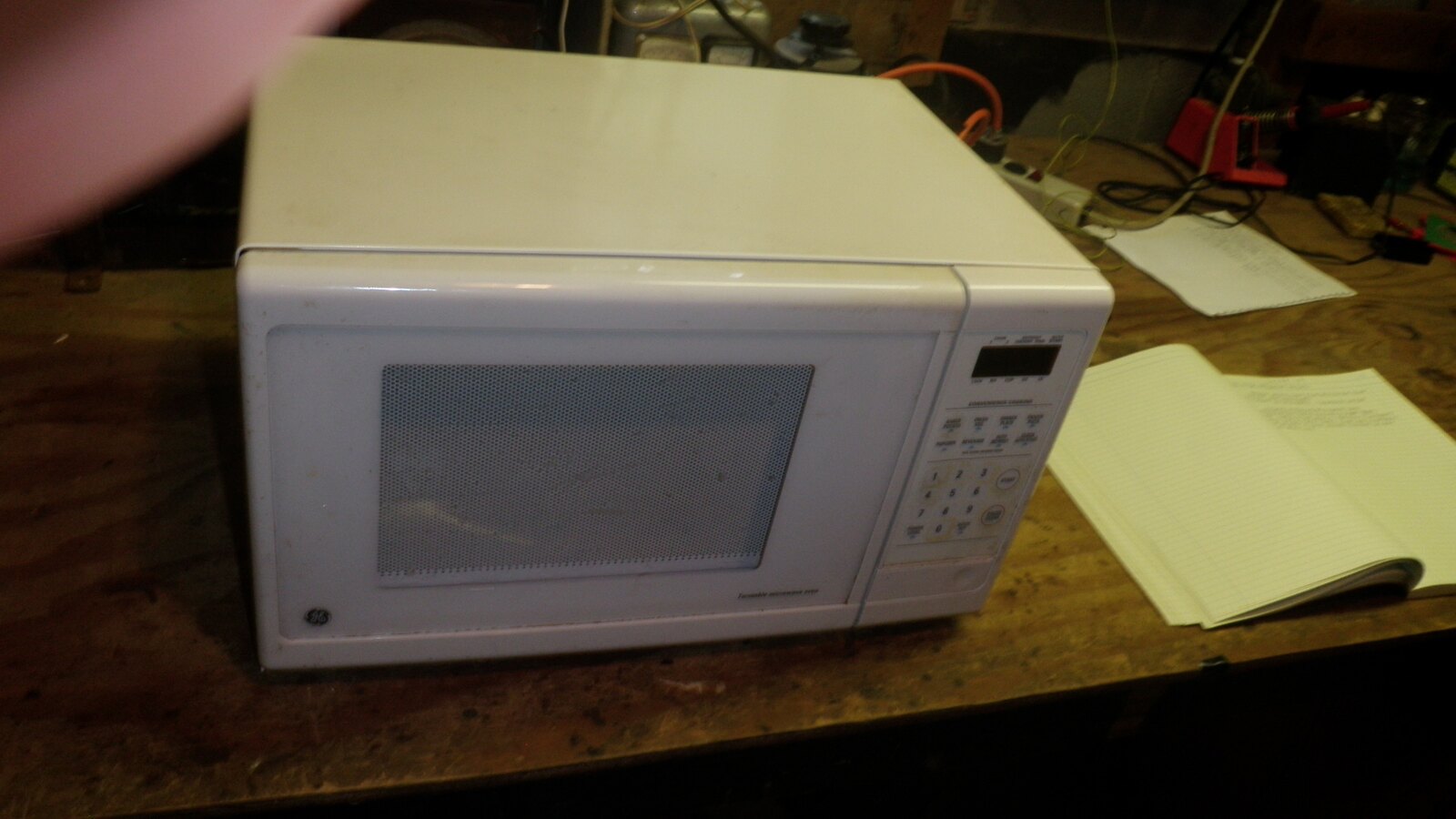

Calculate microwave electricity cost using the electrical input power, not merely the advertised cooking-output wattage:
\text(Cost) =
\frac(\text(input watts))(1(,)000)
\times
\text(hours)
\times
\text(electricity rate)
Quick answer: A hypothetical microwave drawing 1,500 input watts for 10 minutes uses 0.25 kWh. At 18.44 cents per kWh, that costs about 5 cents.
Worked example
Suppose:
- Electrical input: 1,500 watts
- Time: 10 minutes
- Rate: $0.1844 per kWh
Convert watts:
1(,)500 \div 1(,)000 = 1.5 \text( kW)Convert time:
10 \div 60 = 0.1667 \text( hour)Energy:
1.5 \times 0.1667 = 0.25 \text( kWh)Cost:
0.25 \times \$0.1844 = \$0.0461About 5 cents.
For five minutes:
1.5 \times \frac(5)(60) = 0.125 \text( kWh)0.125 \times \$0.1844 = \$0.0231About 2 cents.
Find electrical input watts
Look at:
- Rating label
- Owner’s manual
- Manufacturer specification
The microwave may show:
- Microwave cooking output
- Electrical input
- Rated power
- Volts and amps
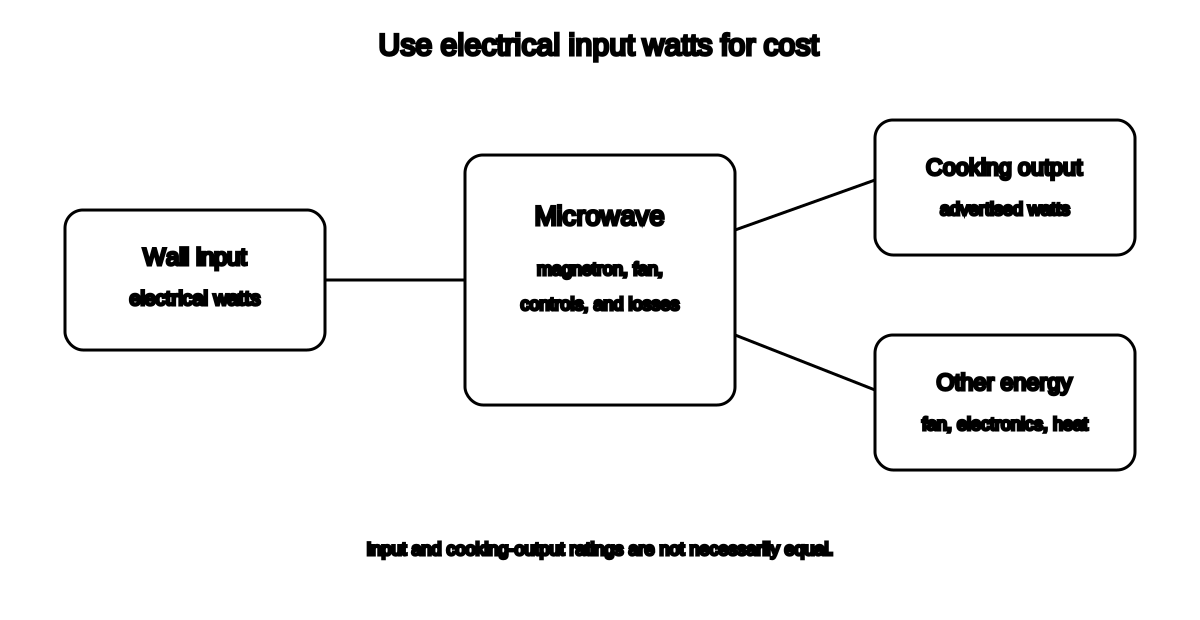
If both output and input are listed, use input for electricity cost.
The advertised “1,000-watt microwave” may describe cooking output rather than wall-socket input.
Do not assume the two numbers are equal.
What if only volts and amps are listed?
A rough apparent-power estimate is:
\text(volt-amperes) =
\text(volts)
\times
\text(amps)
Actual watts may differ because of power factor and operating design.
Use manufacturer input watts or a safe compatible meter when possible.
Microwaves do not generally carry EnergyGuide labels
FTC’s current EnergyGuide-covered appliance list includes products such as clothes washers, refrigerators, dishwashers, televisions, and several heating and cooling products. It does not list countertop microwave ovens.[1][2]
That makes the exact rating label and cooking time the practical cost method.
Can you use a plug-in electricity meter?
A countertop microwave may be measurable with an ordinary meter only when:
- Meter voltage, current, and wattage ratings cover the appliance
- Microwave uses a compatible ordinary plug
- Manufacturer instructions permit it
- Meter and outlet are undamaged
- No extension cord or power strip is introduced
Microwaves can draw high current.
Do not use:
- Undersized extension cords
- Power strips
- Unapproved smart plugs
- Loose outlets
- Damaged cords
Stop using a microwave with a damaged door, hinge, latch, or seal. FDA advises following the manufacturer’s safety instructions and discontinuing use when the door does not close properly or the oven operates with the door open.[3]
Does power level reduce electricity proportionally?
Not always.
Some microwaves reduce average heating by cycling full magnetron power on and off.
Others may use inverter control.
A 50% cooking setting does not automatically mean exactly half the wall power at every moment.
Measure cumulative kWh over the complete event if the exact difference matters.
Standby power
The display and controls may draw electricity while the microwave waits.
A hypothetical continuous 3-watt standby load would use:
0.003 \times 24 \times 365 = 26.28 \text( kWh/year)At $0.1844 per kWh:
26.28 \times \$0.1844 = \$4.85 \text( per year)This is a hypothetical example, not a typical microwave claim.
DOE energy-conservation standards for microwave ovens address standby and off modes, with amended compliance requirements applying from June 22, 2026.[4]
Do not unplug a built-in microwave or repeatedly switch a circuit solely to eliminate a clock without considering installation and manufacturer guidance.
Microwave versus oven
A microwave can use less electricity for small reheating tasks because:
- Cooking time is short
- It heats the food rather than a large oven cavity
- Preheating is usually unnecessary
The result depends on:
- Input watts
- Time
- Food amount
- Number of batches
- Oven alternative
- Desired result
Use the calculator rather than a universal percentage.
Daily-use example
One 10-minute event per day at the hypothetical 1,500-watt input:
0.25 \times 365 = 91.25 \text( kWh/year)91.25 \times \$0.1844 = \$16.83About $16.83 per year.
A household using the microwave for two minutes a day would spend much less.
Safety is not an energy variable
FDA says microwave ovens meeting its standard and used according to manufacturer instructions are generally safe.[3]
Follow instructions for:
- Microwave-safe cookware
- Door condition
- Superheated liquids
- Operating empty
- Cleaning
- Child safety
- Repairs
Do not open the enclosure. High-voltage components can remain dangerous even when unplugged.
Frequently asked questions
Does a 1,000-watt microwave draw 1,000 watts?
The advertised number may be cooking output. Use electrical input from the label or manual.
Is a microwave cheaper than an oven?
Often for small, short tasks, but compare the exact food quantity, time, and appliance input.
Does the microwave use full power at 50%?
Some models cycle full power. Others use different control. Check the manual or measure the complete event.
Is standby expensive?
Usually modest, but exact standby wattage is model-specific.
Can I use a smart plug?
Only if the smart plug and microwave manufacturer explicitly support the load and use. Many ordinary smart plugs are inappropriate for high-current cooking appliances.
Related guides
- Calculate any appliance’s electricity cost
- Estimate electric-oven cost per hour
- Compare air-fryer and oven electricity cost
- Use the appliance electricity cost calculator
Source notes
- How To Use the EnergyGuide Label To Shop for Home AppliancesFederal Trade Commission
- Energy and Water Use Labeling for Consumer Products Under the Energy Policy and Conservation ActFederal Trade Commission
- Microwave OvensU.S. Food and Drug Administration
- Microwave OvensU.S. Department of Energy
- Electric Power Monthly: Sales, Revenue, and Average Price of Electricity to Ultimate Customers for May 2026U.S. Energy Information Administration
See something wrong or out of date? Report a correction.