
How Much Does an Air Purifier Cost to Run?
A purifier’s electricity may be modest, but continuous operation and replacement filters make ownership cost model-specific. Use exact operating watts or measured kWh, not only the maximum number printed on the box.

Calculate air-purifier electricity cost with:
Cost
=
\frac(watts)(1(,)000)
\times
hours
\times
electricity rate
Then add:
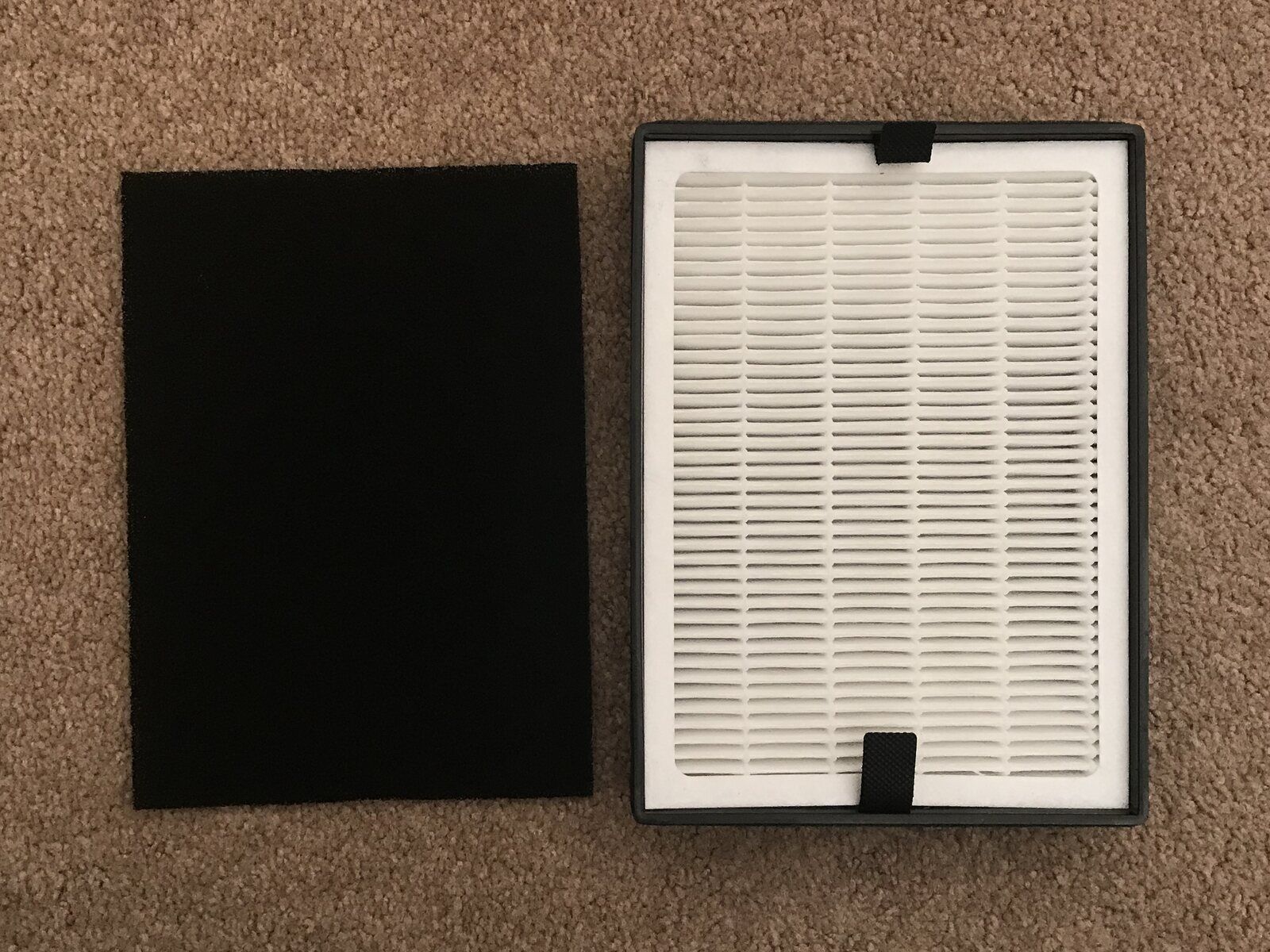
- Replacement filters
- Prefilters
- Shipping
- Any required specialty media
Quick answer: A purifier’s electricity may be modest, but continuous operation and replacement filters make ownership cost model-specific. Use exact operating watts or measured kWh, not only the maximum number printed on the box.
Find the correct power number

Use:
- Model specification
- ENERGY STAR Product Finder
- Owner’s manual
- Rating label
- Safe compatible watt meter
A purifier may have different power use at:
- Sleep speed
- Low
- Medium
- High
- Turbo
- Automatic
- Standby
- Network-connected mode
Maximum watts multiplied by 24 hours can overstate typical automatic operation.
Lowest-speed watts may understate the power required for adequate CADR.
Example: 30 watts continuously
Suppose:
- Power: 30 watts
- Runtime: 24 hours per day
- Rate: $0.1844 per kWh
Daily energy:
0.03 \times 24 = 0.72 kWhAnnual energy:
0.72 \times 365 = 262.8 kWhAnnual electricity cost:
262.8 \times \$0.1844 = \$48.46This is a full-year example at a dated national electricity price. Use the local rate.
Example: 60 watts continuously

0.06 \times 24 \times 365
=
525.6  kWh
525.6 \times \$0.1844
=
\$96.92Doubling continuous watts doubles electricity cost.
It does not necessarily double particle removal, noise, or room coverage.
Automatic mode
Automatic mode may change fan speed based on:
- Particle sensor
- Odor sensor
- Schedule
- Occupancy
- Manufacturer logic
The most reliable cost estimate is measured kWh over a representative week.
Do not assume the sensor accurately identifies every pollutant or that automatic mode provides sufficient smoke filtration.
During wildfire smoke, public-health guidance may favor continuous higher-speed operation rather than waiting for an automatic sensor.
Replacement filters
Annual ownership cost:
Electricity
+
replacement filters
+
prefilters
+
shipping
Record:
- Filter model number
- Recommended interval
- Actual loading
- Smoke events
- Filter price
- Package count
- Washable prefilter care
A cheap purifier with rare proprietary filters may cost more over time than a more expensive unit with available filters.
Do not extend a filter beyond evidence
A filter-life indicator may estimate:
- Runtime
- Fan speed
- Sensor loading
- Calendar time
It may not directly measure particle resistance.
Replace according to the manual and actual conditions.
Do not wash a non-washable HEPA or particle filter.
CADR per watt
ENERGY STAR uses an Integrated Energy Factor based on Clean Air Delivery Rate per watt for current room-air-cleaner certification.[1]
Higher efficiency means more clean-air delivery for the electrical input under the test.
Do not compare watts without CADR.
A 20-watt unit delivering little filtered air is not automatically efficient for the room.
Noise and cost
A unit may deliver its labeled CADR only on a loud maximum setting.
Compare:
- CADR at rated speed
- Noise at usable speed
- Power at usable speed
- Room requirement
- Filter cost
Buying an undersized unit and running it at maximum can be noisier than buying a larger unit and using a lower setting.
Standby and network power
Some units use power for:
- Display
- Wi-Fi
- Sensor
- Remote control
- Standby
ENERGY STAR product data may report partial-on or standby power.
Measure 24-hour energy when these loads matter.
Do not unplug a unit during an active smoke event merely to eliminate a tiny standby cost.
Time-of-use rates
If the purifier must operate continuously, shifting use may not be practical.
Air-quality needs should not be suspended during a high-rate period solely to reduce cost.
For ordinary background use:
- Schedule around occupancy where appropriate.
- Maintain needed filtration.
- Avoid turning the unit off when the pollutant source remains.
Compare two models
| Input | Model A | Model B |
|---|---|---|
| Smoke CADR | ||
| Rated watts | ||
| CADR per watt | ||
| Annual kWh | ||
| Filter price | ||
| Filter interval | ||
| Noise at useful speed | ||
| Five-year ownership cost |
Do not claim a five-year total without disclosing assumptions.
Frequently asked questions
Is an air purifier expensive to run?
It depends on watts, runtime, rate, and filter cost.
Should I run it all day?
Longer operation provides more filtration. Match runtime to the air-quality need and manual.
Does sleep mode save money?
Usually, but it also moves less air. Confirm that it still provides adequate filtration.
Are ENERGY STAR units cheaper?
Certified units meet current energy-efficiency criteria. Exact ownership cost still depends on use and filters.
Can I use a smart plug?
Only if the purifier and plug support the electrical load and automatic restart behavior. Do not defeat safety functions.
Printable companion
Download the ungated HVAC Filter Log PDF. No email address is required.
Related guides
- What MERV Rating Should You Use in Your House?
- How Often Should You Change Your HVAC Filter?
- Air Purifier vs. HVAC Filter: Which Do You Need?
- What Size Air Purifier Do You Need?
- What Can an Air Purifier Remove?
- What Humidity Should Your House Be?
- Home Energy Check for a High Summer Electric Bill
- Why Is My Electric Bill So High in Summer?
- How to Calculate What an Appliance Costs to Run
Source notes
- Air CleanersENERGY STAR
- Room Air Cleaner Key Product CriteriaENERGY STAR
- Guide to Air Cleaners in the HomeEPA
See something wrong or out of date? Report a correction.