
What MERV Rating Should You Use in Your House?
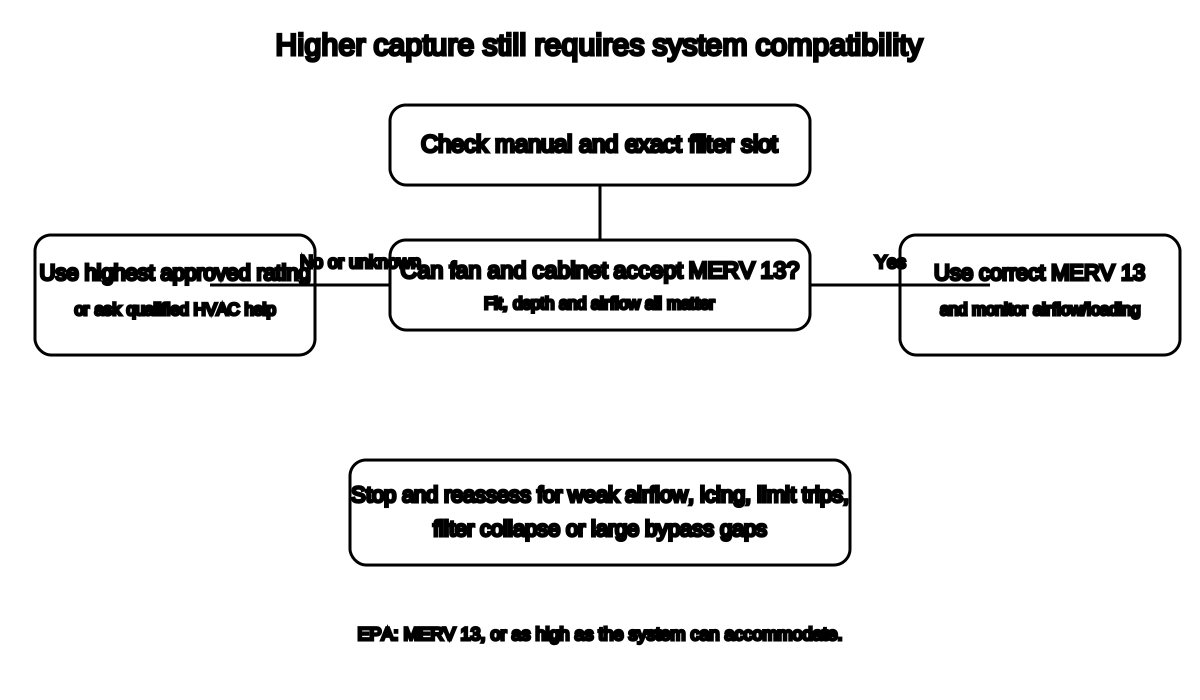
Start with the HVAC manual. EPA recommends MERV 13, or as high a rating as the system fan and filter slot can accommodate. Use the exact filter dimensions, install it in the correct airflow direction, and do not force a thick or restrictive filter into equipment not designed for it.
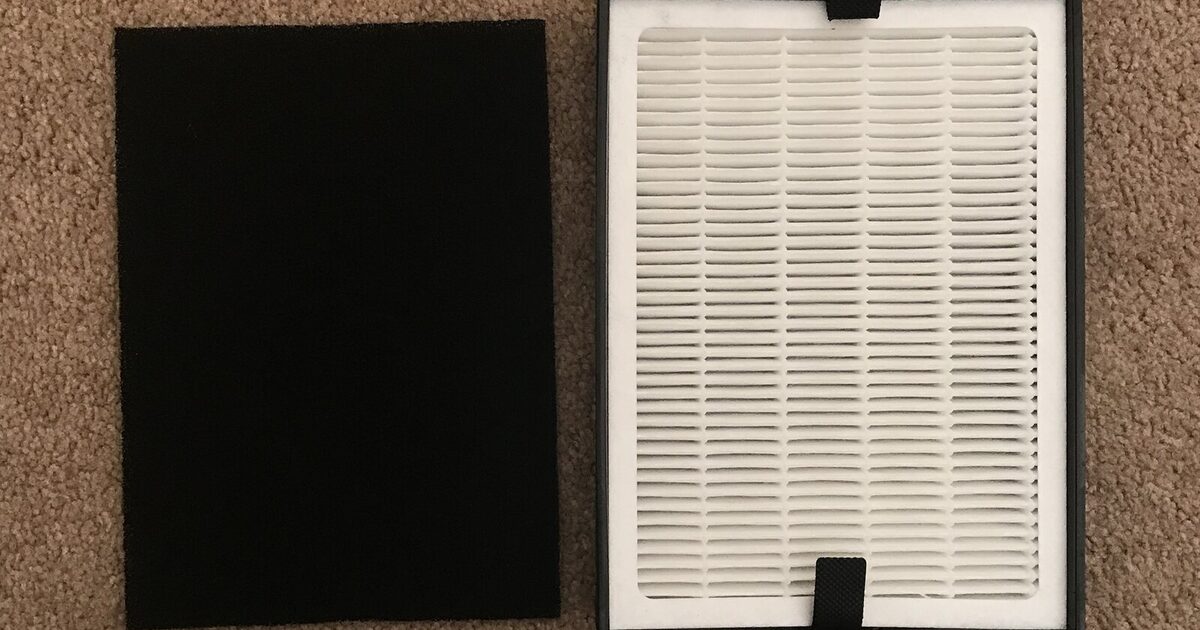

Use a MERV 13 filter, or the highest-efficiency filter that your exact HVAC system can accommodate, when the equipment manual, filter slot, and fan support it.
That last condition matters. A filter that captures smaller particles but does not fit correctly, bends in the slot, or restricts airflow beyond the system’s design is not an upgrade.
Quick answer: Start with the HVAC manual. EPA recommends MERV 13, or as high a rating as the system fan and filter slot can accommodate. Use the exact filter dimensions, install it in the correct airflow direction, and do not force a thick or restrictive filter into equipment not designed for it.
What MERV means

MERV stands for Minimum Efficiency Reporting Value.
The rating describes how effectively a filter captures particles across tested size ranges. A higher number generally means greater particle capture.
MERV does not tell you:
- Whether the filter fits your equipment
- How often it must be replaced
- Whether the system fan can overcome its resistance
- How well air bypasses around a loose filter
- Whether the filter removes gases or odors
- Whether your HVAC fan runs enough hours to provide useful filtration
MERV is one part of a whole-system decision.
EPA’s current home recommendation
EPA’s current Guide to Air Cleaners in the Home advises selecting a furnace or HVAC filter rated at least MERV 13, or as high as the system will accommodate.[1]
EPA also tells consumers to consult the HVAC manual or a professional when they do not know the system’s maximum compatible filter efficiency.
Do not translate “MERV 13 is preferred” into “every furnace accepts MERV 13.”
Older systems, undersized return ducts, narrow filter slots, weak blowers, and poorly maintained equipment may require a different solution.
Higher MERV is not automatically better

A higher-efficiency filter may:
- Capture smaller particles
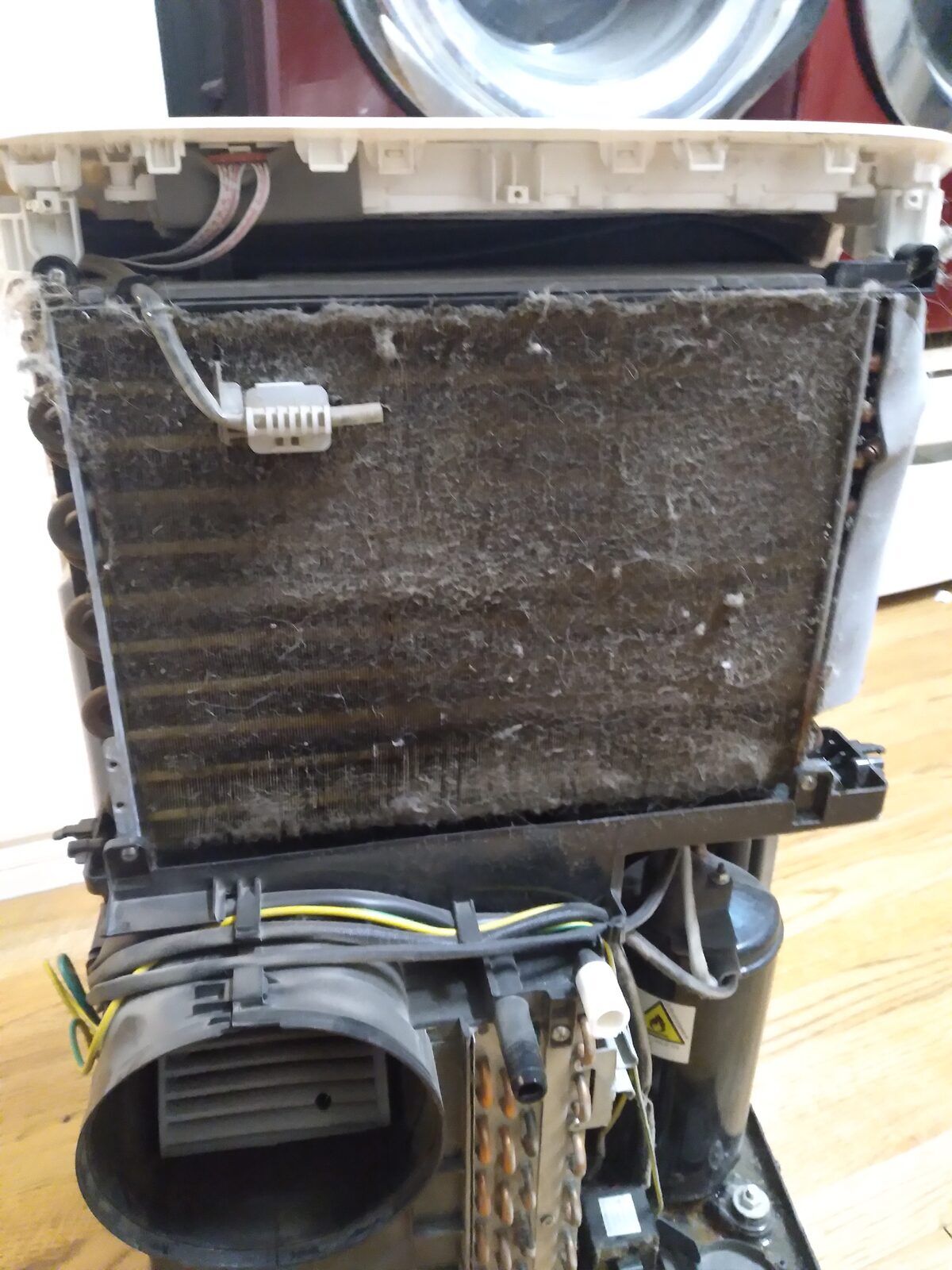
- Increase resistance to airflow
- Load more quickly
- Require a deeper filter cabinet
- Need more frequent inspection
- Expose an existing duct or blower problem
Possible signs that airflow is inadequate include:
- Weak supply-air flow
- Unusual blower noise
- Furnace overheating or limit trips
- Air conditioner coil freezing
- Longer heating or cooling cycles
- Poor humidity control
- Filter being pulled inward
- Air bypassing around the filter
These signs do not prove the filter is the only cause. They require system-level diagnosis.
Fit matters as much as the number
Use the exact dimensions required by the filter cabinet.
Check:
- Width
- Height
- Depth
- Nominal versus actual dimensions
- Airflow arrow
- Gasket or sealing requirement
- Filter-rack condition
A nominal 16-by-25-inch filter may have actual dimensions slightly smaller than those numbers.
Do not assume two filters with the same words on the front fit identically.
The filter should sit securely without being crushed, bowed, or surrounded by large gaps.
What about MPR and FPR?
Some manufacturers and retailers use proprietary scales such as:
- MPR
- FPR
- Microparticle rating
- Allergy or smoke labels
These scales are not direct replacements for MERV unless the manufacturer provides a documented conversion or test basis.
Use MERV as the common comparison where available.
Do not rely on packaging words such as:
- Premium
- Allergen
- Hospital grade
- Maximum
- Elite
- Ultra
Marketing adjectives do not identify system compatibility.
Smoke and fine particles
Wildfire smoke and combustion particles are among the reasons a household may want improved filtration.
EPA states that MERV 13 or higher can capture smaller particles when the system supports it.[2]
During a smoke event:
- Keep outdoor smoke from entering when public-health guidance says to close the building.
- Use a compatible HVAC filter.
- Consider a correctly sized portable air cleaner for a clean room.
- Replace or inspect filters after heavy loading.
- Follow local air-quality and emergency guidance.
A central filter only filters air while the HVAC fan operates.
Running the fan continuously may increase filtration, electricity use, equipment wear, and humidity problems during cooling season. EPA notes that longer fan runtime is not always desirable or practical.[1]
Pets, pollen, and ordinary dust
A more efficient filter may help reduce airborne:
- Dust
- Pollen
- Pet dander
- Smoke particles
- Some mold-related particles
It does not eliminate:
- Dust already settled on surfaces
- Pet allergens embedded in upholstery
- A continuing smoke source
- Moisture causing mold growth
- Gases and many odors
Use filtration alongside:
- Source removal
- Cleaning
- Ventilation with clean outdoor air
- Moisture control
- Proper exhaust
What if the system cannot use MERV 13?
Options include:
- Use the highest rating the system safely accepts.
- Make sure the filter fits and seals correctly.
- Repair return-air or blower problems.
- Ask whether a deeper media cabinet is appropriate.
- Add a portable air cleaner in the room that needs filtration.
- Consider an HVAC upgrade when replacement is already justified.
Do not use a loosely fitted high-MERV filter as decorative proof that the air is being treated.
How often should you inspect it?
Inspect based on:
- Manufacturer interval
- System runtime
- Pets
- Smoke
- Construction
- Dust
- Filter depth
- Visible loading
- Airflow symptoms
The companion article How Often Should You Change Your HVAC Filter? explains why “every 90 days” is only a generic starting point.
Safe replacement
Before replacing:
- Follow the equipment manual.
- Turn the system off when instructed.
- Confirm the filter location.
- Photograph the old airflow-arrow direction.
- Avoid touching blower or electrical components.
- Bag a heavily contaminated filter.
- Install the replacement without bending it.
- Restore covers and switches.
Do not operate equipment with required access panels removed.
Decision table
| Situation | Starting decision |
|---|---|
| Manual explicitly permits MERV 13 | Use a correctly sized MERV 13 and monitor |
| Manual permits higher efficiency | Compare airflow and replacement cost |
| Filter slot is too shallow | Use compatible filter or evaluate cabinet upgrade |
| System has weak airflow now | Diagnose system before increasing resistance |
| Smoke affects one bedroom | Add a correctly sized portable air cleaner |
| Filter bends or gaps around edges | Correct fit before changing rating |
| No manual or uncertain system | Ask manufacturer or qualified HVAC professional |
Frequently asked questions
Is MERV 8 enough?
It may be the highest compatible filter for some systems and can capture larger particles. EPA prefers MERV 13 or the highest rating the system can accommodate.
Is MERV 16 always better?
Not when the system cannot support its resistance or fit.
Will MERV 13 remove odors?
MERV ratings primarily describe particle filtration, not gas or odor removal.
Can a high-MERV filter damage a furnace?
An incompatible or heavily loaded filter can contribute to airflow problems. Use the rating and dimensions approved for the system.
Does a filter clean the air when the fan is off?
No. A central filter acts only on air moving through the system.
Printable companion
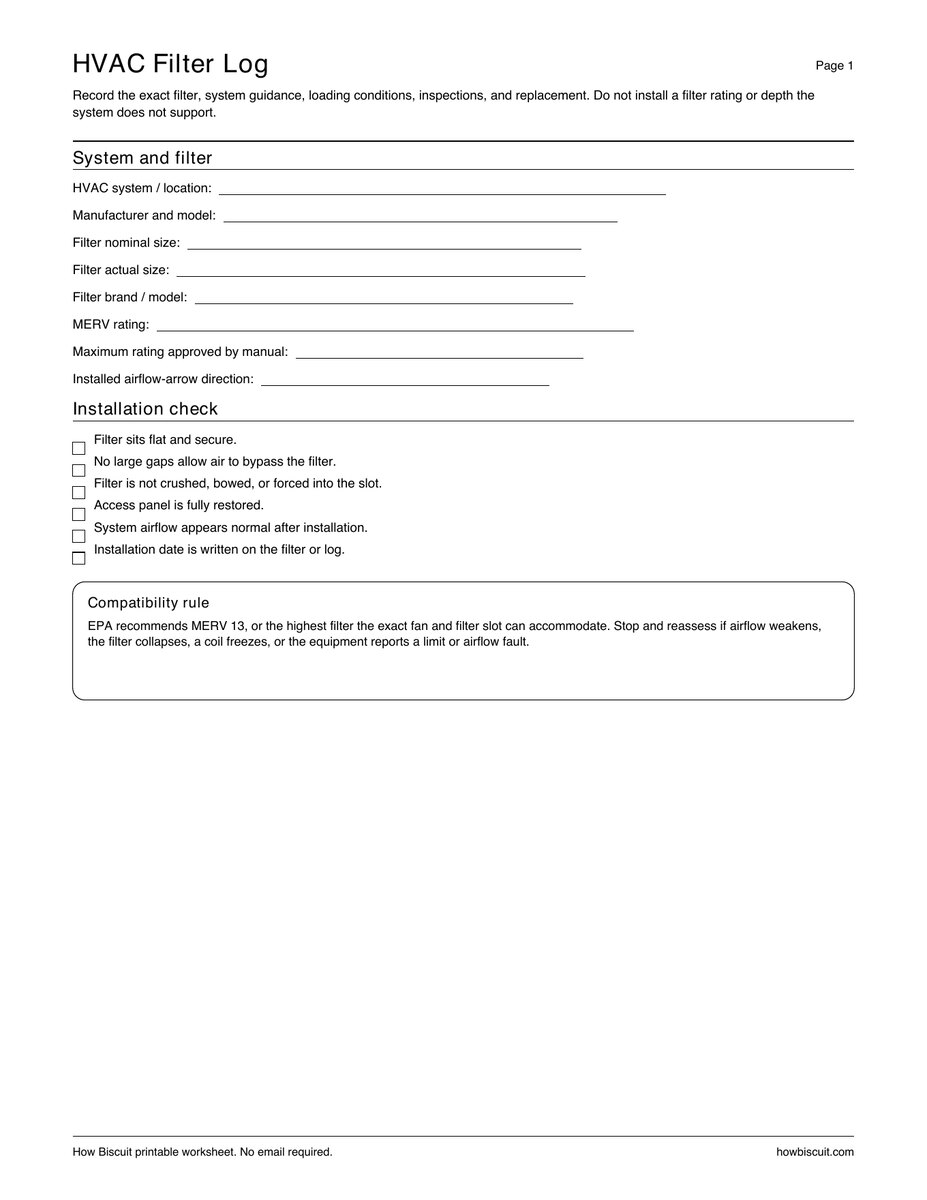
Download the ungated HVAC Filter Log PDF. No email address is required.
Related guides
- How Often Should You Change Your HVAC Filter?
- Air Purifier vs. HVAC Filter: Which Do You Need?
- What Size Air Purifier Do You Need?
- How Much Does an Air Purifier Cost to Run?
- What Can an Air Purifier Remove?
- What Humidity Should Your House Be?
- Home Energy Check for a High Summer Electric Bill
- Why Is My Electric Bill So High in Summer?
- How to Calculate What an Appliance Costs to Run
Source notes
See something wrong or out of date? Report a correction.