
ENERGY STAR vs. EnergyGuide
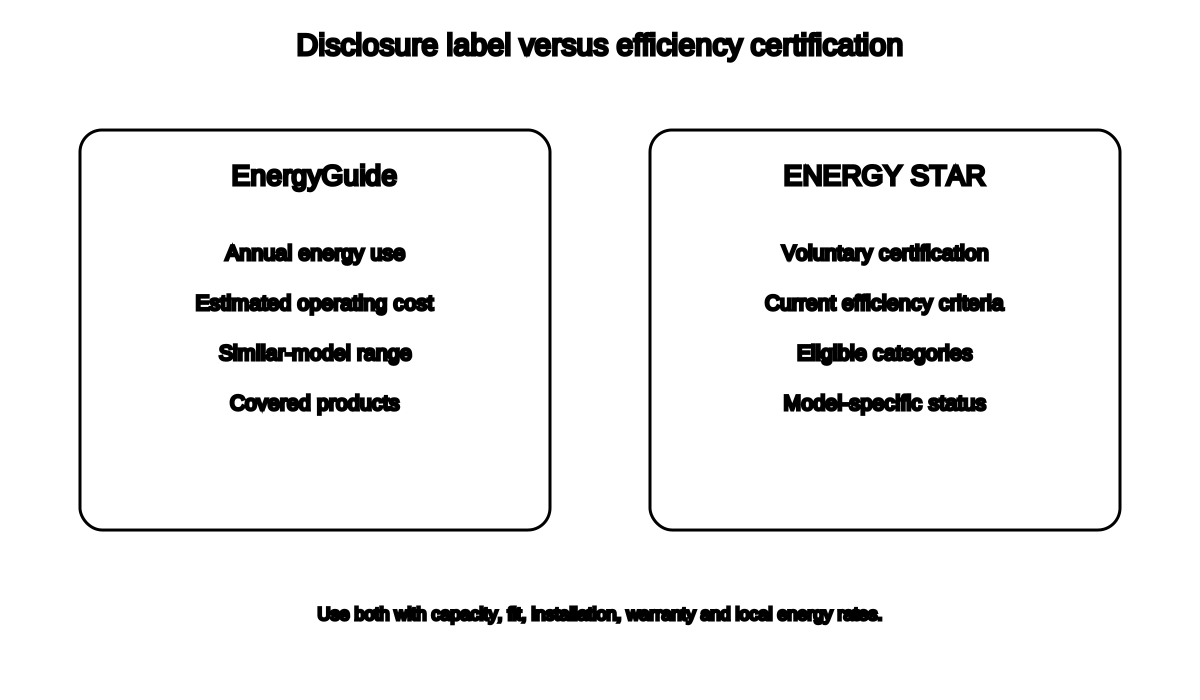
Use EnergyGuide to compare annual energy consumption and estimated cost among similar products. Use ENERGY STAR to identify certified efficiency. Then verify size, features, installation, support, and household needs.

EnergyGuide reports standardized energy information for covered products.
ENERGY STAR identifies eligible models that meet current program efficiency criteria.
A product can:
- Have EnergyGuide without ENERGY STAR
- Have both
- Be in a category that uses ENERGY STAR but not EnergyGuide
- Be in neither program
Quick answer: Use EnergyGuide to compare annual energy consumption and estimated cost among similar products. Use ENERGY STAR to identify certified efficiency. Then verify size, features, installation, support, and household needs.
EnergyGuide

.jpg)
EnergyGuide is administered under FTC’s Energy Labeling Rule.
It provides information such as:
- Annual energy use
- Estimated operating cost
- Comparison with similar models
- Capacity or product class
The exact fields vary by product category.
The label is a disclosure and comparison tool.
ENERGY STAR
ENERGY STAR is a voluntary certification program administered by EPA and DOE.
Eligible products must meet:
- Current efficiency criteria
- Test requirements
- Certification requirements
- Reporting requirements
Criteria change over time.
A model certified under an older version may no longer appear as current when the specification changes.
Mandatory versus voluntary

EnergyGuide applies to covered categories under federal labeling requirements.
ENERGY STAR is voluntary.
A non-certified product is not automatically unsafe or illegal.
A certified product is not automatically the best fit or lowest lifetime cost.
Annual energy use
EnergyGuide’s annual kWh or fuel use can be applied to the local rate.
ENERGY STAR product databases may provide:
- Annual kWh
- efficiency metric
- capacity
- features
- model status
Use both when available.
Product categories differ
Programs cover different sets of products.
For example:
- Refrigerators often have both.
- Clothes washers often have both.
- Room air cleaners can be ENERGY STAR certified but are not generally EnergyGuide-covered.
- Countertop air fryers generally have neither.
- Some electric cooking products are newly eligible for ENERGY STAR, while standalone ovens may not be.
Verify the current category.
Certification is model-specific
Check:
- Exact model
- suffix
- size
- fuel
- voltage
- configuration
- current Product Finder status
Retailers may display an ENERGY STAR logo on a product-family page containing non-certified variants.
Do not assume every variant qualifies.
Current specification
ENERGY STAR criteria can change.
A product may have been certified under:
- Current specification
- Historical specification
- Archived listing
Record:
- Specification version
- effective date
- certification status
- retrieval date
Do not call a discontinued historical model “currently ENERGY STAR certified” without evidence.
Rebates
Rebates may require:
- Current certification
- Exact model
- purchase date
- installation date
- utility territory
- income qualification
- contractor
- permit
- old-equipment removal
- application deadline
Do not subtract a rebate before eligibility is confirmed.
Efficiency versus use
A highly efficient appliance can still use substantial energy when:
- It is very large
- Used constantly
- Set incorrectly
- Installed poorly
- Maintained poorly
- Operated in inefficient mode
A smaller non-certified product may use less total energy than a much larger certified one.
Compare similar products and real use.
Buying sequence
- Define capacity and household need.
- Verify dimensions and hookups.
- Identify exact models.
- Read EnergyGuide annual use.
- Check ENERGY STAR status.
- Apply local rate.
- Check rebates.
- Compare warranty and support.
- Review installation and delivery.
- Compare total cost.
Frequently asked questions
Is ENERGY STAR the yellow label?
No. EnergyGuide is the yellow label. ENERGY STAR is a certification mark.
Does every EnergyGuide appliance earn ENERGY STAR?
No.
Does ENERGY STAR show operating cost?
Product data may include energy information, but EnergyGuide is the standardized consumer label for covered categories.
Can an old ENERGY STAR model lose certification?
Current listings and criteria change. Historical certification should be described accurately.
Is ENERGY STAR always worth paying more for?
Compare verified operating savings with purchase, installation, capacity, and ownership needs.
Printable companion
Download the ungated Appliance Purchase and Delivery Checklist PDF. No email address is required.
Related guides
- How to Read an EnergyGuide Label
- Are Extended Warranties on Appliances Worth It?
- Repair or Replace an Appliance?
- New vs. Used vs. Refurbished vs. Open-Box Appliances
- Appliance Buying Checklist: Measurements, Hookups, Delivery, Warranty, and Recalls
- How to Calculate What an Appliance Costs to Run
- How Much Does a Refrigerator Cost to Run?
- How Much Does a Dishwasher Cost Per Load?
- How Much Does a Washing Machine Cost Per Load?
- How Much Does an Electric Dryer Cost Per Load?
Source notes
- How To Use the EnergyGuide Label To Shop for Home AppliancesFederal Trade Commission
- Product Finder and category criteriaENERGY STAR
See something wrong or out of date? Report a correction.