
Repair or Replace an Appliance?
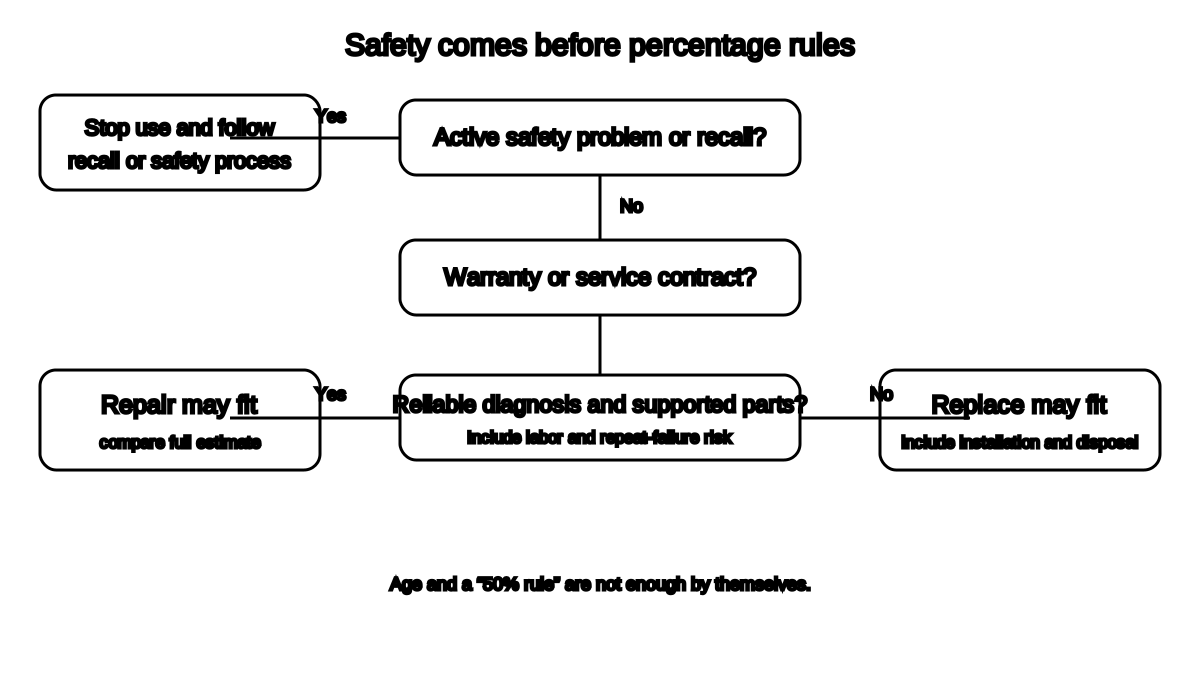
Repair when the appliance is safe, supported, correctly diagnosed, and the repair restores useful service at a reasonable total cost. Replace when safety, pressure-vessel or sealed-system failure, repeated faults, unavailable parts, obsolete support, installation opportunity, or total economics justify it.

Do not decide from appliance age or a single repair-cost percentage.
Use this order:
- Safety
- Recall
- Warranty
- Diagnosis
- Repair scope
- Support and parts
- Operating cost
- Replacement total cost
- Downtime and household need
Quick answer: Repair when the appliance is safe, supported, correctly diagnosed, and the repair restores useful service at a reasonable total cost. Replace when safety, pressure-vessel or sealed-system failure, repeated faults, unavailable parts, obsolete support, installation opportunity, or total economics justify it.
Safety comes first

Stop use for:
- Smoke
- fire
- gas odor
- CO alarm
- electrical arcing
- melted plug
- water on electricity
- pressure-vessel leak
- uncontrolled hot-water discharge
- damaged microwave door
- drum or door failure
- refrigerant-line damage
Do not compare repair prices while the product remains an active hazard.
Check recalls
Search CPSC by:
- Product type
- manufacturer
- model
- date code
- serial range
CPSC states that recalled products may not lawfully be sold unless the specified remedy has been completed.[1]
A recall may provide:
- Repair
- replacement
- refund
- disposal
- new instructions
Do not pay for a repair the recall covers.
Check warranty

.jpg)
Review:
- Manufacturer warranty
- parts warranty
- sealed-system warranty
- labor
- retailer return
- service contract
- credit-card benefit
Report a defect during the warranty period in writing and retain records.
FTC notes that a company may have the right to repair before refunding.[2]
Obtain a diagnosis
A useful diagnosis should identify:
- Failed component
- Reasonable cause
- Related damage
- Repair procedure
- Part availability
- labor
- warranty
- risk of additional failure
Do not authorize a costly “maybe” repair without understanding the uncertainty.
A diagnostic fee may be worth paying for a complex appliance.
Repair estimate
Include:
- Part
- labor
- service call
- shipping
- disposal
- tax
- travel
- required maintenance
- additional damage
- permit
- access work
Ask whether the estimate is:
- Fixed
- Range
- Diagnostic only
- Conditional
Repeat failures
Consider replacement when:
- Same fault recurs
- Multiple major components failed
- Repair did not resolve symptom
- Parts are refurbished without warranty
- Service network is poor
- Downtime is long
- Appliance damages the building
One unrelated minor repair does not prove the appliance is finished.
Support and parts
Check:
- Manufacturer support
- Parts availability
- Firmware
- Service manuals
- Authorized technicians
- Error-code support
- Consumables
- Product registration
A smart appliance that loses cloud support may continue basic operation or may lose major features.
Verify exact model behavior.
Operating cost
A replacement may reduce energy or water use.
Calculate:
Annual savings
=
old annual use
-
new annual use
then multiply by rate.
Do not estimate old energy use from age alone.
Use:
- EnergyGuide
- safe meter
- utility data
- model documentation
Replacement total cost
Include:
- Purchase
- delivery
- installation
- permit
- electrical work
- gas work
- water line
- venting
- cabinet modification
- disposal
- lost food
- laundry
- temporary equipment
A cheap replacement that requires a panel upgrade is not cheap.
Repair-versus-replace calculation
Replacement net cost
=
purchase
+
installation
+
disposal
-
verified future operating savings
Compare with:
Repair cost
+
expected near-term additional work
Do not assign fake probabilities.
Use:
- Best case
- expected case
- worst case
No universal 50% rule
The common rule to replace when repair costs 50% of replacement is incomplete.
It ignores:
- safety
- support
- installation
- condition
- downtime
- energy
- warranty
- household need
- future failures
Use a structured decision.
Decision table
| Finding | Stronger direction |
|---|---|
| Active recall with remedy | Use recall |
| Unsafe pressure vessel or gas problem | Replace or professionally repair as required |
| Minor supported part | Repair |
| Repeated major failures | Replace may be stronger |
| Parts unavailable | Replace |
| Expensive installation for replacement | Repair may remain attractive |
| Old but safe and reliable | No automatic replacement |
| Energy savings small | Do not justify replacement on energy alone |
| Household needs changed | Replacement may provide functional value |
Environmental and disposal
Repair can extend product life.
Replacement may reduce operating energy.
Use responsible:
- Refrigerant recovery
- electronics recycling
- metal recycling
- utility program
- retailer haul-away
Do not abandon appliances or release refrigerant.
Frequently asked questions
Is it worth repairing a 10-year-old appliance?
Age alone is not enough. Use safety, diagnosis, support, cost, and need.
Should I repair a compressor?
Compare exact sealed-system warranty, diagnosis, labor, refrigerant, and replacement cost.
Does ENERGY STAR justify replacement?
Only when verified energy savings and total ownership cost support it.
Should I repair before checking recall?
No. Check recall and warranty first.
Can a technician guarantee no other failures?
Usually not. Ask about repair warranty and related component condition.
Printable companion
Download the ungated Appliance Purchase and Delivery Checklist PDF. No email address is required.
Related guides
- How to Read an EnergyGuide Label
- ENERGY STAR vs. EnergyGuide
- Are Extended Warranties on Appliances Worth It?
- New vs. Used vs. Refurbished vs. Open-Box Appliances
- Appliance Buying Checklist: Measurements, Hookups, Delivery, Warranty, and Recalls
- How to Calculate What an Appliance Costs to Run
- How Much Does a Refrigerator Cost to Run?
- How Much Does a Dishwasher Cost Per Load?
- How Much Does a Washing Machine Cost Per Load?
- How Much Does an Electric Dryer Cost Per Load?
Source notes
- RecallsU.S. Consumer Product Safety Commission
- WarrantiesFTC
See something wrong or out of date? Report a correction.