
Why Is My Refrigerator Leaking Water?
Protect electricity and flooring first. Dry the area, find where water first reappears, check visible external connections, and verify food temperature. Do not reach behind a live leaking appliance or open refrigerant and electrical systems.
.jpg)
Water near a refrigerator may come from:
- Supply tubing
- Shutoff valve
- Filter
- Ice maker
- Defrost drain
- Drain pan
- Condensation
- Door seal
- Nearby sink or dishwasher
- Ceiling or wall plumbing
Quick answer: Protect electricity and flooring first. Dry the area, find where water first reappears, check visible external connections, and verify food temperature. Do not reach behind a live leaking appliance or open refrigerant and electrical systems.
Immediate safety
.jpg)
Stop and seek help when:
- Water reaches an outlet
- Water reaches a power strip
- Cord or plug is wet
- Burning odor occurs
- Circuit trips
- Appliance is unstable
- Floor is damaged
- Water is flowing rapidly
- Ceiling is sagging
Do not step into water to unplug an appliance.
Use the breaker only when safely accessible and correctly identified.
Protect food
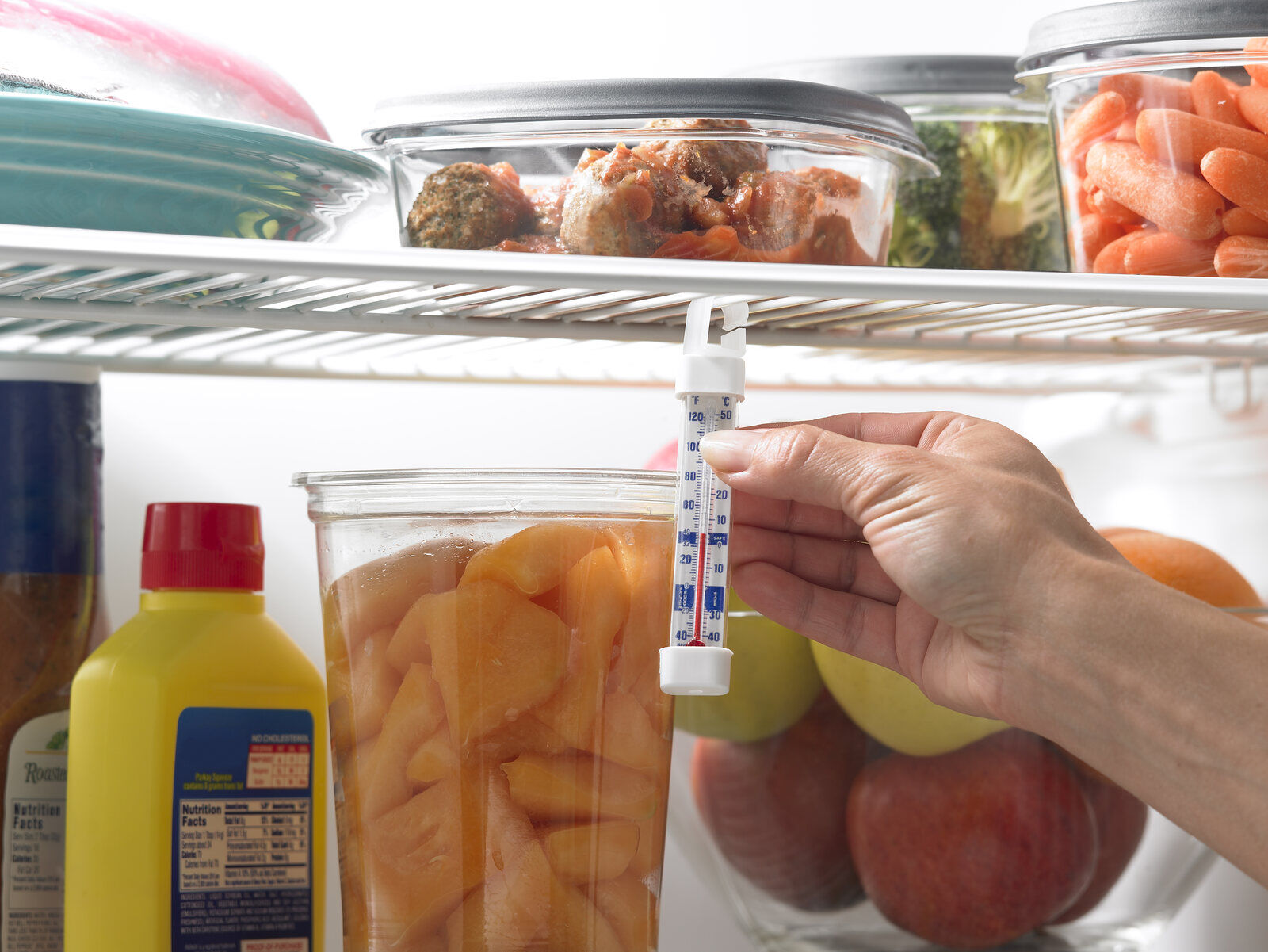
Measure refrigerator temperature.
If it is above 40°F:
- Move perishables to verified cold storage.
- Record the time.
- Limit door opening.
- Use the food-safety rules.
A leaking refrigerator may also have a cooling problem.
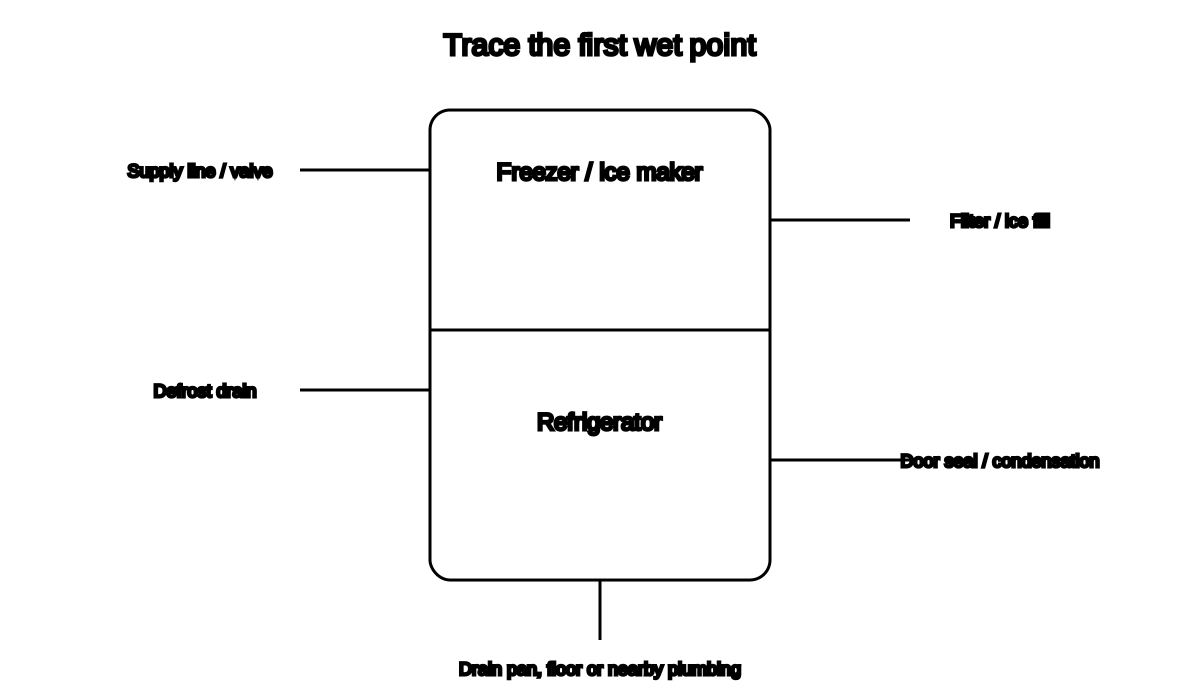
Find the first wet point
Water travels.
Procedure:
- Dry the floor and accessible exterior.
- Use paper towels around visible connections.
- Wait with the appliance operating normally.
- Check where moisture first returns.
- Photograph it.
- Shut off the water supply when a supply leak is confirmed and the valve is safe.
Do not pull the refrigerator forward until the floor, water line, cord, and anti-tip or cabinetry conditions are understood.
Supply line
A refrigerator with water or ice may have:
- Copper line
- plastic tube
- braided connector
- shutoff valve
- compression fitting
- quick-connect fitting
Check externally for:
- Drip
- crack
- kink
- abrasion
- loose support
- corrosion
- damaged connector
Shut off the refrigerator water supply if leaking and safe to operate.
Do not reuse a damaged disposable connector.
Water filter
Leaks may occur from:
- Wrong filter
- incomplete installation
- damaged O-ring
- cracked housing
- missing cap
- counterfeit or incompatible part
- trapped debris
- frozen line
Use the exact model-compatible filter and installation method.
Do not force a filter.
After replacement, check for leaks during water dispensing and ice fill.
Ice maker
Possible sources:
- Fill tube displaced
- overfill
- frozen fill tube
- cracked mold
- leaking valve
- bin obstruction
- door ice-room problem
Turn off ice making as the manual directs while waiting for service.
Do not remove energized components.
Defrost drain
A blocked or frozen defrost drain can produce:
- Water under crisper drawers
- Ice on freezer floor
- Water at front of appliance
- Recurring leak after defrost cycle
Clearing methods differ.
Do not use sharp tools, high-pressure air, or chemicals without model instructions.
Drain pan
The drain pan may:
- Crack
- move
- overflow
- receive too much water
- fail to evaporate because condenser airflow is poor
Some pans are not owner-accessible.
Do not remove panels merely because a generic diagram shows one.
Condensation
Condensation can form because of:
- High room humidity
- door leak
- frequent opening
- cold-water line
- improperly installed cabinet
- sweating around dispenser
- disabled energy-saving feature
- damaged insulation
The existing humidity cluster can help determine whether room moisture contributes.
Condensation is still water damage and needs correction.
Door seal
A leaking gasket brings warm humid air inside.
Possible results:
- Condensation
- frost
- water
- long runtime
- warm food
Clean, align, or replace according to the manual.
Nearby plumbing
Water may come from:
- Sink
- dishwasher
- water heater
- ceiling
- wall
- floor drain
- condensate line
A refrigerator is often blamed because it is large and nearby, the traditional legal standard for household appliances.
Trace the actual source.
Renting and documentation
Record:
- Date
- Leak location
- Photographs
- Food temperature
- Shutoff
- Flooring damage
- Model
- Maintenance notice
Notify landlord or property manager promptly.
Do not conceal ongoing water damage.
Frequently asked questions
Why is there water under the crisper drawers?
A blocked defrost drain is one possibility.
Can a bad filter leak?
Yes. Wrong fit, damaged seal, housing, or incomplete installation can leak.
Should I unplug the refrigerator?
Only when you can do so safely and food is protected. Water near electricity may require breaker shutdown.
Can a refrigerator leak refrigerant as water?
Refrigerant does not form a household puddle like water. Oily residue or damaged tubing requires service.
Is condensation normal?
Small transient condensation can occur, but persistent water indicates humidity, seal, insulation, or drainage trouble.
Printable companion
Download the ungated Leftover Labels and Refrigerator Use-First List PDF. No email address is required.
Related guides
- Why Is My Refrigerator Running All the Time?
- Refrigerator Not Cooling but Freezer Works
- Why Is My Freezer Frosting Up?
- How Long Do Leftovers Last in the Fridge?
- How to Organize a Refrigerator for Food Safety and Less Waste
- How Much Does a Refrigerator Cost to Run?
- Do You Need a Refrigerator Thermometer? What to Look For
- How Long Is Food Safe in the Refrigerator Without Power?
- How to Calculate What an Appliance Costs to Run
- Repair or Replace an Appliance?
- Appliance Buying Checklist: Measurements, Hookups, Delivery, Warranty, and Recalls
Source notes
- Refrigerator Thermometers—Cold Facts about Food SafetyU.S. Food and Drug Administration
See something wrong or out of date? Report a correction.