
Why Are Clothes Taking So Long to Dry?
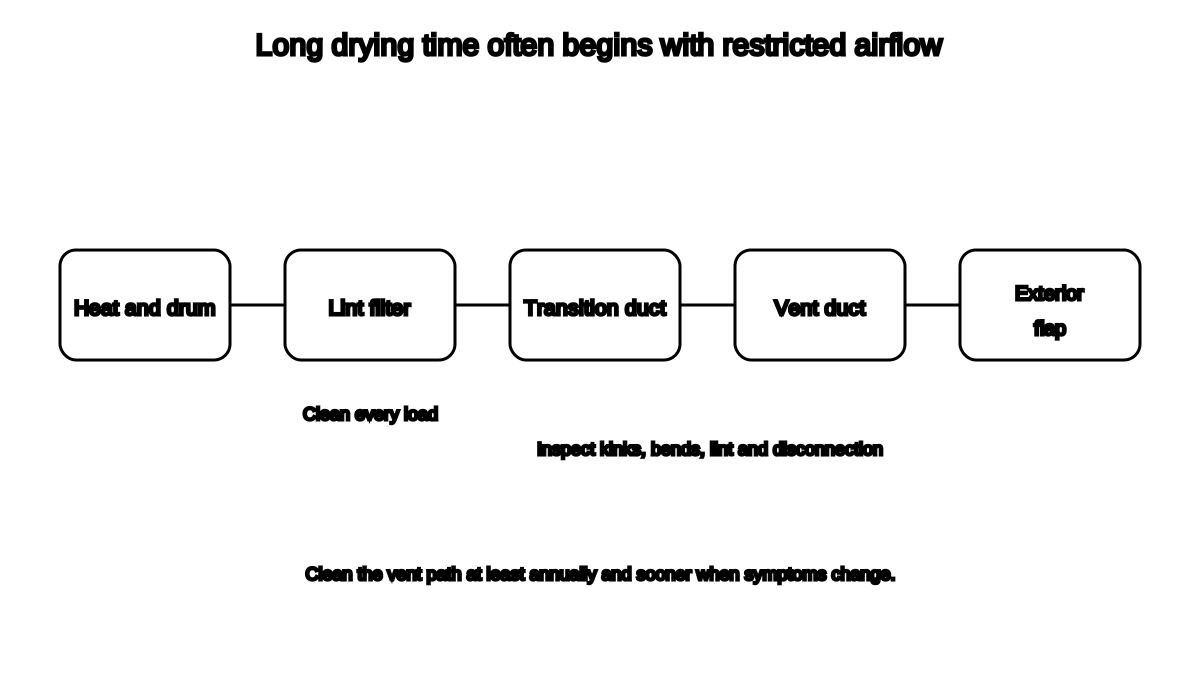
Clean the lint filter, check exterior airflow, inspect the visible vent path, compare load size and washer spin, and stop using the dryer if it overheats, smells burned, trips power, or shows signs of gas or carbon-monoxide trouble.
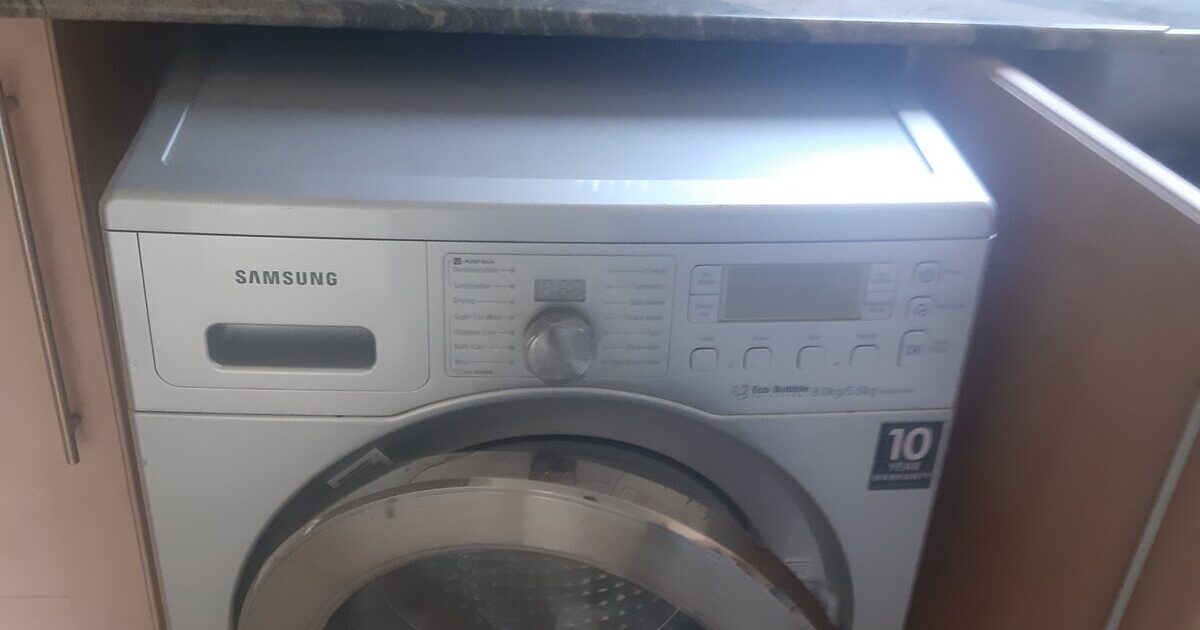

Clothes take longer to dry when the dryer cannot move enough warm air through the load.
Common causes include:
- Loaded lint filter
- Restricted vent
- Crushed duct
- Blocked exterior flap
- Oversized or undersized load
- Low washer spin
- Mixed fabric weights
- Dirty moisture sensors
- Low-heat cycle
- Heating fault
- Cold installation space
Quick answer: Clean the lint filter, check exterior airflow, inspect the visible vent path, compare load size and washer spin, and stop using the dryer if it overheats, smells burned, trips power, or shows signs of gas or carbon-monoxide trouble.
Start with fire and gas safety
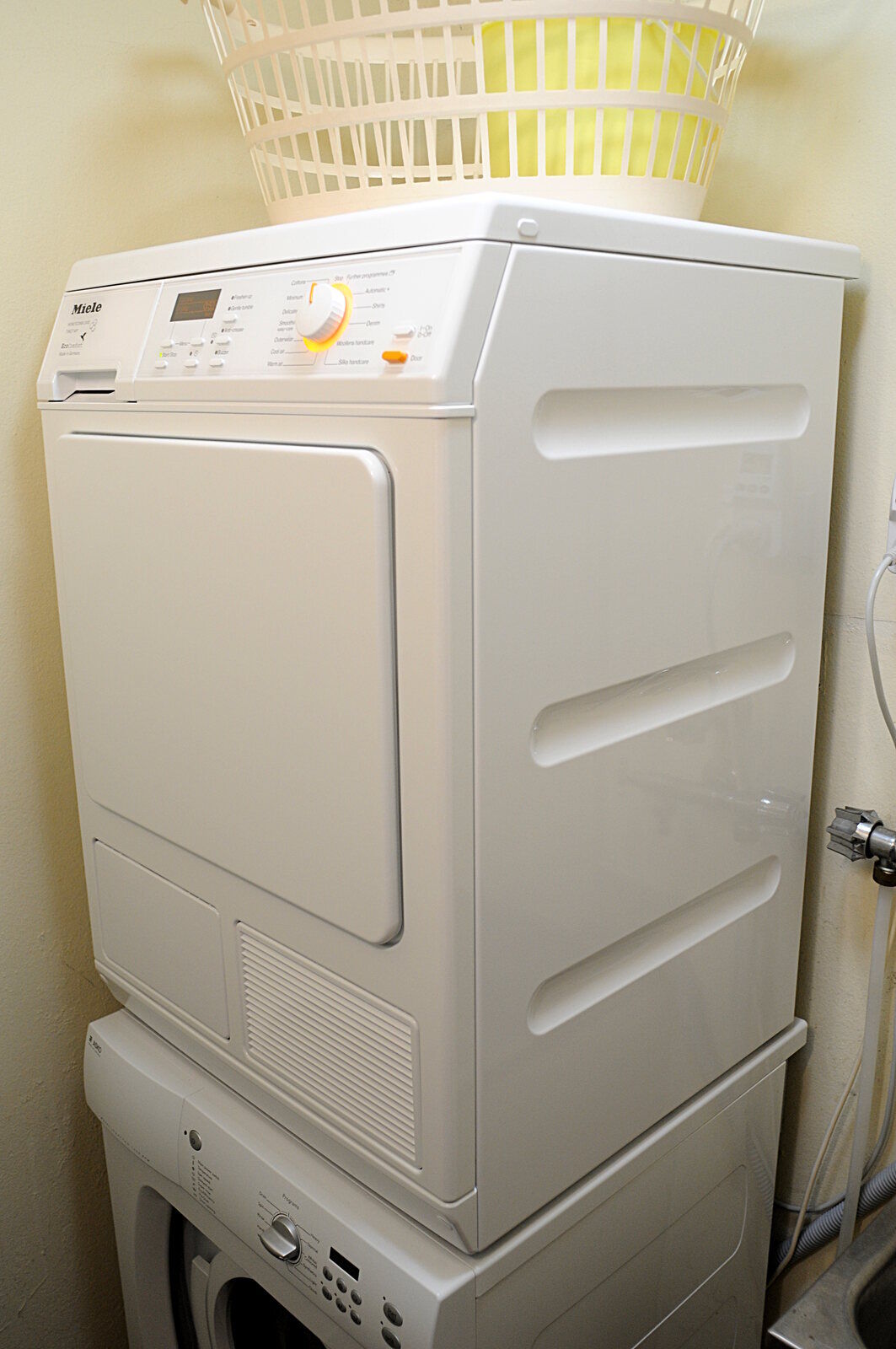

Stop the dryer and obtain qualified help when:
- Burning smell appears
- Smoke appears
- Cabinet becomes unusually hot
- Gas odor is present
- CO alarm sounds
- Circuit trips
- Plug or outlet discolors
- Drum stops while heater continues
- Vent hose is scorched
- Lint burns or glows
Do not run “one more load” to see whether the smell goes away.
Clean the lint filter
ENERGY STAR recommends cleaning the lint filter after every load for airflow, efficiency, and safety.[1]
Check:
- Screen surface
- Frame
- Filter slot
- Tears
- Warping
- Film from dryer sheets
Do not operate without the filter.
A filter that looks clean can have an invisible film.
If the manual permits:
- Wash with mild soap and water.
- Rinse.
- Dry fully.
- Reinstall.
Check exterior airflow

With the dryer operating normally:
- Locate the exterior vent.
- Confirm the flap opens.
- Feel for airflow without reaching into moving parts.
- Look for lint accumulation.
- Check whether the termination is blocked by snow, leaves, nest, or screen.
Weak exterior airflow suggests restriction.
Do not remove a wildlife guard or building component without permission and safe replacement.
Vent duct
Possible problems:
- Crushed behind dryer
- Kink
- Excessive length
- Too many turns
- Lint buildup
- Disconnected joint
- Wrong material
- Sagging flexible duct
- Improper termination
Permanent venting must follow:
- Dryer manual
- Local code
- Building requirements
Do not substitute plastic duct or an unapproved flexible product because it fits conveniently.
Load size
An overloaded dryer prevents clothing from tumbling.
Signs:
- Drum packed tightly
- Center remains damp
- Heavy items wrap around lighter items
- Several cycles required
A very small load can also dry inefficiently because tumbling and sensor contact are poor.
ENERGY STAR notes that both oversized and very small loads can be inefficient.[1]
Use the capacity and loading instructions.
Separate fabric weights
Heavy items such as:
- Towels
- jeans
- blankets
- sweatshirts
may remain damp after lighter items are dry.
Separate:
- Heavy
- lightweight
- delicate
- bulky
Do not dry a bulky item that the manual prohibits.
Washer spin
The dryer must evaporate water the washer leaves behind.
Use the highest appropriate spin for the fabric.
ENERGY STAR recommends high or extended spin where appropriate to reduce dryer time.[2]
If clothes emerge dripping:
- Check washer cycle.
- Check spin setting.
- Check load balance.
- Check drain performance.
- Check pump filter according to manual.
- Service the washer if needed.
Moisture sensors
Sensor-dry cycles may use metal sensor bars.
Residue can reduce accuracy.
Follow the dryer manual for cleaning.
Do not use abrasive chemicals or bend the sensors.
A sensor cycle may end too early with:
- Tiny load
- mixed fabric
- poor sensor contact
Timed drying may be useful for certain loads, but do not simply add hours to a restricted vent.
Cycle and heat
Low heat may run longer.
That is not automatically wasteful when:
- Fabric requires it
- sensor stops correctly
- heat-pump dryer is designed for longer cycles
- lower heat protects clothing
Compare:
- Total kWh
- fabric care
- load result
- model design
Clock time alone is not energy use.
Room temperature
Some dryers, especially heat-pump designs, have approved ambient ranges.
A cold garage or unconditioned space can affect:
- cycle time
- heat-pump performance
- condensation
- controls
Use the installation manual.
Do not use a space heater beside the dryer to compensate.
Heating fault
Possible directions:
Electric dryer
- Element
- thermal fuse
- thermostat
- relay
- power supply
- one leg of 240-volt circuit
Gas dryer
- Igniter
- gas valve
- burner
- flame sensor
- venting
- gas supply
Do not open panels, test energized 240-volt circuits, or service gas combustion from generic instructions.
Record a baseline
For one repeatable load:
- Washer cycle
- final spin
- load weight or size
- dryer cycle
- start time
- end time
- dampness
- exterior airflow
- room temperature
- energy use where safely measured
A sudden change from the baseline is useful service evidence.
Frequently asked questions
Does a dirty vent make the dryer cost more?
It can increase runtime and create a fire hazard.
Should I clean the lint filter before or after every load?
Either routine works if it is clean for every cycle.
Why are towels still wet?
Heavy items may need separation, adequate tumbling, a stronger washer spin, and good airflow.
Is a two-hour heat-pump cycle normal?
Some heat-pump dryers operate longer at lower temperature. Compare with the manual and prior performance.
Can I run the dryer with the vent disconnected indoors?
No. Moisture, lint, heat, and combustion products can enter the home.
Printable companion
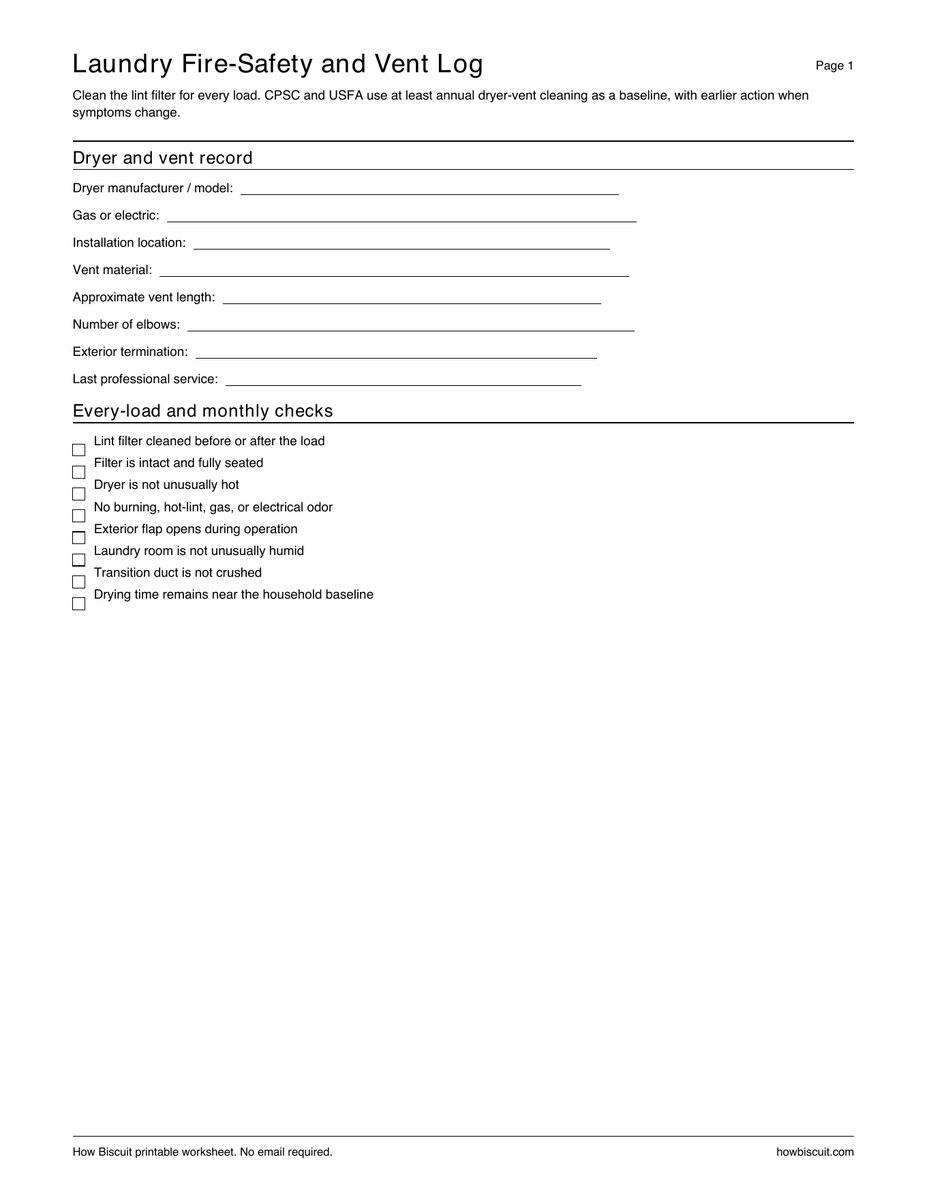
Download the ungated Laundry Fire-Safety and Vent Log PDF. No email address is required.
Related guides
- How Often Should You Clean a Dryer Vent?
- Why Does My Front-Load Washer Smell?
- Cold vs. Warm vs. Hot Water for Laundry
- How Much Laundry Detergent Should You Use?
- Air-Drying vs. Clothes Dryer: Cost, Time, and Fabric Tradeoffs
- How Much Does a Washing Machine Cost Per Load?
- How Much Does an Electric Dryer Cost Per Load?
- What Humidity Should Your House Be?
- How Much Does a Dehumidifier Cost to Run?
- How to Read an EnergyGuide Label
- Repair or Replace an Appliance?
Source notes
- Clothes DryersENERGY STAR
- Clothes WashersENERGY STAR
- dryer fire preventionCPSC
See something wrong or out of date? Report a correction.