
How Often Should You Clean a Dryer Vent?
Use one year as the baseline for the exhaust path, not a guarantee that it can be ignored for twelve months. Long ducts, many bends, large households, pets, heavy lint, and warning signs require earlier inspection.

Clean the lint filter before or after every load.
Clean lint from the dryer vent pipe at least once a year, and inspect sooner when airflow or drying time worsens.
CPSC currently gives that annual vent recommendation and emphasizes keeping the lint filter clean for each use.[1]
Quick answer: Use one year as the baseline for the exhaust path, not a guarantee that it can be ignored for twelve months. Long ducts, many bends, large households, pets, heavy lint, and warning signs require earlier inspection.
Lint filter versus vent

The lint filter captures some lint before air enters the exhaust path.
The vent includes:
- Dryer outlet
- transition duct
- rigid or semi-rigid duct
- elbows
- wall or ceiling path
- exterior termination
Cleaning one does not clean the other.
Every-load filter routine
Before starting:
- Remove lint.
- Inspect for tears.
- Confirm the filter seats correctly.
- Check for waxy film.
- Reinstall.
ENERGY STAR recommends cleaning after every load.[2]
Do not:
- Operate without filter
- Use a damaged filter
- Pack lint into the slot
- Ignore film from dryer sheets
Annual vent baseline

CPSC advises cleaning lint from the vent pipe at least annually.[1]
USFA also advises cleaning dryer vent ductwork every year and cleaning the lint filter every use.[3]
The interval may need to be shorter when:
- Dryer runs daily
- Household is large
- Pets shed
- Duct is long
- Many turns exist
- Vent rises vertically
- Exterior flap collects lint
- Dryer has moved
- Remodel disturbed the duct
Warning signs that should not wait
- Clothes take longer
- Dryer becomes hotter
- Laundry room becomes humid
- Burning or hot-lint smell
- Exterior airflow weak
- Flap barely opens
- Lint appears around dryer
- Dryer stops on heat limit
- Vent hose crushed
- CO alarm or gas concern
- Lint visible at termination
Stop use for smoke, burning, gas odor, or unsafe heat.
Inspect the transition duct
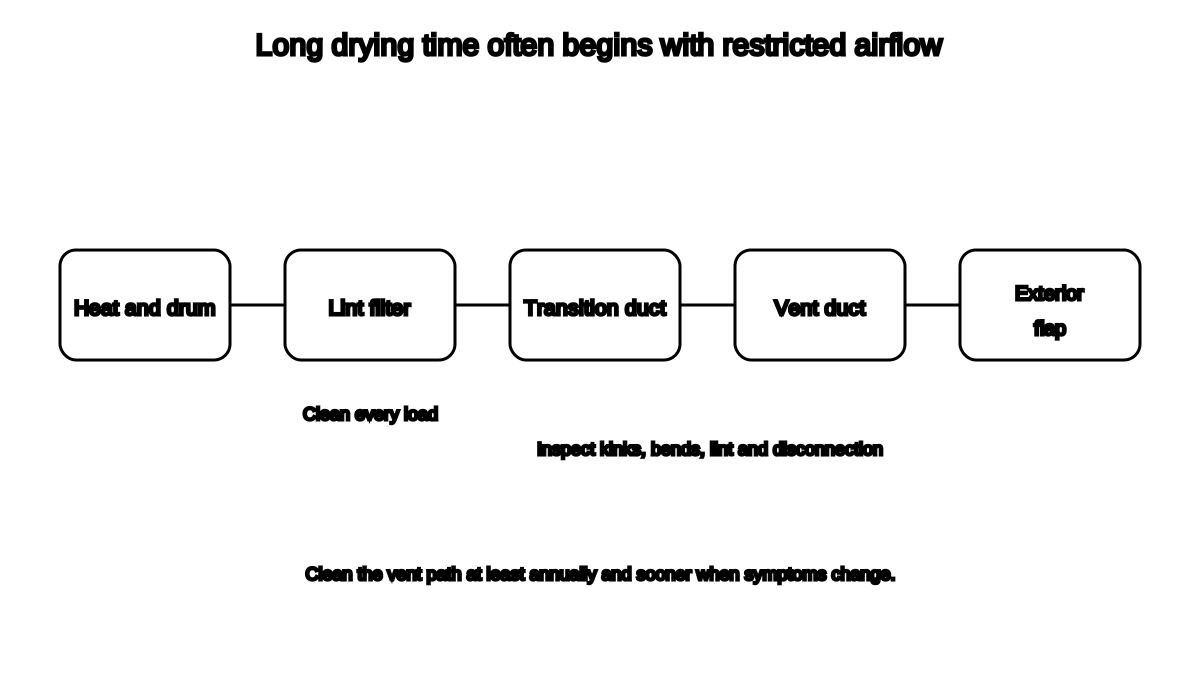
The connection behind the dryer should be:
- Approved material
- As short as practical
- Not crushed
- Not kinked
- Supported
- Connected
- Not filled with lint
Moving the dryer can crush the duct.
Do not pull a gas dryer without protecting and inspecting the gas connector.
Exterior termination
Check:
- Flap movement
- lint
- debris
- nest
- snow
- plant growth
- screen
- damage
- water entry
Some building codes prohibit screens that trap lint.
Use a termination approved for dryer exhaust.
Duct material
Follow the dryer manual and local code.
Problem materials may include:
- Plastic
- thin foil used where prohibited
- improvised hose
- screws protruding into airflow
- taped collapse
- unapproved booster
A generic article should not prescribe a complete duct design for every building.
Permanent work may require a qualified installer.
Long or complex vents
A long vent may require:
- More frequent cleaning
- Correct duct diameter
- Fewer elbows
- Accessible cleanouts
- Manufacturer-approved booster system
- Professional measurement
Do not add a booster fan without confirming compatibility, cleaning access, and code.
Gas dryers
A restricted gas-dryer vent can contribute to:
- Poor combustion exhaust
- moisture
- overheating
- carbon monoxide risk
Use CO alarms according to public-safety guidance.
Do not operate a gas dryer with the vent disconnected into the room.
Apartment and condominium buildings
Responsibility may be divided among:
- Tenant
- owner
- association
- building management
- shared-vent contractor
Ask:
- Who cleans the in-unit transition?
- Who cleans the common shaft?
- When was it last serviced?
- Is proof available?
- Is the vent shared?
Document slow drying or heat.
Do not access shared shafts without authorization.
DIY versus professional
Simple accessible transition cleaning may be owner-manageable when the manual and building permit it.
Professional service is stronger when:
- Vent is long
- roof termination
- concealed path
- shared duct
- gas appliance
- repeated blockage
- inaccessible elbows
- water or animal damage
- suspected disconnected duct
- no airflow after cleaning
A spinning brush can damage or disconnect some ducts.
Do not improvise blindly.
After cleaning
Verify:
- Connections restored
- Gas connector undamaged
- Dryer level
- Exterior flap opens
- Airflow improved
- No lint or tools remain
- Cycle time returns toward baseline
- No gas odor
- No unusual heat
Record the date.
Printable log
The Laundry Fire-Safety and Vent Log should include:
- Lint-filter check
- Monthly exterior inspection
- Annual vent cleaning
- Dryer model
- Duct path
- Gas or electric
- CO alarm check
- Cycle-time baseline
- Service record
- Recall search
Frequently asked questions
Is once a year enough?
It is a baseline. Inspect sooner when conditions or symptoms justify it.
Can I clean the vent from the outside?
Some systems can be partly accessed there, but the complete path and connections must be considered.
Does the lint screen catch all lint?
No.
Is foil duct safe?
Use the exact dryer instructions and local code. Some thin flexible products are not approved for permanent concealed runs.
Can I use a leaf blower?
Uncontrolled pressure can disconnect or damage ductwork and spread lint. Use approved methods.
Printable companion
Download the ungated Laundry Fire-Safety and Vent Log PDF. No email address is required.
Related guides
- Why Are Clothes Taking So Long to Dry?
- Why Does My Front-Load Washer Smell?
- Cold vs. Warm vs. Hot Water for Laundry
- How Much Laundry Detergent Should You Use?
- Air-Drying vs. Clothes Dryer: Cost, Time, and Fabric Tradeoffs
- How Much Does a Washing Machine Cost Per Load?
- How Much Does an Electric Dryer Cost Per Load?
- What Humidity Should Your House Be?
- How Much Does a Dehumidifier Cost to Run?
- How to Read an EnergyGuide Label
- Repair or Replace an Appliance?
Source notes
- dryer fire preventionCPSC
- Clothes DryersENERGY STAR
- Basement and Garage Fire SafetyUSFA
See something wrong or out of date? Report a correction.